






Definition & Meaning
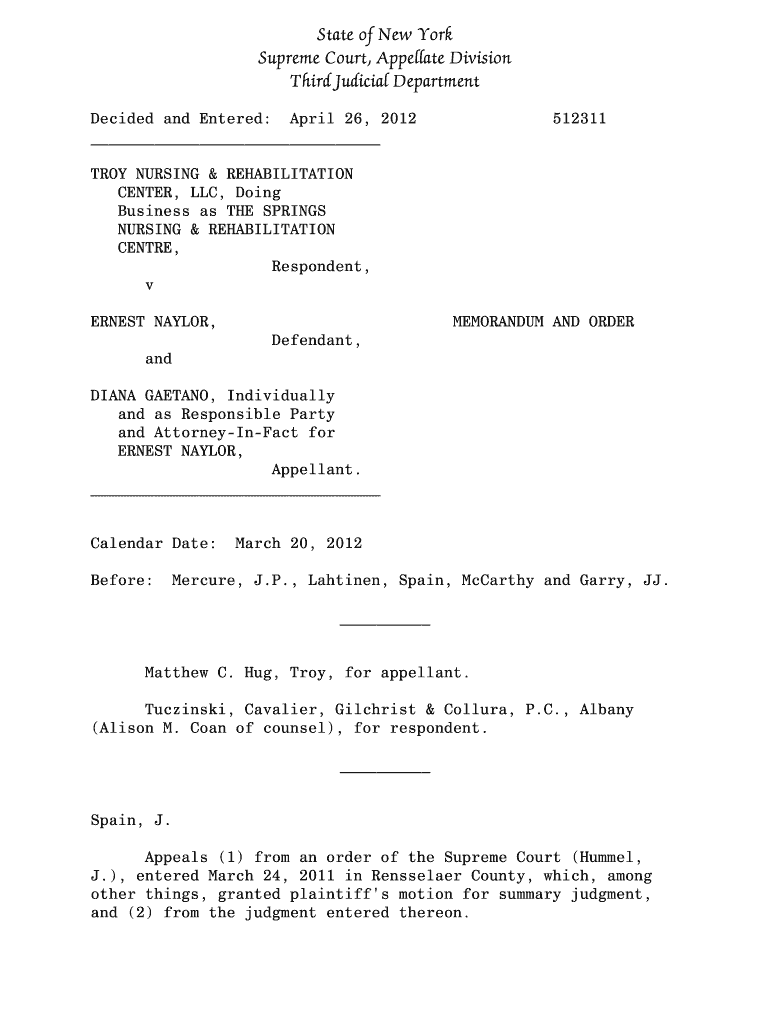
The "Troy Nursing and Rehabilitation - decisions courts state ny" refers to a legal case involving the Troy Nursing & Rehabilitation Center in the State of New York. This case centers around attempts by the nursing facility to collect unpaid nursing home fees from the estate of a deceased individual, Ernest Naylor. Specifically, it addresses the court's decision involving the personal liability of Diana Gaetano, Naylor's daughter, who breached an agreement to use her access to her father’s assets to settle the nursing home fees. To proceed with the lawsuit, the court required the substitution of an estate representative, signifying the estate's essential role as a necessary party for damage assessment.
Key Elements of the Case
Parties Involved
- Plaintiff: Troy Nursing & Rehabilitation Center
- Defendant: Initially, Ernest Naylor's estate, with Diana Gaetano specifically being held accountable
- Court: New York Supreme Court
The court held Diana Gaetano personally liable due to her agreement to use Naylor's assets for payment, yet neglected this agreement resulting in pending nursing home fees.
Court's Decision
- Summary Judgment: The court granted this in favor of the nursing center, which underscores the legal merits seen in the nursing home's claim.
- Necessary Party: The explanation of the estate being a necessary party indicates the requirement to consider estate assets and management before further legal proceedings to finalize damages.
How to Use the Case Information
The outcomes and details of this legal case can offer insights into similar disputes or cases involving nursing homes and estate liabilities. Legal professionals and individuals managing estates can apply this understanding to:
- Assessing personal liabilities when managing funds or assets on behalf of incapacitated individuals.
- Understanding the importance of clear agreements concerning responsibilities for estate-related debts.
Important Legal Terms
Summary Judgment
This indicates the court finds a clear determination of which party is right in a case, without a full trial. Here, it means the plaintiff, Troy Nursing, had sufficient unrefuted evidence of the defendants' liability without requiring further trial proceedings.
Necessary Party
A necessary party in legal terminology is an entity whose involvement is crucial for the comprehensive resolution of a case. In this context, the decedent's estate is needed to properly assess and allocate damages.
Legal Use of the Case
Professionals can reference the court's interpretations and judgments in similar contexts. The legal principles applied here—particularly around estate responsibility and personal liability agreements—can be essential in:
- Drafting agreements related to asset management.
- Litigation involving similar disputes at nursing or rehabilitation facilities.
Examples of Similar Legal Scenarios
Estate Management Conflicts
- A family dispute where the executor fails to manage obligations, like outstanding fees or taxes, leading to personal liability claims.
- Disagreements over the interpretation and execution of wills specifically addressing asset utilization for debt payment.
Health Services and Liability
- Nursing homes seeking unpaid fees may heighten diligence in securing clear, enforceable payment agreements with residents’ guardians or family members.
State-Specific Rules
In New York, this case adheres to state statutes on estate management and nursing facility finance agreements. Understanding local state law concerning:
- Estate administration and probate processes.
- Liability of estate representatives or family members in financial disputes.
Step-by-Step Process in Legal Resolution
- Filing a Claim: Nursing facility files a suit seeking unpaid fees.
- Defendant Identification: Named parties in line with legal standing and relevance.
- Court Evaluation: Analysis of contracts, personal responsibilities, estate involvement.
- Summary Judgment Review: Court's decision based on undisputed facts.
- Substitution of Parties: If necessary, estate representatives are appointed or substituted per legal stipulations.
- Assessment of Damages: Continues with substituted parties involved.
This procedural understanding aids further legal preparation in similar disputes concerning estate liabilities at a nursing or rehabilitation facility.