






Definition & Meaning
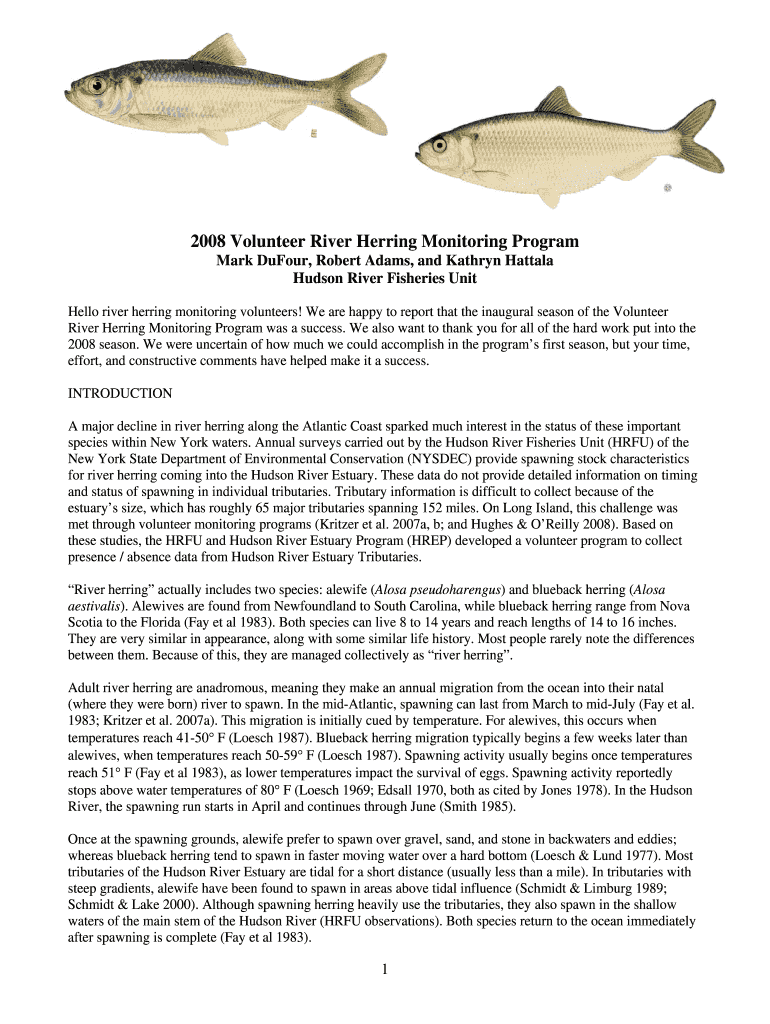
The 2008 Volunteer River Herring Monitoring Program, designed by the Hudson River Fisheries Unit, was an initiative to engage citizens in monitoring river herring populations in the Hudson River Estuary. This program focused primarily on collecting data on the spawning runs of alewife and blueback herring, which have seen a decline along the Atlantic Coast. Key outcomes of this program included the gathering of presence/absence data to gain insights into herring immigration patterns and environmental effects.
How to Use the FTP Directory
Utilizing the FTP Directory associated with the 2008 Volunteer River Herring Monitoring Program requires accessing the repository that holds essential data and reports from the project. The directory serves as a centralized location where users can download documents related to river herring monitoring, including spreadsheets, graphs, and other analytical tools. This directory is particularly useful for environmental researchers and conservationists who wish to study trends and contribute to ongoing efforts in understanding and supporting herring populations.
Steps to Access the FTP Directory
- Navigate to the FTP server linked with the New York State Department of Environmental Conservation.
- Use a compatible web browser or FTP client software to connect.
- Browse the directory to locate required files.
- Download the necessary documents for local review and analysis.
Key Elements of the Monitoring Program
Several critical elements comprise the 2008 Monitoring Program. These include:
- Volunteers: Engaging local volunteers to collect data enhances community involvement and expands data collection reach.
- Data Collection: Focuses primarily on the presence/absence of river herring during peak spawning times.
- Environmental Factors: Monitors elements such as water temperature and tidal stages to analyze their impact on herring populations.
Each of these components plays a significant role in the comprehensive assessment of the river herring's ecological status.
Important Terms Related to the Program
Understanding the language and terminology is vital when navigating the program and its reports. Some key terms include:
- Spawning Runs: The annual migration of herring to their breeding grounds in freshwater tributaries.
- Alewife and Blueback Herring: The two main herring species monitored.
- Absence Data: Information indicating where herring were not found, as important as presence data for understanding population health.
State-Specific Rules for Monitoring
New York State's regulations governing herring conservation and monitoring play a pivotal role in the implementation of this program. Such rules ensure that monitoring efforts align with official wildlife management goals and legal requirements. These policies also provide a framework for ethical data collection and reporting.
Compliance Guidelines
- Volunteers must adhere to ethical data collection practices as defined by state regulations.
- Required reporting of findings to the appropriate state conservation departments.
- Observance of seasonal restrictions to prevent disruption of natural habitats.
Examples of Program Use
Real-world applications of the monitoring program demonstrate its practical significance. For instance, in the initial year, volunteers documented a higher spawning presence in certain tributaries, which prompted further ecological studies. This kind of volunteer-collected data has been instrumental in influencing policy changes towards river conservation efforts.
Who Typically Uses the Monitoring Program
The program is generally utilized by a mix of stakeholders:
- Environmental Scientists: For conducting further research on riverine ecosystems.
- Local Conservation Groups: To plan community awareness and conservation activities.
- Policy Makers: To guide decisions for sustainable fisheries management.


Legal Use of the Monitoring Program
The legal framework surrounding the program ensures that data collection aligns with New York's environmental laws and conservation goals. Participation is structured to provide transparency and scientific validity, which are crucial for using the data in policy formation and academic research.
Legal and Ethical Standards
- Compliance with state and federal privacy laws regarding volunteer information.
- Adherence to guidelines for ethical treatment of wildlife during data collection.
- Ensuring accuracy and reliability in reported findings to avoid misinformation.