







Definition & Meaning
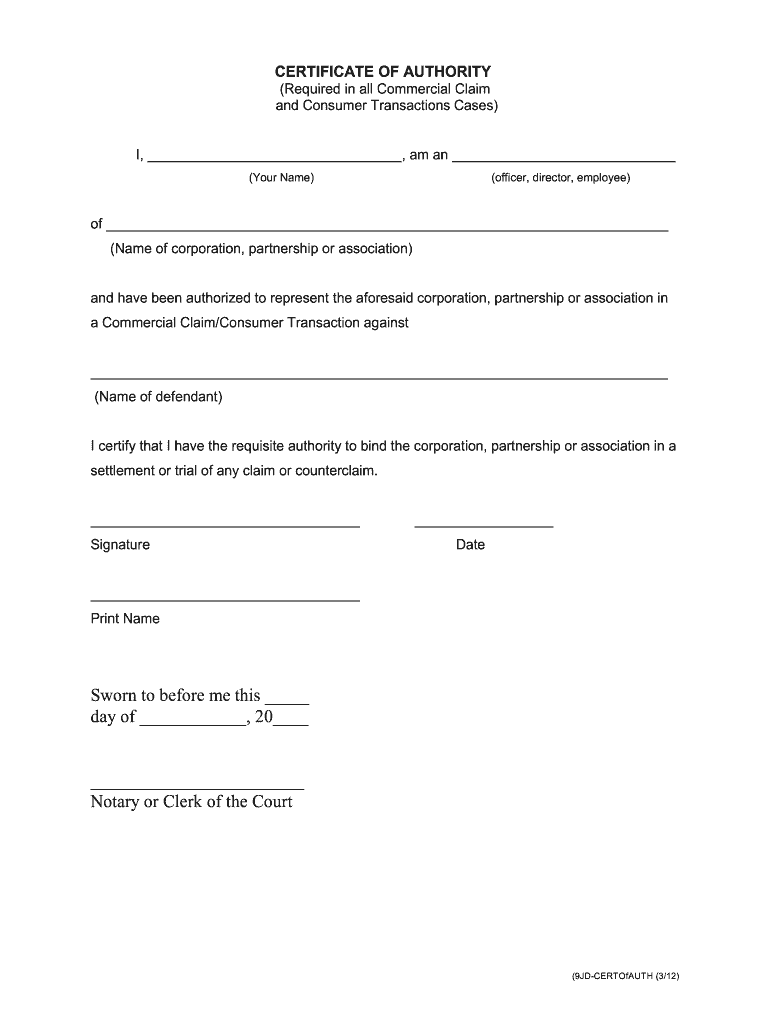
A Certificate of Authority is a legal document that permits an individual to act on behalf of a corporation, partnership, or association in business transactions or legal matters. It essentially authorizes a representative to engage in activities like signing contracts, making decisions, and representing the entity in court cases. This document is crucial for businesses operating across multiple jurisdictions, ensuring that their representatives have the legal capacity to execute tasks on their behalf.
Key Elements of the Certificate of Authority
The Certificate of Authority contains several important elements that validate its purpose and authenticity:
- Representative's Details: This includes the name, title, and signature of the individual who is authorized to act on behalf of the entity.
- Entity Information: The name and registration details of the corporation or organization granting the authority.
- Scope of Authority: Specific activities or decisions the representative is authorized to handle.
- Notarization or Acknowledgment: The document must be notarized or acknowledged by a court clerk to confirm authenticity and legality.
How to Use the Certificate of Authority
Once you have a Certificate of Authority, it can be employed in various business or legal contexts:
- Signing Contracts: The representative can enter into legal agreements on behalf of the entity.
- Court Representation: The authorized individual can represent the organization in legal proceedings.
- Banking Transactions: Use it to establish authority when opening bank accounts or securing loans.
Always ensure that the tasks fall within the outlined scope of authority to maintain legal compliance.
Steps to Complete the Certificate of Authority
Completing a Certificate of Authority involves several detailed steps:
- Collect Required Information: Gather the details of the representative and business entity, including names and registration numbers.
- Define the Scope of Authority: Clearly outline what the representative is authorized to do.
- Fill in the Form: Accurately complete the form with all necessary details.
- Notarization: Have the certificate notarized or officially acknowledged to ensure its validity.
Ensure each step is followed meticulously to avoid potential legal issues.
How to Obtain the Certificate of Authority
To obtain a Certificate of Authority:
- Application Submission: Submit an application to the relevant state authority or regulatory body, often within the Secretary of State's office.
- Document Verification: Provide essential documentation such as business registration certificates and proof of representative identity.
- Processing Fee: Pay any applicable fees required by the authority.
- Approval Process: Wait for the processing and approval of your application, which may vary based on the jurisdiction.
Complete these steps within the designated timeframe to ensure timely approval.
Legal Use of the Certificate of Authority
The legal aspects of using a Certificate of Authority include:
- Compliance: Ensure the certificate complies with the laws of each state where the entity operates.
- Scope Adherence: Representatives must adhere strictly to the tasks and decisions they are authorized to handle.
- Validity Period: Be aware of the certificate’s expiration date, if applicable, and renew it timely.
Failure to abide by these legalities can result in void or disputed actions, affecting the entity's operations significantly.
Business Entity Types Benefiting from Certificate of Authority
Different business entities stand to benefit significantly from obtaining a Certificate of Authority, including:
- Corporations: Large entities that operate extensively across state lines, requiring legal representatives to act in diverse jurisdictions.
- Limited Liability Companies (LLCs): Often need representatives for transactions and legal matters across different states.
- Partnerships and Sole Proprietorships: While typically more localized, they may still need such certificates for broader national operations.
These entities achieve better transactional efficiency and legal compliance through Certificates of Authority.
State-by-State Differences
The process and requirements for a Certificate of Authority can vary significantly between states:
- Different Forms and Fees: Each state might have its unique form, application process, and fee structure.
- Regulatory Agencies: Responsibility for issuing the certificate might lie with different agencies, like the Secretary of State or state Tax Department, depending on the region.
- Varying Validity Periods: Some states may require annual renewals, while others might have longer validity periods.
Understanding these state-specific nuances is crucial for businesses operating across multiple jurisdictions to ensure compliance and avoid penalties.




