






Definition & Meaning
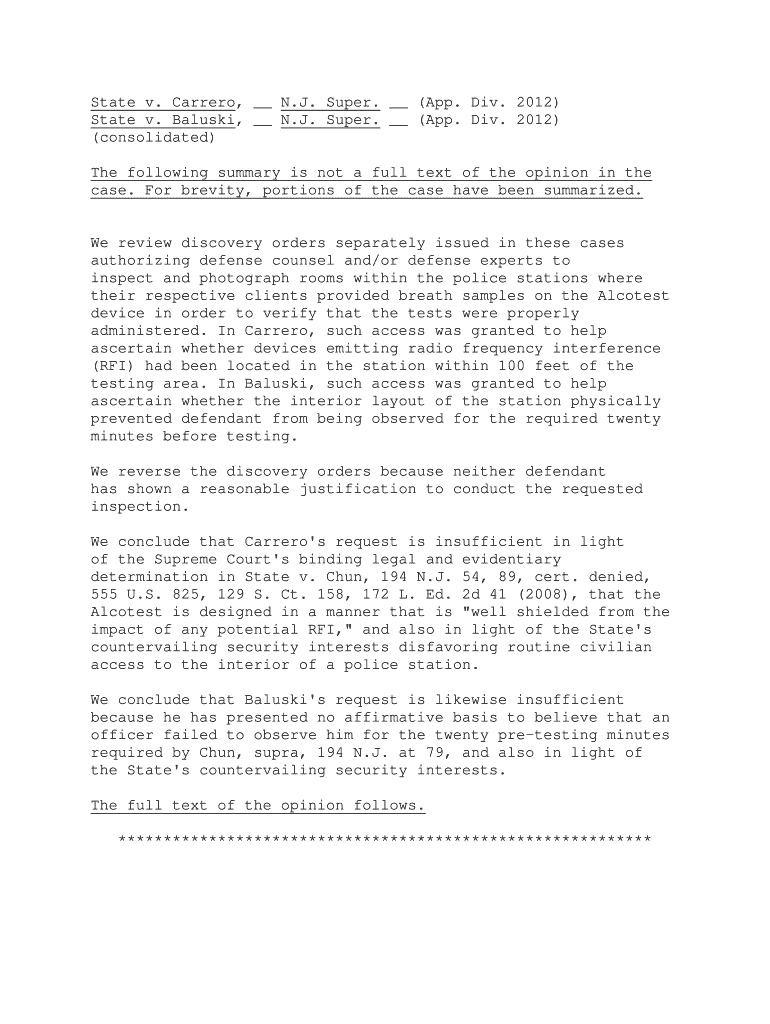
The cases "State v. Carrero, N J Super (App Div 2012)" and "State v. Baluski" are notable legal proceedings involving DWI charges in New Jersey. These cases are significant in the context of judiciary processes related to the use of Alcotest devices, a tool used for measuring blood alcohol content. The appellate court reviewed and consolidated these cases to address discovery order issues, focusing on the defendants' requests for access to police areas where breath tests were conducted. The legal precedents established through these cases are crucial for understanding how courts handle evidence requests and the reliability of the Alcotest in judicial settings.
How to Use the State v Carrero, N J Super (App Div 2012) State v Baluski - Judiciary State NJ
To utilize the cases "State v. Carrero" and "State v. Baluski" in legal and academic contexts, understanding the key legal principles and outcomes is essential. Lawyers might reference these cases to argue for or against discovery motions in similar DWI cases, particularly focusing on access to evidence. Legal scholars can study these cases to explore how appellate courts interpret discovery requests and the balance between defendant rights and police procedure security. In educational settings, these cases are exemplary for illustrating principles of evidence handling and judicial review within New Jersey's jurisdiction.
Steps to Complete Research on the Cases
- Study Court Opinions: Review the decisions rendered by the New Jersey Superior Court, Appellate Division, to understand the rationale behind reversing the discovery orders.
- Analyze Legal Precedents: Identify other cases referenced in the court's opinion to comprehend the broader legal context.
- Review Legal Commentary: Consult legal journals and analyses that discuss the implications and impacts of these cases on DWI law enforcement.
- Examine Discovery Laws: Familiarize yourself with New Jersey's statutes and case law concerning discovery in criminal cases.
- Explore Alcotest Reliability: Investigate studies and legal analyses related to the reliability and admissibility of Alcotest results in court.
Key Elements of the Cases
- DWI Charges: Both cases revolve around charges of driving while intoxicated, necessitating careful legal scrutiny.
- Discovery Requests: Central to both cases is the request by defendants for access to police facilities to verify the correct administration of breath tests.
- Appellate Decision: The appellate division's decision to reverse the initial discovery orders highlights legal precedents about the reliability and security of evidence.
- Legal Precedents Used: Citing established precedents, the court rationalized denial of the defendants' requests, balancing transparency and the security of police procedures.
- Alcotest Device: Understanding the technological and procedural implications of this device is crucial for appreciating the court's decision-making process.
Legal Use and Implications
The legal implications of these cases extend to defendant rights during discovery and law enforcement protocols in DWI cases. Attorneys might leverage these decisions in arguments regarding evidence admissibility and procedural demands. The cases demonstrate judicial perspectives on balancing defendants’ right to evidence with institutional security. These proceedings further illustrate how courts evaluate the technological reliability of commonly used forensic tools like the Alcotest.
Examples of Using the Cases in Legal Strategy
- Defense Tactics: Defense attorneys may cite these cases to argue against broad discovery orders that might infringe on privacy or security protocols.
- Prosecution's Reference: Prosecutors might use the appellate division’s rationales to bolster arguments for limiting access to sensitive police areas, ensuring evidence protection.
- Legal Education: Law schools might use these cases as teaching examples for students to explore discovery rights and limitations within criminal defense cases.
Important Legal Terms Related to the Cases
- Discovery: Legal process by which defendants obtain evidence from the prosecution to prepare a defense.
- Alcotest Device: A forensic tool used to determine blood alcohol concentration, central to the issues in these cases.
- Appellate Review: The process by which a higher court reviews the decision and proceedings in a lower court to determine if legal principles and laws were correctly applied.
State-Specific Rules and Variations
New Jersey’s legal standards governing the discovery processes and DWI adjudication are paramount in understanding these cases. The state's protocols ensure that while defendants’ rights to fair trial preparations are respected, there is also a safeguard to ensure the integrity and security of police operations. Such legal frameworks may vary considerably from those in other states, highlighting the localized nature of some legal interpretations within the United States judiciary system.