






Definition and Meaning
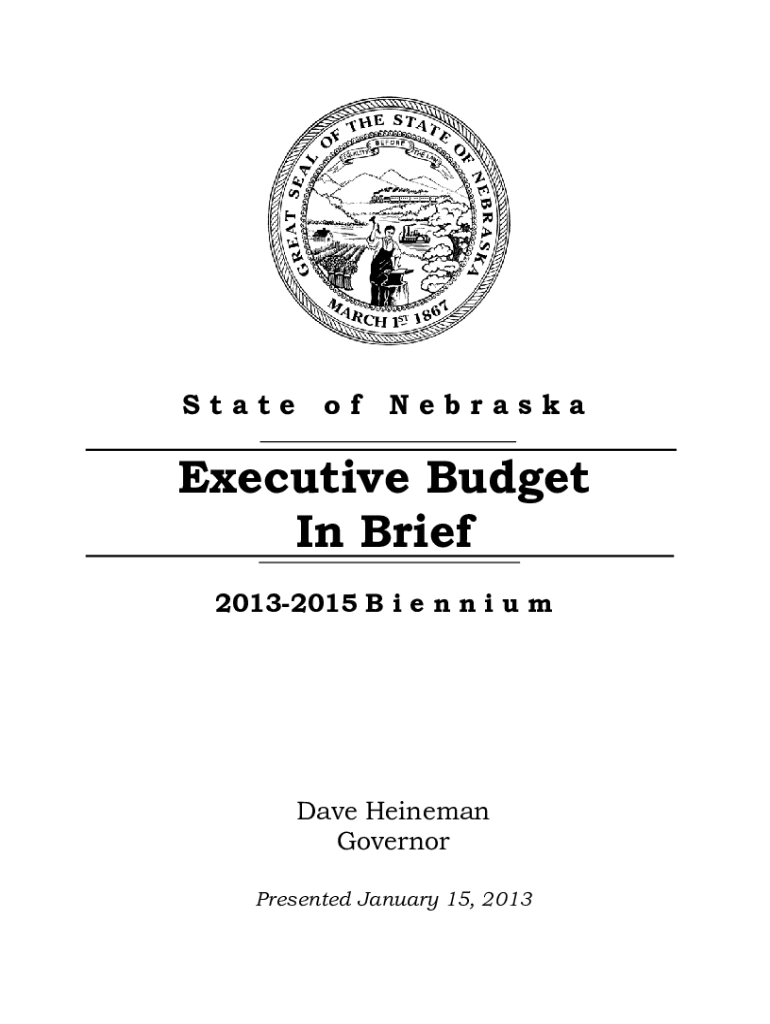
The "Executive Budget In Brief - Budget Division - State of Nebraska" is an essential document that provides a condensed overview of the financial plan proposed by the governor for a specific biennium. It highlights the state's priorities, expenditure patterns, and funding allocations across various sectors. The document serves as a roadmap for how the state intends to address its fiscal responsibilities while pursuing growth objectives. It bridges understanding for policymakers, stakeholders, and residents by presenting complex budgetary data in an accessible format.
How to Use the Executive Budget In Brief
The Executive Budget In Brief can be used as a tool for comprehending Nebraska's fiscal agenda and financial priorities. To harness its utility:
- Review Funding Priorities: Look for key sections detailing the allocation of funds across sectors such as education, healthcare, and infrastructure.
- Analyze Financial Forecasts: Examine projections and fiscal forecasts to understand anticipated revenue streams and economic assumptions.
- Understand Policy Implications: Identify policy changes and initiatives proposed for the upcoming fiscal years, which may affect various stakeholders.
Obtaining the Executive Budget In Brief
There are several ways to obtain a copy of the Executive Budget In Brief:
- Online Access: Visit the official website of the State of Nebraska's Budget Division or related government portals to download the document.
- Physical Copies: Request a printed version from the Budget Division's office or libraries that maintain public government records.
- Public Hearings: Attending budget-related public hearings may provide additional insights alongside access to the printed materials.
Steps to Complete the Executive Budget In Brief
While the Executive Budget In Brief itself is a summary document that doesn't require completion, understanding it thoroughly involves:
- Reading Each Section: Comprehend the summary of budget proposals and narratives provided.
- Examining Data Tables: Analyze tables for financial allocations and comparisons to previous budgets.
- Noting Key Changes: Highlight sections that mention shifts from past allocations, new initiatives, or budget cuts.
Why Use the Executive Budget In Brief
The document serves several important purposes:
- Policy Evaluation: It offers a snapshot for policymakers to evaluate proposed budgetary allocations and their implications.
- Public Accountability: By summarizing the state's financial direction, it holds the government accountable to its citizens.
- Informed Decision-Making: It provides citizens and stakeholders with data to engage in informed discussions about state priorities and financial management.
Key Elements of the Executive Budget In Brief
The document includes several critical components:
- Budget Recommendations: Initial proposals by the governor for how funds should be allocated.
- Financial Forecasts: Projections indicating the state's economic outlook and expected fiscal conditions.
- Agency Funding Requests: Specific requests by state agencies that outline funding needs and resource allocation.
- Spending Priorities: Identified areas such as healthcare, education, and infrastructure that receive focus and funding.
State-Specific Rules for Nebraska
Nebraska has unique fiscal policies impacting its budgeting process:
- Balanced Budget Mandate: The state's constitution requires that the budget be balanced, meaning expenditures must align with revenues.
- Biennial Budgeting: Nebraska operates on a two-year budget cycle, necessitating careful long-term planning.
- Public Involvement: There are avenues for public input and feedback during the budgeting process, particularly through hearings and community forums.
Examples of Using the Executive Budget In Brief
- Legislative Sessions: Lawmakers use the document to debate and negotiate budgetary provisions during legislative sessions.
- Local Community Advocacy: Community leaders and citizens might reference the brief in advocacy for increased funding or policy changes in their regions.
- Media Reporting: Journalists often use the document as a primary source for reporting on government spending and fiscal policies.