






Definition and Purpose of the Pesticide OverviewMinnesota Department of Agriculture
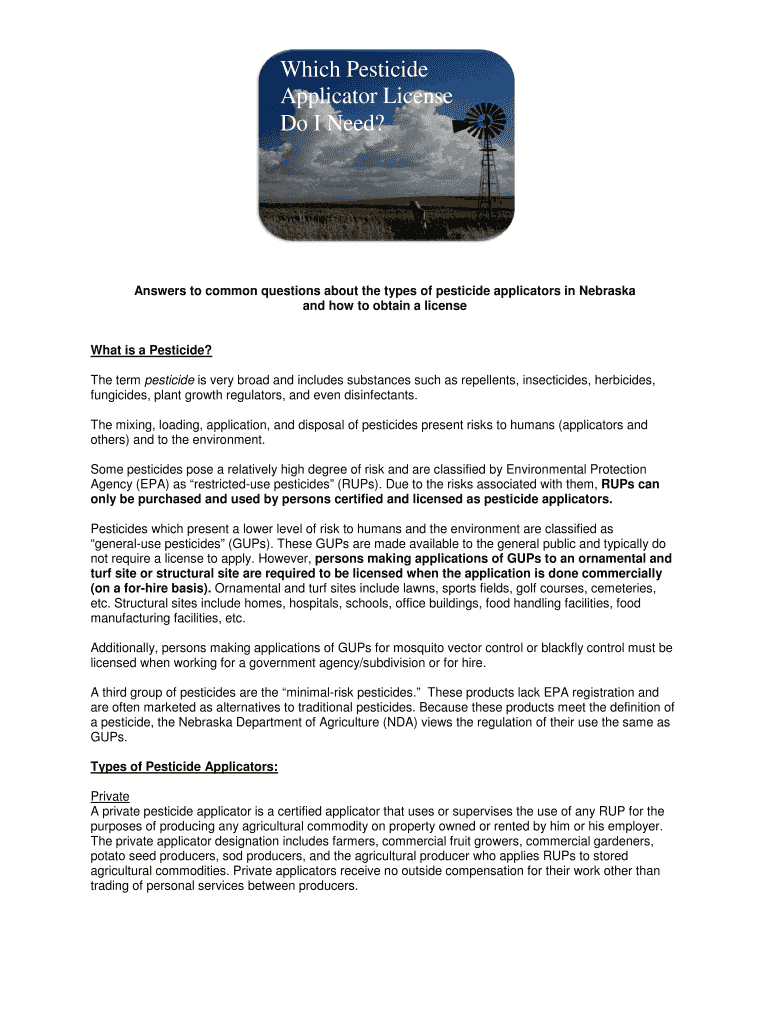
The "Pesticide OverviewMinnesota Department of Agriculture" serves as a comprehensive resource for agricultural professionals and pesticide applicators in Minnesota. This document provides essential information regarding pesticide management, including understanding restricted-use and general-use pesticides. The primary aim is to ensure safe, effective, and environmentally sound practices in the application of pesticides. By defining the criteria for pesticide use, the overview promotes compliance with state and federal regulations, safeguarding both the environment and public health.
How to Use the Pesticide Overview
Utilizing the "Pesticide OverviewMinnesota Department of Agriculture" effectively involves familiarizing oneself with its contents and application guidelines. Stakeholders, including private and commercial applicators, should thoroughly review sections that detail pesticide types and approval processes. This resource offers step-by-step guidance on acquiring proper certification and maintaining compliance with outlined standards. Practical use includes referring to it when planning pesticide applications, verifying classification types, and aligning methodologies with regulatory expectations.
Steps to Obtain the Pesticide OverviewMinnesota Department of Agriculture
To acquire the "Pesticide OverviewMinnesota Department of Agriculture," interested parties can visit the Minnesota Department of Agriculture's official website. It is typically available as a downloadable PDF document. For those who prefer physical copies, requests can be submitted via mail or through phone contact with the department. Engaging with local agricultural extensions or visiting regional offices is also a viable way to access this document.
Key Elements and Structure
The "Pesticide OverviewMinnesota Department of Agriculture" is structured to offer clear, actionable information. Key components include:
- Types of pesticides used in Minnesota and their respective classifications.
- Licensing requirements for various categories of pesticide applicators.
- Certification processes detailing prerequisite training and examinations.
- Guidelines for maintaining documentation related to pesticide application.
- Procedures for reporting pesticide use and managing records effectively.
Each section is crafted to address the distinct needs of its users, ensuring that agricultural practices align with Minnesota’s legal requirements.
Important Terms Related to Pesticides
The overview includes critical terminology that users should understand:
- Restricted-Use Pesticides (RUPs): These are controlled substances that require licensed individuals to apply due to potential environmental and health impacts.
- General-Use Pesticides: These are available for public use with fewer restrictions.
- Certification: The process required by applicators to legally apply certain pesticides, encompassing training and testing.
- Licensing: Legal authorization obtained post-certification, allowing the use of pesticides categorized under restricted-use.
Understanding these terms aids in compliance and facilitates proper communication among professionals within the agricultural sector.
Legal Use and Compliance
Compliance with the "Pesticide OverviewMinnesota Department of Agriculture" ensures legal use of pesticides. This document articulates the responsibilities of applicators, including adhering to prescribed methods, maintaining accurate records, and reporting usage data. Failure to comply can result in legal action, fines, or revocation of licenses. It’s imperative that all users familiarize themselves with legal obligations to avoid non-compliance penalties.
State-Specific Rules and Regulations
Minnesota's regulations on pesticide usage have distinct provisions unique to the state. These rules consider local environmental priorities and pest control needs. The overview addresses state-specific mandates, such as buffer zone requirements, proximity restrictions near water bodies, and application timing. Awareness and understanding of these local policies are crucial for applicators operating within Minnesota.
Who Typically Utilizes This Overview?
Typical users of the "Pesticide OverviewMinnesota Department of Agriculture" include licensed pesticide applicators, agricultural organizations, farm owners, and environmental agencies. Regulatory authorities and educational institutions also rely on this overview to disseminate information and train new applicators. These stakeholders find the document valuable for ensuring that pesticide applications adhere to best practices and regulatory demands.
Examples of Practical Applications
Several case studies illustrate the effective use of the "Pesticide OverviewMinnesota Department of Agriculture." For instance, a commercial farm may utilize the guide to train employees on compliance, ensuring all applicators possess necessary certifications before application. Similarly, a local cooperative might reference the overview's state-specific regulations to develop internal policies that align with environmental protection goals.
Required Documents for Applicator Certification
To obtain certification as a pesticide applicator, certain documents are necessary:
- Proof of completion of required training programs.
- Identification and personal information verification documents.
- Previous experience records, if applicable.
- Application forms specified by the Minnesota Department of Agriculture.
These documents must be submitted in conjunction with any fees associated with the certification process, ensuring a complete application.
Form Submission Methods
Applicants can submit forms and documents related to the "Pesticide OverviewMinnesota Department of Agriculture" via multiple channels:
- Online: Through the official state department’s online portals.
- Mail: By sending physical copies to designated departmental offices.
- In-Person: Submission at local agricultural extension offices for direct processing.
Choice of method depends on convenience and the applicant’s access to technology or proximity to departmental locations.