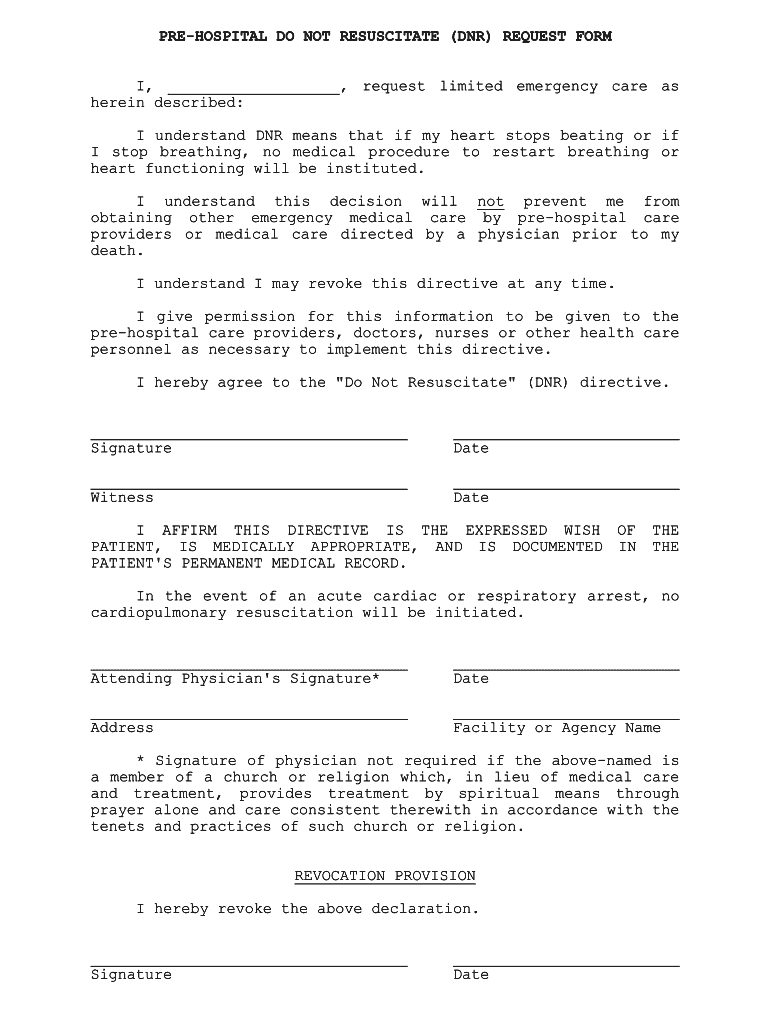







Definition and Meaning of a Pre-Hospital DNR Form
A Pre-Hospital Do Not Resuscitate (DNR) Form is a critical legal document that communicates an individual's decision to forego cardiopulmonary resuscitation (CPR) in specific medical emergencies. Often used by terminally ill patients, the form ensures that emergency medical personnel understand the patient’s desire not to receive life-sustaining interventions if their heart stops beating or they stop breathing. It signifies the patient’s informed consent to limit medical treatment and gives healthcare providers the authority to honor this directive in pre-hospital settings, such as during ambulance services or home medical emergencies.
Key Elements of the Pre-Hospital DNR Form
The Pre-Hospital DNR Form includes several essential components that must be completed accurately:
- Patient Information: Basic details such as the patient's name, address, and identification number ensure the form pertains to the correct individual.
- Consent Statement: A written agreement in which the patient, or their legal representative, confirms their understanding of the DNR directive.
- Signatures: The document requires signatures from the patient (if capable), a legal representative, two witnesses, and an attending physician.
- Date of Execution: The form must display the date when it was completed and signed to be considered valid.
- Revocation Clause: This section outlines the patient's right to revoke the DNR order at any time.
Steps to Complete the Pre-Hospital DNR Form
To ensure that the Pre-Hospital DNR Form is filled out correctly, follow these steps:
- Consult with Healthcare Providers: Discuss the decision with doctors and caregivers to understand the implications and responsibilities involved.
- Fill Out Patient Information: Provide accurate details to ensure that all emergency personnel can identify the document holder.
- Review Consent Statement: Carefully read and confirm understanding of the consent statement before signing.
- Obtain Required Signatures: Secure signatures from relevant parties, including personal physicians and witnesses, to legitimize the document.
- Distribute Copies: Once completed, distribute copies to family members, caregivers, emergency medical services, and retain a copy with personal medical records.
Legal Use of the Pre-Hospital DNR Form
In the United States, the Pre-Hospital DNR Form is legally recognized under state-specific regulations, meaning the form is enforceable across various jurisdictions with slight variations. It empowers healthcare providers to respect patient autonomy and acts as a safeguard against unwanted medical interventions that do not align with the patient’s wishes. Here's how it functions legally:
- Authorization for Medical Personnel: Gives clear instructions to emergency service providers not to perform CPR or other life-saving measures.
- Comprehensive Validity: Requires proper execution with all necessary signatures to ensure it stands up to any legal scrutiny.
- State Recognition: Aligns with state laws that guide the use and implementation of DNR orders, which may vary slightly in scope and application.
Who Typically Uses the Pre-Hospital DNR Form
The form is predominantly used by individuals with severe medical conditions or those in palliative care who wish to control the extent of medical interventions during emergencies. It includes:
- Terminally Ill Patients: Individuals with diseases like advanced cancer or end-stage organ disease.
- Elderly Individuals: Older adults who prefer to decline aggressive treatments.
- Patients with Advance Directives: Those who have existing advance directives or living wills, further establishing their medical care preferences.


How to Obtain the Pre-Hospital DNR Form
Acquiring the Pre-Hospital DNR Form can be done through several methods:
- Healthcare Facilities: Often available directly from hospitals, hospices, or nursing homes where patients receive long-term care.
- State Health Departments: Many states provide downloadable forms on their department of health websites for public access.
- Legal Advisors: Attorneys specializing in elder law or estate planning can offer guidance on obtaining and completing these forms.
State-Specific Rules for the Pre-Hospital DNR Form
Different states implement unique guidelines and regulations concerning the Pre-Hospital DNR Form. Key variations include:
- Form Design and Requirements: Some states demand specific formatting or additional documentation.
- Recognition of Out-of-State Forms: Not all states automatically recognize DNR orders from other jurisdictions.
- Permit for EMS Use: Certain states require that EMS personnel be officially informed about a patient’s DNR status through registration systems.
Digital vs. Paper Version of the Pre-Hospital DNR Form
As technology evolves, many states offer digital versions of the Pre-Hospital DNR Form, complementing traditional paper forms:
- Accessibility: Digital forms can be easily stored and accessed from electronic devices, offering convenience and rapid sharing in emergencies.
- Security: Enhanced data protection measures secure electronic forms against unauthorized access.
- Flexibility: Digital versions, supported by platforms like DocHub, incorporate tools for signing and distributing forms efficiently.
Through comprehensive execution and understanding of a Pre-Hospital DNR Form, individuals can ensure their health care preferences are respected, providing peace of mind for both the patient and their loved ones.