Definition and Meaning
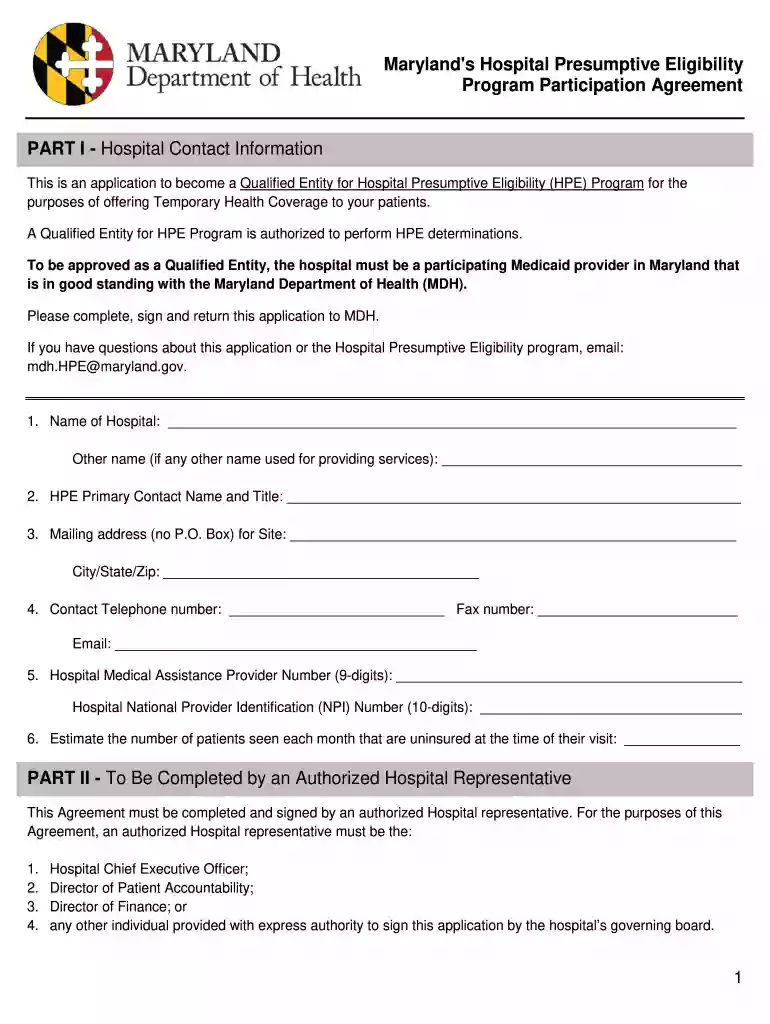
The Hospital Presumptive Eligibility Statement of - Medicaid is a document used by hospitals to temporarily enroll patients into Medicaid coverage under presumptive eligibility. This form allows hospitals to provide immediate healthcare services to uninsured individuals who meet specific income and residency criteria without waiting for the full Medicaid application process to be completed. The goal is to ensure that eligible patients receive necessary medical care promptly while their full Medicaid application is being processed.
Key Elements of the Form
- Patient Information: Includes details like name, address, and date of birth.
- Residency Verification: Confirms that the patient resides in the state where they are applying for presumptive eligibility.
- Income Assessment: Evaluates the patient's income level to establish if they qualify for temporary Medicaid coverage.
- Household Composition: Details regarding the patient's family size and dependents, which affect income thresholds and eligibility.
- Authorized Hospital Staff: Lists the hospital personnel certified to make presumptive eligibility determinations.
How to Obtain the Hospital Presumptive Eligibility Statement of - Medicaid
Hospitals must apply to become Qualified Entities (QEs) with the authority to issue presumptive eligibility statements. This involves:
- Application Submission: The hospital submits an application to the relevant state Medicaid agency.
- Training: Staff undergo training to properly assess and determine eligibility.
- Certification: Hospitals receive certification allowing them to use the form.
Hospitals can typically obtain the form directly from state Medicaid offices or their digital platforms once they are approved as QEs.
Steps to Complete the Hospital Presumptive Eligibility Statement of - Medicaid
- Gather Patient Information: Collect accurate personal details and residency documentation.
- Conduct Income Analysis: Review income proofs such as pay stubs or tax returns.
- Verify Household Size: Clarify the number of individuals relying on the patient's income.
- Complete the Form: Fill in all required sections, ensuring accuracy and clarity.
- Hospital Staff Declaration: Certified staff must sign the form to validate the eligibility decision.
- Patient Acknowledgement: Have the patient sign to acknowledge understanding and receipt of services.
Examples of Using the Form
- Emergency Services: A patient arrives at the emergency department without insurance. The hospital uses the form to grant temporary coverage for urgent treatment.
- Maternity Care: An uninsured pregnant woman receives prenatal care after being approved via the form.
- Pediatric Services: A child is provided immediate health services pending full Medicaid approval.
Important Terms Related to the Hospital Presumptive Eligibility Statement of - Medicaid
- Presumptive Eligibility (PE): A temporary Medicaid status granted to individuals who seem to meet eligibility criteria.
- Qualified Entity (QE): Hospitals authorized to grant temporary Medicaid through presumptive eligibility.
- Medicaid Eligibility Criteria: Guidelines dictating who can receive Medicaid, including income levels and residency.
- Authorized Representative: Hospital personnel responsible for making presumptive eligibility determinations.
State-specific Rules for the Hospital Presumptive Eligibility Statement of - Medicaid
Each state may have unique requirements and procedures for using the presumptive eligibility form. For instance:
- Specific Income Thresholds: Vary by state and affect eligibility.
- Documentation Requirements: States may differ in the types of documentation required to prove eligibility.
- Additional Training Requirements: Some states might require hospital staff to undergo supplementary training.
Legal Use of the Hospital Presumptive Eligibility Statement of - Medicaid
Hospitals must strictly adhere to state and federal Medicaid laws when utilizing this form. Legal requirements include:
- Compliance with Privacy Laws: Hospitals must protect patient information in alignment with HIPAA guidelines.
- Accurate Reporting: Ensure that all information is precise to avoid legal repercussions.
- State Regulations: Follow specific state regulations related to timing, documentation, and eligibility assessment.
Penalties for Non-Compliance
Improper use of the Hospital Presumptive Eligibility Statement of - Medicaid can lead to:
- Fines and Sanctions: Hospitals can be fined for failing to comply with Medicaid regulations.
- Loss of Certification: Revocation of QE status if hospitals do not adhere to protocols.
- Legal Action: Potential lawsuits from patients or government entities for incorrect eligibility assessment or misuse.
Digital vs. Paper Version
Hospitals can choose between using digital or paper forms based on their infrastructure and capabilities:
- Digital Version: Allows for easier processing, storage, and retrieval of forms. Integration with hospital information systems is possible.
- Paper Version: Useful in facilities with limited access to digital resources or in situations where paper documentation is preferred for legal reasons.
Software Compatibility
- Integration with Existing Systems: Many hospitals may use software like TurboTax or QuickBooks for financial assessments, which can aid in verifying income criteria.
- Compatibility with Medical Record Systems: Ensure the digital form can be integrated with existing electronic health record (EHR) systems for seamless processing.
Through these sections, one can mediate the complexities and streamline the processes associated with the Hospital Presumptive Eligibility Statement of - Medicaid in a hospital setting for a comprehensive understanding.