






Definition and Purpose of Driver Safety Branch Offices
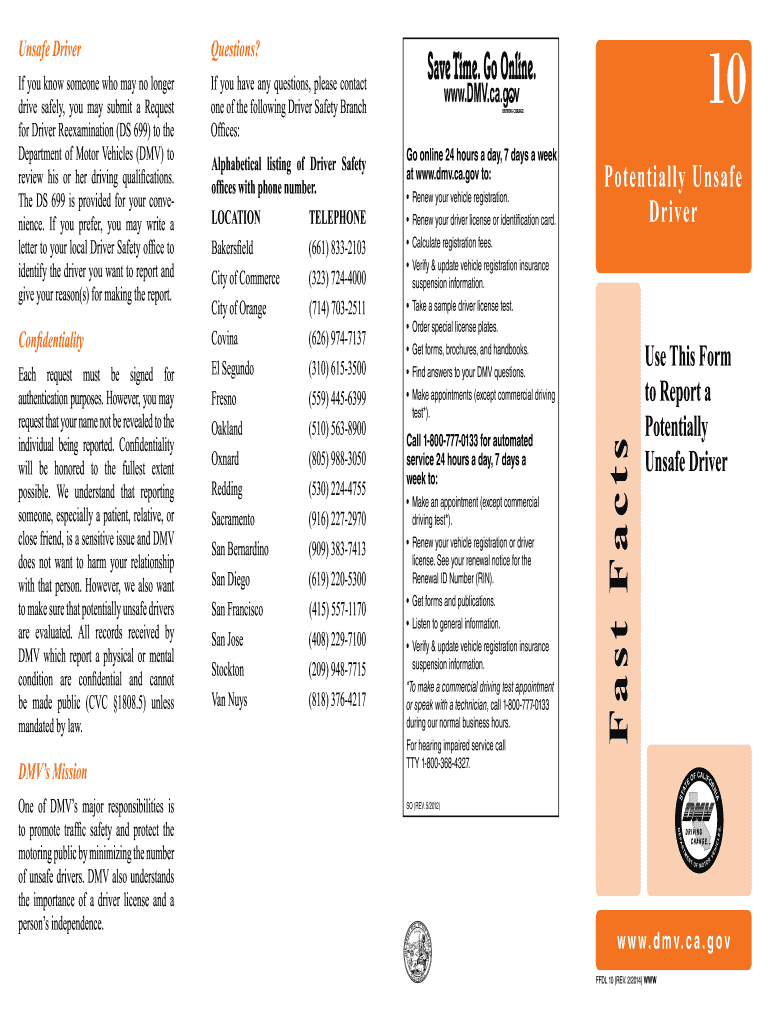
Driver Safety Branch Offices in California play a critical role in maintaining road safety by handling reexaminations of drivers who have been reported as potentially unsafe. These offices assess the ability of drivers to safely operate a vehicle, ensuring the safety of the public and the drivers themselves. A reexamination may include written tests, vision exams, driving tests, or interviews depending on the specific concerns raised. The offices provide resources and guidance to help drivers understand the reexamination process.
Steps to Complete the Reexamination Request
-
Identify the Concerns: Clearly document the unsafe driving behaviors observed. This information will be pivotal during the reexamination process.
-
Submit a DS 699 Form: The Request for Driver Reexamination (DS 699) form must be completed with accurate details about the driver in question.
-
Provide Supplementary Evidence: Attach any relevant evidence, such as photographs, eyewitness accounts, or medical evaluations, that support the claim of unsafe driving.
-
Await Notification: After submission, the Driver Safety Branch Office will review the request and notify the driver in question about the requirement for a reexamination.
Importance of Contacting Driver Safety Branch Offices
Contacting the Driver Safety Branch Offices is essential for individuals who need to report potentially unsafe drivers. This step ensures that the issue is formally addressed and allows the proper authorities to investigate and take necessary actions. It also provides an opportunity to ask questions about the process and gain clarity on what to expect, reducing anxiety and uncertainty for the reporting party.
Who Typically Uses the Driver Reexamination Process
-
Family Members: Concerned relatives may initiate a reexamination if they observe potentially dangerous driving habits in aging or medically impaired family members.
-
Healthcare Professionals: Doctors who notice medical conditions affecting a patient's ability to drive safely can report these observations to initiate a reexamination.
-
Law Enforcement Officers: Officers can request a reexamination if they believe a driver's conduct during traffic stops indicates impaired or unsafe driving.

Legal Framework and Confidentiality
The legal framework governing driver reexaminations ensures confidentiality for the reporting party to encourage honest and undiscriminating reporting. Under Californian law, personally identifiable information about the person reporting a potentially unsafe driver is protected, and the driver in question is not informed of the report's source. This confidentiality is key to ensuring public cooperation with safety initiatives.
Key Elements of the DS 699 Form
- Driver Information: Includes the name, address, driver's license number, and specifics related to the report.
- Reporter Information: While details about the reporter are collected, confidentiality is maintained throughout the process.
- Observation Details: This section allows the reporter to provide a detailed account of the unsafe driving behaviors observed, which is critical for the evaluation process.
State-Specific Rules for Driver Reexaminations
California mandates specific guidelines for driver reexaminations, reflecting the state's commitment to road safety. Rules include the criteria for reporting and reexamination triggers, new regulations for senior drivers, and the acceptance of medical evaluations to assess fitness to drive. These guidelines ensure a uniform approach to managing potentially unsafe drivers.
Examples of Driver Reexamination Scenarios
Consider a scenario where a family doctor reports a patient who exhibits signs of dementia, resulting in impaired driving judgment. A reexamination will focus on cognitive assessments alongside traditional driving tests. In another case, a traffic officer may report erratic driving behavior linked to possible substance abuse, initiating a process that includes drug testing as part of the reexamination.
Penalties for Non-Compliance
Drivers who fail to comply with reexamination requests may face penalties such as suspension of their driving privileges. The aim is to enforce compliance and encourage participation in the reexamination process to ensure public safety. Non-compliance can also result in legal actions and further interventions by law enforcement to prevent potentially hazardous driving incidents.
Digital vs. Paper Submission Methods
Both digital and paper submissions are accepted for initiating a driver reexamination. Online submissions can expedite the process by reducing mail handling times and allowing for electronic confirmation of receipt. Paper submissions remain available for those preferring traditional methods or lacking digital access. Both options ensure accessibility and convenience for reporters.