






Definition and Meaning
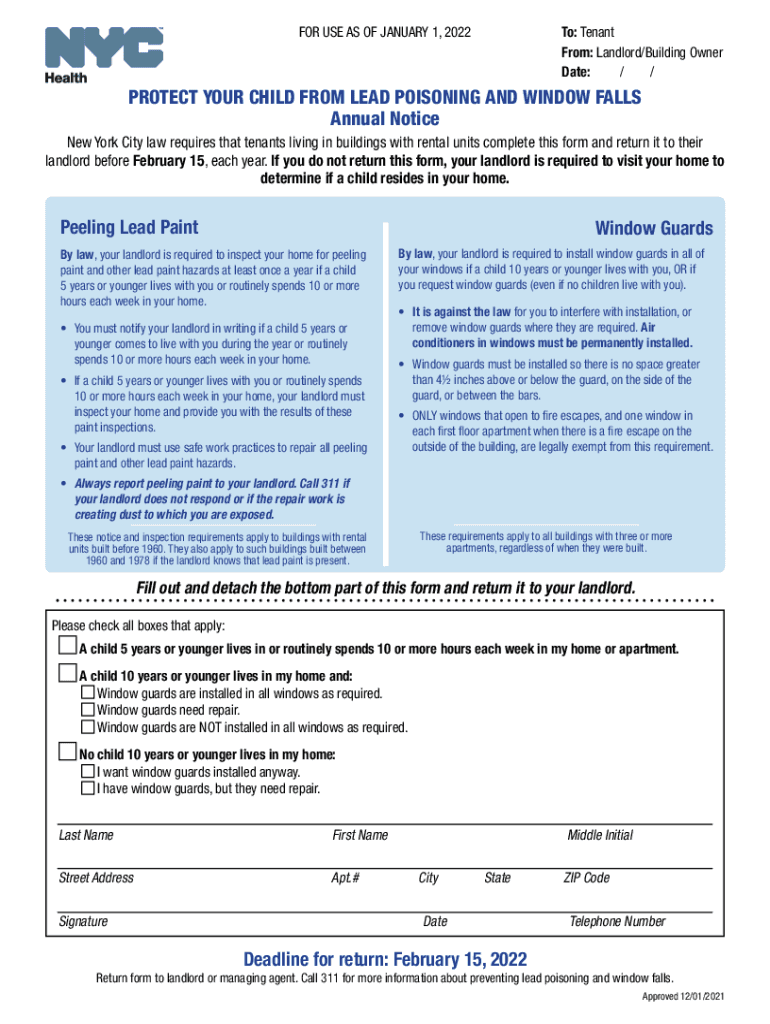
The "Protect Your Child From Lead Poisoning and Window Falls" form is a critical document employed predominantly by landlords to verify and manage health and safety measures in residences with children. Its core purpose is to ensure compliance with local regulations, primarily by identifying and mitigating hazards related to lead poisoning and potential window falls. This proactive approach is vital because young children are particularly susceptible to lead poisoning, which can lead to severe developmental issues, and window falls, which pose serious injury risks.
Key Terminologies
- Lead Poisoning: A medical condition caused by lead accumulation in the body, often due to exposure to lead-based paint.
- Window Guards: Safety devices installed on windows to prevent falls, especially in homes with young children.
Steps to Complete the Form
Completing the "Protect Your Child From Lead Poisoning and Window Falls" form involves several meticulous steps aimed at ensuring thorough documentation.
-
Identification Information: Begin by providing necessary identification details, such as the tenant’s full name, address, and contact information.
-
Presence of Children: Indicate whether children under five reside or frequently visit the residence.
-
Lead Inspection Status: Confirm if an inspection for lead hazards has been conducted in the past year and detail any findings or remediation efforts made.
-
Window Guard Request: Specify the need for window guards, particularly if children under ten are present.
-
Maintenance Requests: List any repairs required to address potential lead hazards or to install window guards.
-
Sign and Date: Finalize the form by signing and dating it, acknowledging the accuracy of the provided information.
Why You Should Protect Your Child
Protecting your child from environmental hazards such as lead and potential window falls is crucial for several reasons. Early exposure to lead can profoundly impact a child's cognitive and physical development, resulting in long-term health challenges. Window falls, meanwhile, are preventable accidents that can cause severe injuries.
Taking active measures to address these issues not only safeguards children’s well-being but also complies with local laws and regulations that mandate such precautions for enhanced safety in multi-story apartments and buildings.
Who Typically Uses the Form
The form is typically used by:
-
Landlords: To ensure their properties comply with legal safety requirements and to proactively manage tenant's safety needs.
-
Tenants: To request necessary safety equipment and report potential lead hazards in their homes.
-
Property Managers: To oversee and implement safety measures and ensure adherence to local housing regulations.


Legal Use of the Form
The "Protect Your Child From Lead Poisoning and Window Falls" form serves a dual legal purpose. Firstly, it acts as a declaration that landlords are taking necessary steps to identify and mitigate hazards that could harm young children. Secondly, it fulfills the legal obligation to inform tenants of their rights and responsibilities regarding child safety in rented accommodation.
Properly filling out and submitting this form is essential to maintain compliance with local regulations, thereby avoiding potential legal disputes or fines.
State-Specific Rules
State regulations regarding lead poisoning prevention and window safety can vary. In New York City, for instance, landlords must inspect units annually for lead if children under six reside there and are also required to install window guards if children under ten live in the apartment.
Examples of State Regulations
- California: Has stringent regulations regarding lead-based paint abatement.
- Massachusetts: Requires specific certifications for landlords who address lead paint hazards.
Key Elements of the Form
Several key elements need to be addressed within the form, which include:
- Inspection Results: Details on previous inspections and their outcomes.
- Safety Measures Implemented: Specific actions taken to address any identified hazards, including repairs and installations.
- Verification of Compliance: Documentation proving that all legal obligations have been met by the landlord.
Important Terms Related to the Form
Understanding certain terms is essential for effectively navigating this form:
- Remediation: The process of removing lead-based paint hazards from a dwelling.
- Certified Inspector: A professional authorized to perform lead hazard assessments and provide certifications for remediation efforts.
Penalties for Non-Compliance
Failing to adhere to the regulations outlined in the "Protect Your Child From Lead Poisoning and Window Falls" form can lead to significant penalties.
- Fines: Monetary fines that may be imposed on landlords for failing to comply with state or local regulations.
- Legal Action: Potential lawsuits from tenants if inadequate safety measures result in harm to a child.
- Revocation of Licenses: Repeated failure to comply can result in landlords losing their licenses to rent properties.