






Definition & Meaning
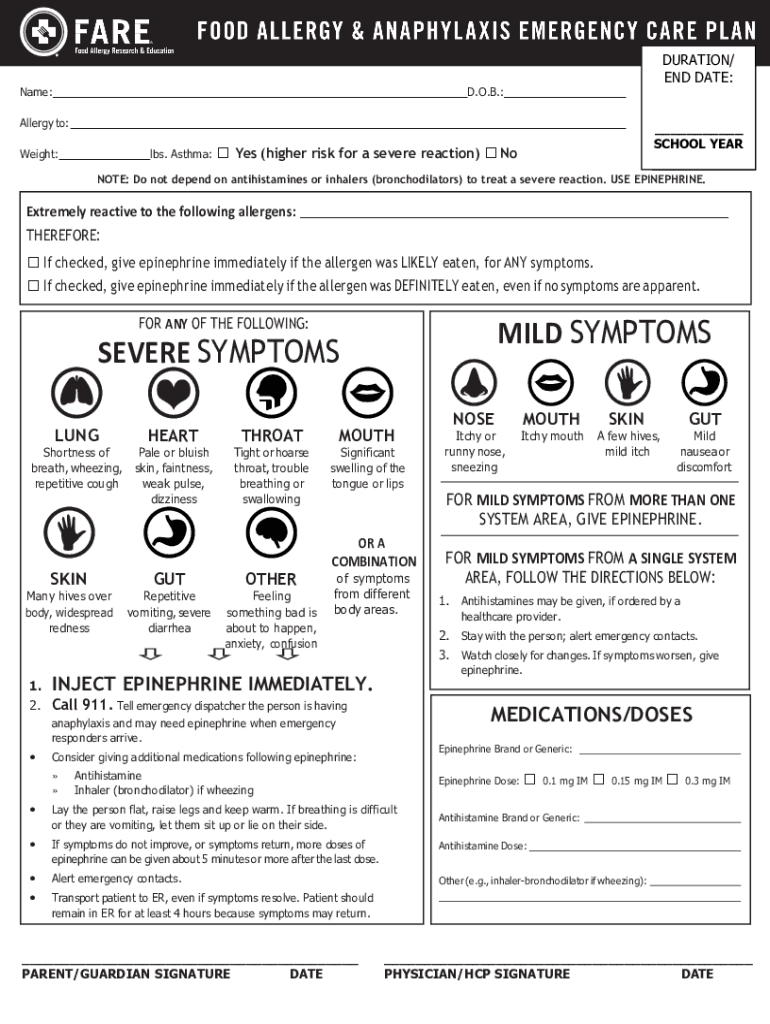
The "Food Allergy and Anaphylaxis Emergency Care Plan - IN" is a crucial document designed to inform and guide schools on how to manage a child's potential food allergy and anaphylactic reactions during school hours. It outlines the necessary steps to effectively respond to an emergency involving allergic reactions, particularly anaphylaxis, which is a severe, life-threatening allergic reaction that requires immediate attention. The form serves as a directive for school personnel, detailing the symptoms of both mild and severe reactions and providing specific instructions for administering life-saving medications.
Key Components
- Symptoms Identification: Lists signs of mild symptoms like itching or hives and severe symptoms such as difficulty breathing or loss of consciousness.
- Emergency Instructions: Provides detailed actions to be taken, such as administering epinephrine.
- Responsibility Delegation: Assigns roles to school staff, including the nurse and principal, for handling emergencies.
Key Elements of the Food Allergy and Anaphylaxis Emergency Care Plan - IN
A comprehensive plan of this type includes several critical elements that ensure the safe management of food allergies within schools. Each component is essential for effective response and prevention.
Core Features
- Parental Consent: The form must be signed by parents or guardians to authorize trained school staff to administer medication.
- School Personnel Training: Specifies that staff, particularly those in contact with the child, should be trained in recognizing and responding to allergic reactions.
- Medication Authorization: Outlines requirements for storing and administering medications such as epinephrine auto-injectors.
Why Should You Use the Food Allergy and Anaphylaxis Emergency Care Plan - IN
Implementing this emergency care plan is essential for educational institutions due to several reasons, all centered around child safety and legal compliance.
Benefits
- Safety Assurance: Helps ensure a quick and effective response, minimizing the risk of severe outcomes during an allergic event.
- Legal Compliance: Meets state-specific mandates for managing school health emergencies.
- Peace of Mind: Provides reassurance to parents that their child’s needs are addressed and managed appropriately within the school environment.
Steps to Complete the Food Allergy and Anaphylaxis Emergency Care Plan - IN
Filling out this form correctly is crucial to ensure its effectiveness. Follow these steps to complete it:
- Gather Personal Information: Include the student’s full name, age, and identifying details.
- Detail Allergy Information: Specify known allergens and past reactions.
- Complete Medication Details: List medications, including dosage and administration instructions.
- Parental/Guardian Signature: Must be signed and dated by a parent or guardian.
- School Staff Acknowledgment: Obtain signatures from the school principal and nurse to confirm receipt and understanding of the plan.
Who Typically Uses the Food Allergy and Anaphylaxis Emergency Care Plan - IN
This form is predominantly used by schools but is relevant for various stakeholders involved in student health.


User Profiles
- Parents/Guardians: Responsible for initiating the plan for their child's safety.
- School Administrators: Includes principals and health personnel who enforce and follow the protocol.
- Teachers and Support Staff: Carry out the measures outlined in the event of an allergic reaction.
Legal Use of the Food Allergy and Anaphylaxis Emergency Care Plan - IN
Understanding the legal implications associated with the use of this document is critical for compliance and effective implementation.
Legal Aspects
- Document Authorization: Legally permits anyone designated within the form to administer emergency medications.
- Liability Management: Protects school staff by documenting compliance with state laws regarding allergy management.
- Privacy Considerations: Ensures compliance with data protection laws by safeguarding medical information.
State-Specific Rules for the Food Allergy and Anaphylaxis Emergency Care Plan - IN
Each state may have varying requirements regarding allergy management in schools.
Indiana-Specific Guidelines
- Mandatory Training: In Indiana, laws may require specific training programs for school staff handling emergency situations.
- Form Adaptation: Indiana may have unique stipulations about how the form is to be completed or filed.
Examples of Using the Food Allergy and Anaphylaxis Emergency Care Plan - IN
Practical scenarios provide insight into how these plans unfold in real settings.
Real-World Applications
- Elementary School Scenario: A child experiences symptoms, prompting immediate action according to the care plan, thereby preventing a severe reaction.
- Field Trip Protocol: Schools use the plan to outline specific guidelines and designate personnel responsible for carrying medications and monitoring the student during off-campus activities.