Definition and Meaning of Cognitive Ability Assessment
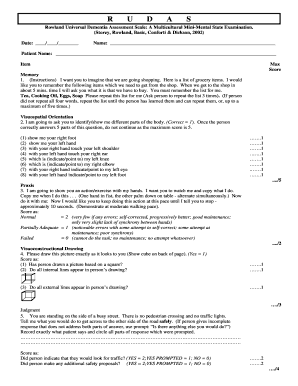
A Cognitive Ability Assessment is a tool used to measure a person's intellectual capabilities, focusing on various cognitive skills such as memory, attention, and problem-solving. This form is designed to evaluate how well individuals process information, understand complex ideas, and learn from experience. Cognitive assessments are often employed in educational settings, workplaces, and clinical evaluations to predict performance and identify areas where a person might need additional support.
How to Use the Cognitive Ability Assessment
Using a Cognitive Ability Assessment involves administering a series of questions and tasks designed to gauge different cognitive functions. Follow these steps to effectively administer the assessment:
-
Select the Appropriate Assessment Tool: Choose a cognitive assessment that aligns with the specific abilities you wish to measure, such as memory or problem-solving skills.
-
Administer the Test: Provide clear instructions to the individual taking the test. Ensure that they understand each task and question.
-
Monitor the Test-Taking Process: Observe the individual during the assessment to ensure that they are focused and understand the tasks.
-
Score the Assessment: Utilize the scoring guidelines provided with the assessment tool to accurately evaluate the individual's cognitive abilities.
-
Interpret the Results: Analyze the scores to determine the individual's strengths and weaknesses in various cognitive areas.
-
Share Feedback: Discuss the results with the individual and provide recommendations for improvement or further evaluation if necessary.
Steps to Complete the Cognitive Ability Assessment
Completing a Cognitive Ability Assessment involves a structured approach to maximize accuracy and relevance. Here's a step-by-step guide:
-
Understand the Assessment Objective: Determine what cognitive abilities need to be measured and why.
-
Prepare the Environment: Ensure a quiet and non-distracting environment for the individual taking the assessment.
-
Provide Instructions: Clearly explain the process and expectations to the individual.
-
Conduct the Assessment: Administer the test, ensuring the person understands each task.
-
Collect and Score Responses: Gather the completed assessments and follow the given scoring rubric to evaluate responses.
-
Evaluate Results: Review and compare the scores against established benchmarks to assess cognitive capabilities.
-
Feedback Session: Arrange a meeting to discuss the outcomes with the individual, explaining their strengths and areas needing improvement.
Key Elements of the Cognitive Ability Assessment
Several key elements are integral to a Cognitive Ability Assessment, ensuring comprehensive analysis:
-
Memory Tasks: Evaluate the ability to recall information after short and long intervals.
-
Attention Tests: Assess focus and the capacity to concentrate on specific tasks.
-
Problem-Solving Exercises: Determine how individuals approach and resolve complex challenges.
-
Spatial Reasoning: Examine the understanding of visual and spatial relationships.
-
Verbal Skills: Measure vocabulary, comprehension, and language processing ability.
Each element gathers critical data on cognitive functions, providing a holistic view of an individual's intellectual capability.
Important Terms Related to Cognitive Ability Assessment
Understanding the terminology used in Cognitive Ability Assessments aids in proper implementation and interpretation:
-
Cognitive Function: Refers to the mental processes involved in gaining knowledge and comprehension.
-
Intellectual Capacity: The potential of an individual to learn and process information.
-
Benchmark Scores: Standardized scores used for comparison to evaluate cognitive performance.
-
Neuropsychological Testing: Standardized procedures to measure brain-behavior relationships.
-
Adaptive Reasoning: The ability to think logically and solve novel problems.
These terms provide a foundational understanding of the assessment's purpose and methodology.
Who Typically Uses the Cognitive Ability Assessment
Various stakeholders utilize Cognitive Ability Assessments to achieve different objectives:
-
Educational Institutions: Schools and colleges use these assessments to design personalized learning strategies for students.
-
Employers: Companies assess prospective employees' cognitive abilities to ensure appropriate role fit and potential for success.
-
Clinical Psychologists: These assessments help diagnose cognitive impairments and plan necessary interventions.
-
Researchers: Academicians employ cognitive tests to study the effects of various factors on intellectual functioning.
Each user group focuses on distinct aspects of cognitive ability to meet their specific needs and objectives.


Legal Use of the Cognitive Ability Assessment
Using Cognitive Ability Assessments legally requires awareness of regulations and ethical guidelines:
-
Compliance with Privacy Laws: Ensure adherence to laws such as HIPAA when handling sensitive data.
-
Informed Consent: Obtain permission from participants after explaining the purpose and scope of the assessment.
-
Non-Discrimination: Use assessments that are free from cultural or linguistic bias.
-
Accurate Representation: Present results in a manner that accurately reflects an individual's abilities without exaggeration or understatement.
Observing these legal considerations helps maintain trust and validity in the assessment process.
Examples of Using the Cognitive Ability Assessment
Several scenarios demonstrate the application of Cognitive Ability Assessments:
-
Educational Support: Identifying students who need extra help or advanced programs based on their cognitive strengths.
-
Workplace Productivity: Assessing employee cognitive skills to optimize task allocation and development plans.
-
Clinical Evaluation: Diagnosing cognitive deficits in patients with neurological disorders.
-
Research Studies: Examining the impact of new teaching methods or therapies on cognitive development.
These examples illustrate how assessments facilitate tailored interventions and informed decision-making across various settings.