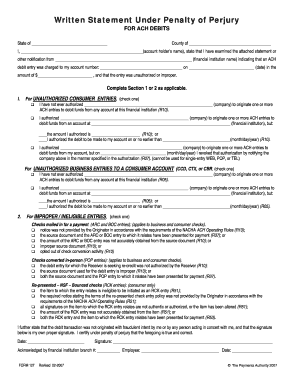
01. Edit your form online
Type text, add images, blackout confidential details, add comments, highlights and more.

Type text, add images, blackout confidential details, add comments, highlights and more.

Draw your signature, type it, upload its image, or use your mobile device as a signature pad.

Send it via email, link, or fax. You can also download it, export it or print it out.
A Settlement Statement US Department of Housing and Urban Development, commonly referred to as the HUD-1 Settlement Statement, is a comprehensive document used in the United States real estate transactions that involve federal housing agencies. It details the financial breakdown of a real estate transaction, including all costs and fees for both buyers and sellers. The document is crucial for ensuring transparency and fairness in real estate settlements by itemizing charges such as loan fees, escrow charges, and commissions. It provides a clear account of credits and debits for both parties involved, ensuring that every expense is tracked and justified before the closing of the property deal.
Completing the HUD-1 Settlement Statement involves multiple steps that require knowledge of real estate transactions and financial details. Here's a concise outline on how to accurately complete it:
Understanding the critical elements of the HUD-1 form is essential for accurate completion:
The HUD-1 Settlement Statement is a legally binding document that ensures all parties involved in the property closing are aware of the financial obligations and entitlements. It is governed by the Real Estate Settlement Procedures Act (RESPA), which mandates full disclosure of any expenses related to real estate transactions involving residential properties. This transparency helps prevent fraud and misrepresentation. It is a critical document for legal compliance in property transactions and serves as a retrospective reference in case disputes over payments arise.
Familiarity with specific legal and financial terminology can significantly aid comprehension of the HUD-1:
While the HUD-1 Settlement Statement follows federal guidelines, each state may have specific requirements or additional disclosures. States such as California and New York require particular clauses addressing state taxes or additional interventions specific to local laws. It is essential for both parties involved to consult with a knowledgeable real estate attorney experienced with state legislation to ensure full compliance with state-specific rules.
The timing of the completion and exchange of the HUD-1 Settlement Statement is critical. Typically, the form must be provided to both purchasers and sellers at least one day prior to the closing of the transaction. This allows time for verification and any necessary adjustments before the actual settlement. Understanding these deadlines is crucial in avoiding delays in closing, which can lead to further penalties.
While traditionally completed in person, technological advancements now allow for digital completion and submission of HUD-1 forms. Many real estate agencies and lawyers use specialized software to manage these documents electronically. However, in-person submissions remain an option for parties preferring traditional paper methods or those without access to digital platforms. The choice between digital and paper methods often depends on convenience, security, and preference for the parties involved.
At DocHub, your data security is our priority. We follow HIPAA, SOC2, GDPR, and other standards, so you can work on your documents with confidence.