Definition & Meaning
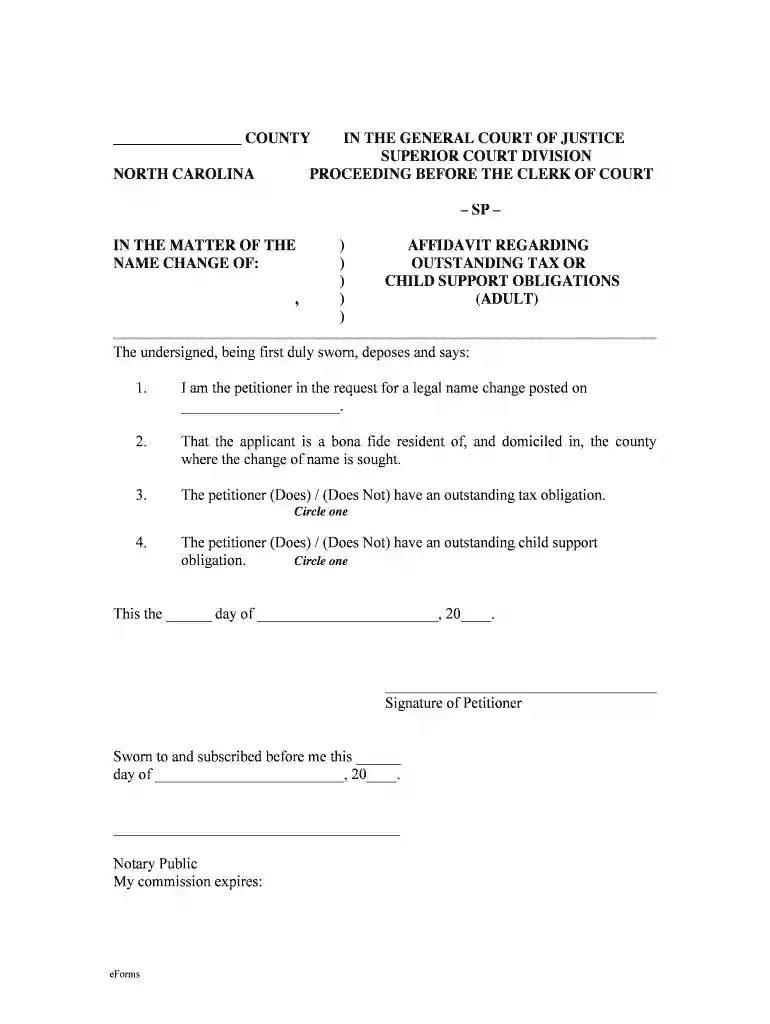
An "Affidavit Regarding Outstanding Tax or Child Support Obligations" is a sworn statement by an individual declaring any tax or child support dues. Predominantly used in legal proceedings, it serves to inform relevant parties about existing obligations that may impact financial or legal outcomes. It's crucial in various scenarios, including legal name changes or other official processes where past obligations might affect decision-making.
Affidavits are commonly used in the United States as a formal declaration, ensuring honesty under penalty of perjury. This specific affidavit is instrumental in legal settings, aiding transparency regarding financial obligations, thus supporting informed decisions in related legal or administrative matters.
Key Elements of the Affidavit
The affidavit comprises several essential components necessary for it to be considered valid:
- Declarant's Information: Includes the full name, address, and contact details of the person making the declaration.
- Statement of Obligations: A detailed account of outstanding tax or child support owed, if any.
- Certification: A sworn confirmation that the information provided is true and accurate to the best of the declarant's knowledge.
- Date and Signature: The affidavit must be dated and signed by the declarant in the presence of a notary public to ensure its legal standing.
- Notarial Section: Sealed and signed by a notary, affirming that the affidavit was sworn and executed in their presence.
This precise structure ensures the affidavit reliably conveys the status of any obligations, supporting legal and financial transparency.
How to Use the Affidavit
Proper usage of this affidavit involves comprehending the document's components and its legal implications:
- Preparation: Gather relevant financial information concerning outstanding taxes or child support obligations.
- Drafting: Carefully fill out the affidavit, ensuring all sections are completed with accurate and honest details.
- Notarization: Visit a notary public who will witness and certify the affidavit, giving it legal validity.
- Submission: File the completed affidavit with the relevant authority, such as a court or government agency, as part of your legal or administrative proceedings.
The affidavit acts as a pivotal piece of documentation in legal areas where declaring fiscal responsibilities is pertinent.
Steps to Complete the Affidavit
To properly complete the affidavit, follow these detailed steps:
- Review Requirements: Understand the specific details needed, such as legal requirements or state-specific mandates, affecting the affidavit's completion.
- Collect Documentation: Gather documents that detail current tax or child support obligations, verifying accuracy before inclusion.
- Fill Out the Form: Enter accurate data in the designated fields, ensuring clarity and correctness in all parts of the affidavit.
- Visit a Notary: Have your affidavit notarized, which involves signing it before a licensed notary public who will authenticate it.
- Submit the Affidavit: File the notarized affidavit with the required entity, ensuring compliance with any procedural rules or deadlines.
These steps ensure the affidavit is both legally compliant and effectively communicates necessary financial disclosures.
Legal Use of the Affidavit
Legally, the affidavit serves several purposes within the U.S. judicial and administrative systems:
- Transparency: Provides a transparent account of an individual's financial obligations, crucial during legal proceedings or administrative processes.
- Accountability: By swearing under oath, the declarant is held accountable for the affidavit's accuracy, compelling transparency and honesty.
- Record-Keeping: Serves as an official record that can be referenced during legal disputes, hearings, or future proceedings.
The affidavit's legal function relies on its integrity, offering a binding declaration of outstanding obligations.
Who Typically Uses the Affidavit
This affidavit is primarily utilized by individuals in the following contexts:
- Legal Name Change Applicants: Required during name changes to disclose obligations potentially affecting court decisions.
- Divorcing Parties: Used in divorce proceedings to declare any outstanding support obligations impacting settlements.
- Estate Executors: To certify unpaid obligations of a deceased party, facilitating fair asset distribution among heirs.
- Registrant for Government Benefits: Necessary for those applying for government assistance where financial accountability is essential.
The usage spectrum reflects its essential role where financial disclosures critically impact decisions.

Important Terms Related to the Affidavit
Understanding key terms ensures accurate comprehension and usage of the affidavit:
- Affidavit: A written statement confirmed by oath, used as evidence in judicial proceedings.
- Declarant: The individual making and signing the affidavit.
- Obligations: Refers to any outstanding financial duties, primarily focusing on tax or child support.
- Notarization: Certification by a notary public, authenticating the affidavit's execution.
Grasping these terms clarifies the document's function and how it fits into legal processes.
State-Specific Rules for the Affidavit
Certain states may have unique requirements regarding the affidavit's usage and filing:
- Variations in Notarization: Some states might have specific certifications beyond standard notarization, impacting the affidavit's acceptance.
- Different disclosures: Varying state laws might dictate different levels of disclosure, affecting what must be included regarding obligations.
- Format Adjustments: Specific states could require their own forms or templates, necessitating modification from a generic version.
It's crucial to understand these state-specific differences to ensure compliance and avoid potential legal challenges.