






Definition and Meaning of Vermont DNR/COLST Form
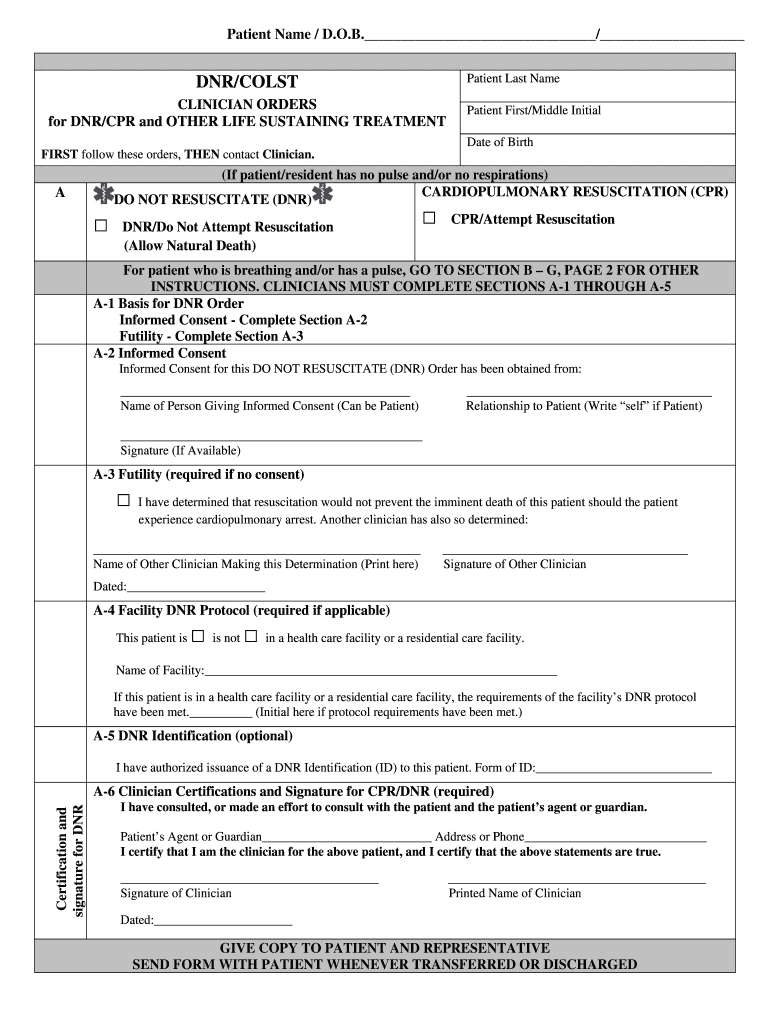
The Vermont Do Not Resuscitate (DNR) and Clinician Orders for Life Sustaining Treatment (COLST) forms are crucial legal documents used by clinicians to outline a patient's preferences regarding resuscitation and other life-sustaining treatments. The DNR order specifically addresses situations involving cardiopulmonary arrest, directing healthcare professionals not to perform CPR. In contrast, the COLST form provides comprehensive instructions for treatment preferences under various medical conditions. Both forms ensure that a patient's medical wishes are honored, promoting patient autonomy and informed consent.
Key Elements of the Vermont DNR/COLST Form
Understanding the key components of the DNR and COLST forms is vital for accurate completion. These forms typically include:
- Patient Identification: Full name, date of birth, and other identifying information to ensure clarity.
- Medical Orders: Specific instructions regarding the provision or withholding of interventions like CPR or mechanical ventilation.
- Clinician Information: Details of the healthcare provider completing the form, including name, signature, and contact details.
- Consent Documentation: Evidence of the patient’s informed consent, or documentation of medical futility in the absence of consent.
- Legal Validity: Information about the legal recognition of photocopies or faxes of the forms.
Steps to Complete the Vermont DNR/COLST Form
- Gather Patient Information: Ensure all identifying details are accurate.
- Discuss Treatment Preferences: Engage with the patient or the patient's representative about their medical care wishes.
- Document the Orders: Clearly write the medical treatments that should or should not be administered.
- Obtain Necessary Signatures: Secure signatures from the clinician and the patient or legal representative.
- Review and Store the Form: Make sure all sections are filled out correctly and store the form where it can be easily accessed by healthcare providers during emergencies.
Importance of the Vermont DNR/COLST Form
The DNR and COLST forms are indispensable for respecting patient decisions about life-sustaining treatments. They serve several key purposes:
- Patient Autonomy: Ensures patients have control over their healthcare decisions.
- Legal Protection: Provides legal backing for healthcare providers following the documented wishes.
- Medical Clarity: Reduces ambiguity in emergency medical situations, guiding potentially life-saving interventions.
Legal Use of the Vermont DNR/COLST Form
These forms carry legal weight and must be appropriately completed and stored to be effective in guiding patient care. Photocopies and facsimiles hold the same validity as the original, which promotes easier dissemination among healthcare teams. Regular reviews should be conducted to ensure the forms reflect the current wishes of the patient.
Who Typically Uses the Vermont DNR/COLST Form
- Clinicians and Healthcare Teams: Ensure patient wishes are respected and followed.
- Patients and Families: Use these forms to clearly communicate healthcare preferences.
- Legal Representatives and Advocacy Groups: Assist patients in understanding and completing these forms, ensuring they are legally compliant.


State-Specific Rules for the Vermont DNR/COLST Form
Vermont law mandates specific regulations regarding the use and execution of DNR and COLST forms:
- Periodical Review: It is advised to periodically review and update the forms to reflect any changes in patient preferences.
- State Recognition: The forms are recognized across healthcare settings in Vermont.
- Mandatory Elements: Certain fields and signatures are essential for the forms to be legally binding.
Examples of Using the Vermont DNR/COLST Form
Consider a scenario where a patient with a terminal illness wishes to forgo CPR or other invasive procedures in the event of their heart stopping. By having a DNR order documented and accessible, healthcare professionals are legally permitted to withhold these interventions, honoring the patient’s end-of-life wishes. Similarly, a COLST form may outline a preference for comfort care measures without aggressive interventions, facilitating a peaceful transition aligned with the patient’s values.