






Definition & Meaning
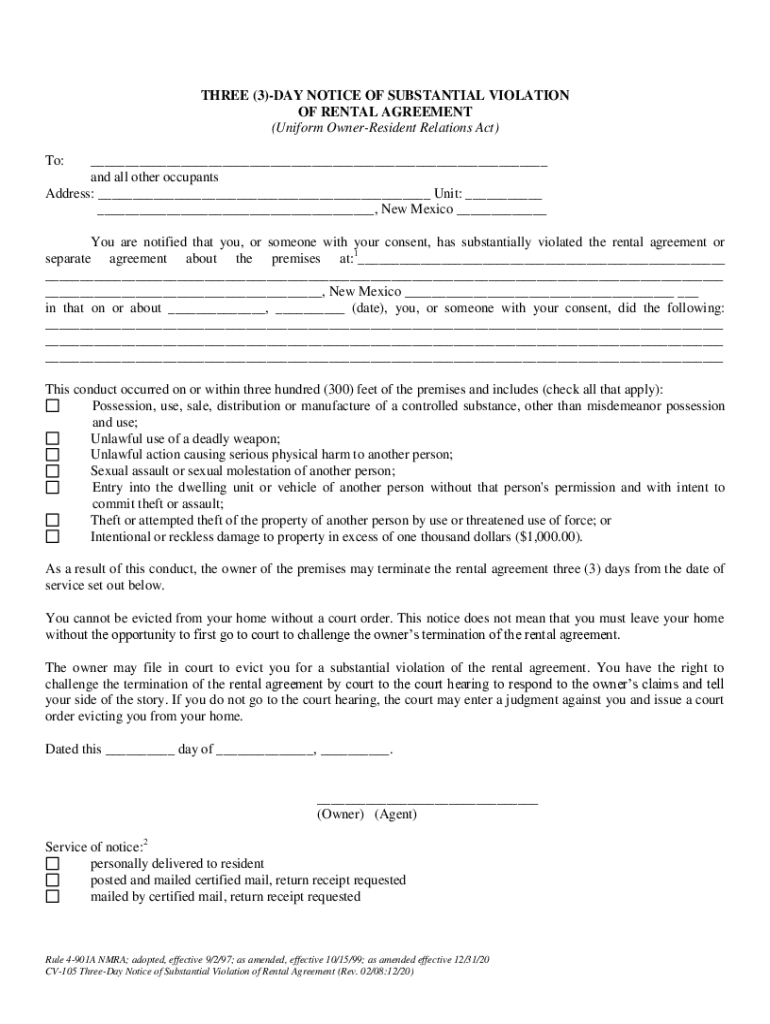
The "Section 47-8-33: Breach of Agreement by Resident" is part of the Uniform Owner-Resident Relations Act, which outlines the rights and responsibilities of tenants and landlords in the context of a residential lease agreement. This section specifically deals with instances where a tenant fails to adhere to the terms of their lease agreement, which could include non-payment of rent, damage to the property, or engaging in illegal activities on the premises.
- Lease Violations: Common breaches include overdue rent, unauthorized subletting, and property damage.
- Legal Framework: Provides a structured process for addressing and resolving tenant violations.
- Tenant Rights: Ensures tenants can contest alleged breaches in a court of law.
Key Elements of the Section 47-8-33
This legal provision includes several critical components that outline the process for addressing breaches of rental agreements by residents.
- Notice Requirements: Landlords must issue a formal notice to the tenant indicating the specific breach and allowing a period for remediation.
- Remediation Period: Typically, tenants are given a timeframe, often three days, to correct the breach or face the termination of their lease.
- Termination Rights: If the tenant fails to resolve the breach within the stipulated period, the landlord may terminate the lease agreement.
Steps to Complete the Section 47-8-33
The process involves several steps to ensure both the landlord's rights are protected and the tenant receives fair treatment.
- Identify the Breach: The landlord must first identify the specific terms of the lease that have been violated.
- Issue Notice: A formal notice is served to the tenant, specifying the nature of the breach and the period within which it should be rectified.
- Await Response: The tenant may either rectify the breach or contest the notice.
- Termination or Resolution: If unrectified, the landlord can proceed with terminating the lease.
Who Typically Uses the Section 47-8-33
This provision is primarily used by:
- Landlords: Seeking formal legal recourse to address breaches by tenants.
- Property Managers: Handling residential properties on behalf of landlords.
- Tenants: Who may need to understand their rights when accused of a breach.


Legal Use of the Section 47-8-33
The section helps legitimize the eviction process by ensuring tenants are properly notified and given a fair opportunity to address the breach.
- Court Involvement: Tenants can contest the notice in court, ensuring judicial review.
- Standardized Procedures: Helps maintain consistency in how breaches are handled across cases.
State-Specific Rules for the Section 47-8-33
While rooted in federal law, states may have specific rules that modify the application of this section.
- Variations by State: Some states may adjust notice periods or add additional tenant protections.
- Local Ordinances: Can also influence the implementation of tenancy rules, particularly in rent-controlled areas.
Examples of Using the Section 47-8-33
Real-world scenarios illustrate how this section is applied in practice.
- Example 1: A tenant consistently pays rent late. The landlord issues a notice under Section 47-8-33, giving three days to pay overdue rent or face eviction.
- Example 2: A tenant is found violating the no-pet policy. A notice is given with a deadline to remove the pet or the lease will be terminated.
Penalties for Non-Compliance
Failure to comply with the terms of Section 47-8-33 can result in severe consequences for both tenants and landlords.
- For Tenants: Possible eviction if they fail to address the breach within the given timeframe.
- For Landlords: Risk of legal challenges and potential damages if they fail to follow proper notice procedures.
Important Terms Related to Section 47-8-33
Understanding the terminology used in Section 47-8-33 is key to navigating legal processes.
- Remediation: The act of correcting or resolving the breach.
- Eviction: Legal process of removing a tenant from the rented property.
- Notice to Quit: Formal document informing a tenant of possible eviction due to lease violations.
Software Compatibility for Managing Section 47-8-33
Various software tools can assist in creating, managing, and tracking documents related to compliance with Section 47-8-33.
- Property Management Software: Tools like Buildium or AppFolio that help track lease agreements and tenant interactions.
- Document Management Systems: Platforms like DocHub for modifying and sharing legal notices.
State-by-State Differences
Understanding regional variations helps landlords and tenants navigate their specific legal landscapes better.
- California: Offers greater tenant protections and longer notice periods.
- Texas: Provides a more expedited eviction process compared to other states.