Definition and Purpose of the Illinois Eviction Complaint Form
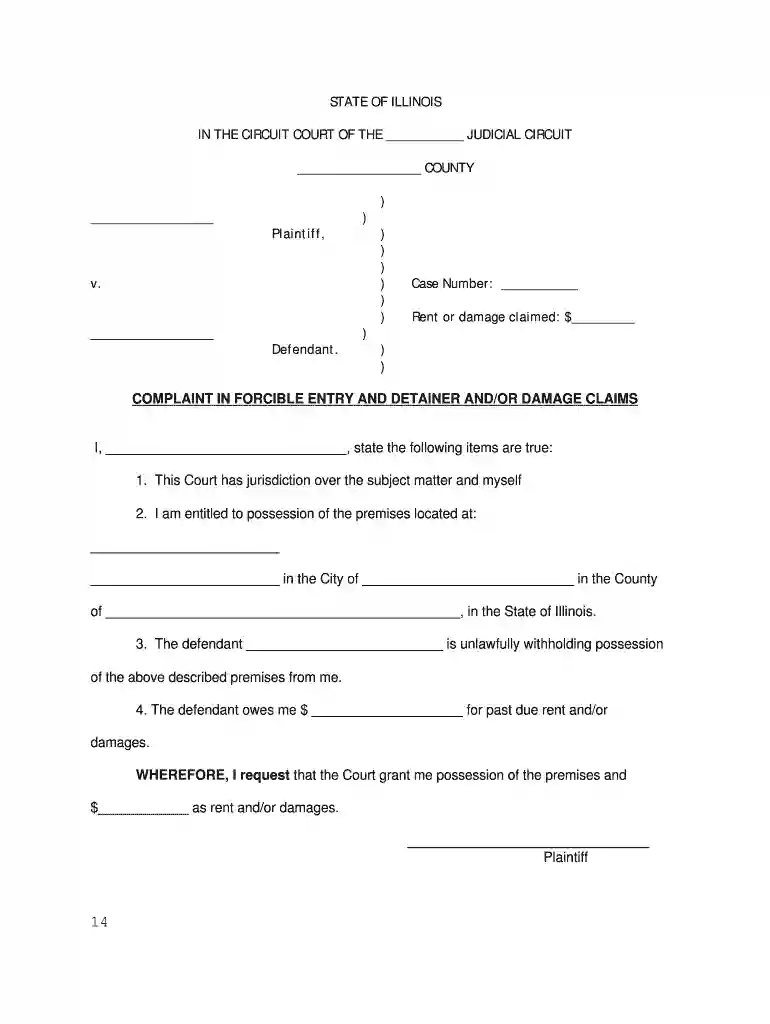
The Illinois Eviction Complaint Form is a legal document filed in the Circuit Court of Illinois to initiate the eviction process. This form is used by landlords or property owners to assert their right to regain possession of a property when a tenant has breached the lease agreement. The complaint typically includes claims of unlawful detainment of the property and may seek compensation for unpaid rent and damages. It serves an essential function in the legal process, allowing landlords to formally address lease violations and request the court's assistance in resolving tenancy disputes.
Key Components of the Form
- Plaintiff and Defendant Information: Includes the names and contact details of the landlord (plaintiff) and the tenant (defendant).
- Property Details: Specifies the location and characteristics of the rented property in question.
- Lease Agreement Reference: Summarizes the lease terms that the tenant allegedly violated, such as non-payment of rent or damage to the property.
- Relief Sought: Details the remedies the landlord is seeking, such as eviction, repayment of overdue rent, or repair costs.
How to Obtain the Illinois Eviction Complaint Form
The Illinois Eviction Complaint Form can be accessed through various sources:
- Circuit Court Clerk's Office: Available directly at the local Circuit Court where the eviction is to be filed.
- Online Resources: Some county court websites provide downloadable versions of the form.
- Legal Assistance Organizations: Legal aid offices and tenant rights organizations often have copies or can guide individuals in procuring the form.
Common Methods of Access
- Direct Pickup: Visit the court to get a physical copy, which provides an opportunity to ask court personnel for information.
- Online Download: Many courts offer PDF versions that can be filled out digitally, providing convenience for those unable to visit in person.
Steps to Complete the Illinois Eviction Complaint Form
Filing an eviction complaint involves several essential steps:
- Gather Information: Collect all necessary details, including tenant information, lease agreements, and proof of violation.
- Fill Out the Form: Accurately complete each section of the form, making sure that all relevant claims and details are clearly stated.
- Review and Verify: Double-check the completed form for accuracy and completeness, ensuring all data is correct and legible.
- File with the Court: Submit the form to the appropriate Circuit Court. Be prepared to pay a filing fee and present any supporting documentation.
Verification and Submission
- Document Verification: Ensure that all attached documents, such as the lease and notices, are included.
- Court Presentation: Files must be presented to the court in person or via approved electronic submission channels, depending on the court's processes.
Legal Use of the Illinois Eviction Complaint Form
This form has specific legal implications and uses within the Illinois court system:
- Initiating Legal Proceedings: Officially starts the eviction process, requiring the tenant to respond or vacate the property.
- Evidence Presentation: Acts as a formal record of the landlord’s claims and sets the stage for presenting evidence in front of a judge.
- Compliance with State Laws: Ensures that landlords follow proper legal channels rather than attempting unlawful evictions.
Legal Compliance
- Timely Filing: Ensure adherence to deadlines for responding to defenses and providing necessary documentation.
- Authorized Use: Only landlords or legally appointed agents should use this form to avoid complications.
State-Specific Rules for the Illinois Eviction Complaint Form
Illinois has unique legal requirements governing eviction processes:
- Notice Requirements: Landlords must provide tenants with proper notice before filing, often varying based on the violation.
- Court Jurisdiction: Complaints must be filed in the county where the property is located.
- Hearing Guidelines: Specific protocols exist for scheduling and attending eviction hearings.
Regional Variations
- County-Specific Practices: Some counties may have additional rules or resources to assist landlords in filing.
- Local Court Preferences: Review any local court preferences for document format and submission methods.
Key Terms Related to the Illinois Eviction Complaint Form
Understanding the jargon involved is critical:
- Forcible Entry and Detainer: Legal action for reclaiming possession of property.
- Rent Arrearage: Unpaid or overdue rent covered in the complaint.
- Tenant Summons: Court-issued notification requiring tenant presence in court.
Glossary of Terms
- Plaintiff: The party initiating the complaint (landlord).
- Defendant: The party against whom the complaint is filed (tenant).
- Default Judgment: A court decision in favor of the landlord if the tenant fails to respond.
Important Terms and Conditions of the Form
Recognizing the terms and conditions within the document ensures compliance:
- Conditions Precedent: Pre-filing requirements, such as tenant notification and waiting periods.
- Filing Fees: Costs associated with the submission of the complaint, payable to the court.
- Judicial Process Adherence: Following court instructions precisely to avoid delays or dismissals.
Practical Considerations
- Fee Waivers: Investigate eligibility for reduced fees or waivers based on financial status.
- Amendments and Corrections: Procedures for updating or correcting filed forms.
Examples of Using the Illinois Eviction Complaint Form
Real-life scenarios help illustrate its application:
- Non-Payment of Rent: A landlord files against a tenant who has consistently failed to pay rent on time.
- Lease Violation Disputes: Involves tenants breaking lease terms, such as unauthorized subletting or property damage.
- Holdover Tenants: Filing against tenants who refuse to vacate after lease expiration.
Case Studies
- Successful Eviction: Detailed account of a landlord achieving favorable court judgment through proper form use.
- Tenant Defense: Outline of common tenant responses and how landlords can prepare.
Required Documents for Filing
Supporting documentation is critical for a successful eviction case:
- Lease Agreement Copy: Validates the terms broken by the tenant.
- Notification Evidence: Proof of served notice to the tenant prior to filing.
- Proof of Non-Payment: Records showing rent arrears or other financial breaches.
Documentation Checklist
- Proof of Service: Confirmation that the tenant received all notices and communications.
- Damage Proof: Photos or repair bills in cases claiming physical damages to the property.
Form Submission Methods
There are multiple submission options to accommodate different needs:
- In-Person Filing: Direct submission at the court clerk’s office, with immediate receipt issuance.
- Electronic Filing: Growing in popularity, allowing for faster processing times.
- By Mail: Traditional method, requiring allowance for postal delays.
Submission Best Practices
- Verification: Ensure all sections of the form are complete before submission.
- Tracking: Use methods that allow for tracing and confirmation of court receipt.