







Definition & Meaning
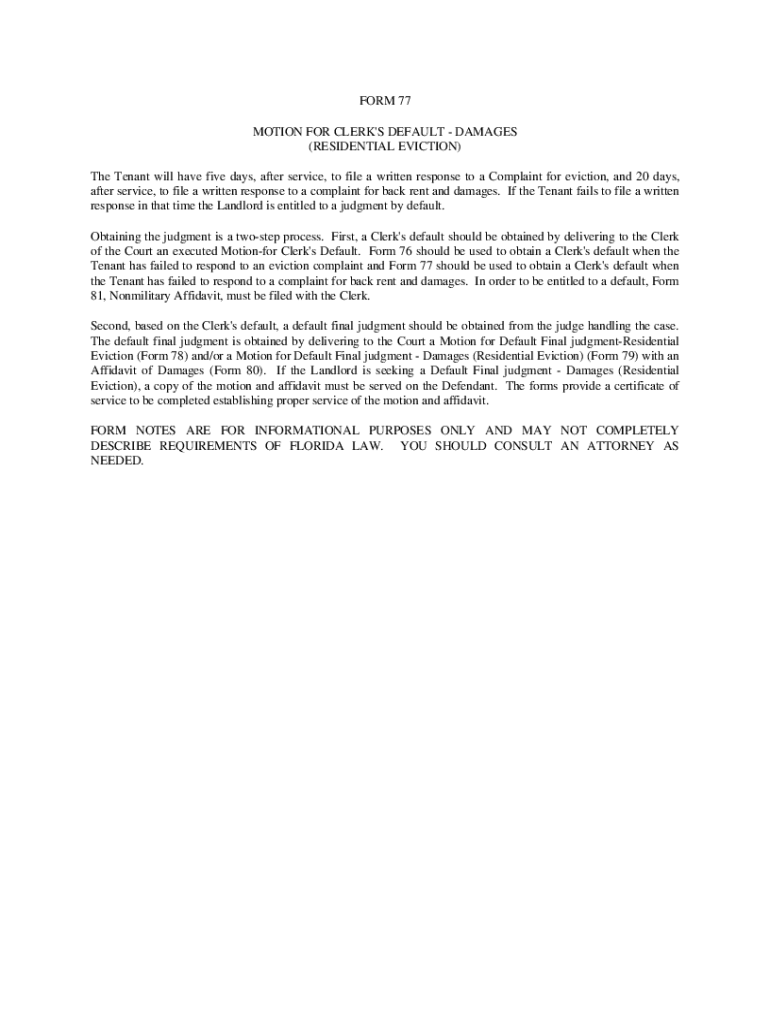
A Motion for Clerk's Default - Damages is a legal document used in civil cases where a party seeks a default judgment for unpaid damages due to the opposing party's failure to respond to a complaint. This motion is typically filed when the defendant does not answer or contest the claims within the stipulated time frame set by the court. By filing this motion, the plaintiff requests the court to enter a default judgment, allowing them to recover damages without proceeding to a full trial. This process is commonly used in breach of contract cases, landlord-tenant disputes, and other civil claims involving financial losses.
How to Use the Motion for Clerk's Default - Damages
To effectively use the Motion for Clerk's Default - Damages, follow these steps:
-
Review Court Rules: Understand the specific court rules and procedures related to filing for a default judgment in your jurisdiction. This includes knowing the timeline for when the defendant must respond to the complaint.
-
Gather Documentation: Collect necessary documents, such as the original complaint, proof of service, and any correspondence indicating the defendant's lack of response.
-
Draft the Motion: Prepare the motion in accordance with local court rules. Ensure it contains key information, such as the parties involved, the case number, a summary of the complaint, and the specific damages sought.
-
File the Motion: Submit the motion to the appropriate court clerk. Ensure that all required documents are attached, including any affidavits or exhibits supporting the motion.
-
Notify the Defendant: Send a copy of the filed motion to the defendant to inform them of the request for a default judgment.
Steps to Complete the Motion for Clerk's Default - Damages
Completing a Motion for Clerk's Default - Damages requires attention to detail. Here are the major steps:
-
Identify Relevant Details: Include the case number, names of parties involved, and the court's name at the top of the form.
-
Explain Non-Response: Clearly outline the defendant's failure to respond to the lawsuit, noting the specific time frame they were given.
-
Itemize Damages: Specify the damages you are seeking, providing itemized amounts for each type of loss, such as back rent, repair costs, or other financial harms.
-
Provide Supporting Evidence: Attach supporting documents, such as invoices, receipts, or contracts, as exhibits to substantiate the damages claimed.
-
Sign and Date: The person filing the motion must sign and date the document. Check if notarization is required in your jurisdiction.
Why Should You File a Motion for Clerk's Default - Damages
Filing a Motion for Clerk's Default - Damages is beneficial in scenarios where the defendant fails to engage with the legal process:
- Efficiency: It allows the plaintiff to expedite resolution without the time and expense of a trial when the defendant is non-responsive.
- Recovery of Damages: Facilitates the recovery of financial losses incurred due to the defendant's actions or inactions.
- Legal Closure: Provides a formal legal judgment that can be used to pursue collection efforts, such as garnishment or other enforcement actions.
Important Terms Related to Motion for Clerk's Default - Damages
Several legal terms are relevant when dealing with a Motion for Clerk's Default - Damages:
- Default Judgment: Court's decision in favor of one party due to the other's failure to contest or respond to the complaint.
- Plaintiff: The party filing the motion and seeking damages.
- Defendant: The party who failed to respond to the lawsuit.
- Proof of Service: Documentation showing the defendant was properly notified about the lawsuit and failed to respond.
State-Specific Rules for the Motion for Clerk's Default - Damages
While the general process of filing a Motion for Clerk's Default - Damages is similar across states, specific rules and requirements can vary:
- Response Timelines: States differ on how long a defendant has to respond before a default can be requested. Common timelines range from 20 to 30 days.
- Local Format Requirements: Courts may have specific formatting and submission guidelines.
- Mandatory Forms: Some states provide specific forms or templates that must be used when filing this motion.
Legal Use of the Motion for Clerk's Default - Damages
The Motion for Clerk's Default - Damages serves specific legal purposes:
- Enforce Rights: Ensures parties' rights are respected when they have not been contested.
- Judicial Efficiency: Streamlines court procedures by resolving unopposed cases swiftly.
- Finality and Certainty: Offers legal certainty that allows plaintiffs to further pursue the recovery of owed amounts.
Examples of Using the Motion for Clerk's Default - Damages
The Motion for Clerk's Default - Damages is used in various real-world legal scenarios:
- Landlord-Tenant Disputes: A landlord may file this motion when a tenant fails to respond to a lawsuit regarding unpaid rent or property damage.
- Contractual Breaches: Parties to a contract can seek a default judgment if the opposing party does not respond to claims of a contract breach.
- Debt Recovery: Creditors may use this motion to recover unpaid debts in cases where the debtor does not acknowledge the court summons.




