





Definition & Meaning
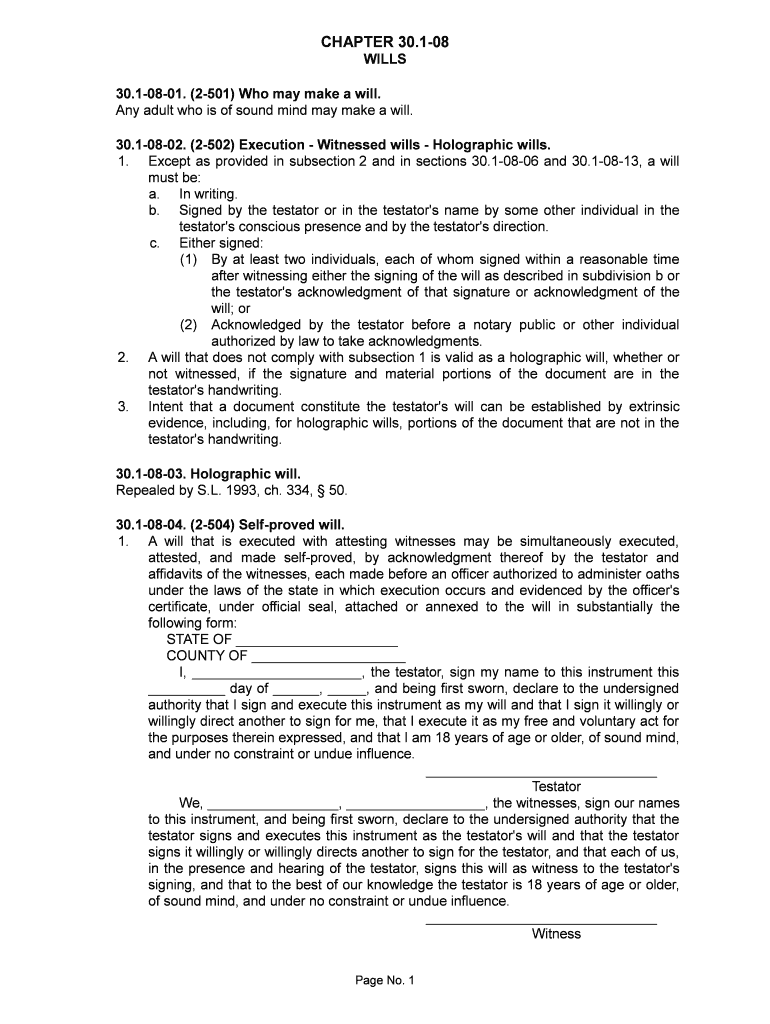
Chapter 30.1-08, an essential framework in wills documentation, outlines the procedural rules and legal principles governing the creation and execution of wills. These guidelines ensure that the will is legally admissible and reflects the intent of the person creating it, known as the testator. The term "Chapter 30 1-08 (Wills) - eForms" refers to electronic forms designed to streamline the process of documenting a will, aligned with these specific legal statutes.
How to Use the Chapter 30 1-08 (Wills) - eForms
Utilizing Chapter 30 1-08 (Wills) - eForms involves accessing the appropriate document, filling in required personal and property details, and ensuring the document aligns with statutory requirements for wills in your jurisdiction. Begin by downloading the form from a trusted platform like DocHub, ensuring digital compatibility with your existing document workflows. Electronically sign the form and, if necessary, facilitate collaboration for reviewing or witnessing requirements. This digital method aids in providing efficiency and security compared to traditional paper methods.
Steps to Complete the Chapter 30 1-08 (Wills) - eForms
- Download the Form: Access reputable platforms such as DocHub to download the Chapter 30 1-08 e-form.
- Input Personal Details: Enter the testator's full legal name, birth date, and contact information.
- List Property and Assets: Detail all properties and assets, ensuring clarity in ownership and distribution intentions.
- Appoint Beneficiaries: Clearly state the beneficiaries of the estate, along with their contact details.
- Designate an Executor: Choose a trusted individual to oversee the will's execution.
- Add Witness Information: Include spaces for witness signatures to attest to the will's authenticity.
- Sign the Document: Both the testator and witnesses should electronically sign the document when completed.
Key Elements of the Chapter 30 1-08 (Wills) - eForms
- Personal Information: Includes the testator’s details which are crucial for identifying the individual whose will is being documented.
- Asset Distribution: Clearly outlines how the testator wants their assets distributed after their demise.
- Executor Details: Names a trusted individual responsible for executing the will, ensuring that all instructions are followed.
- Witness Signatures: Validates the will by having unbiased individuals witness and sign the document.
- Guardianship Provisions: If applicable, specifies guardians for minor children or dependents.
Legal Use of the Chapter 30 1-08 (Wills) - eForms
The Chapter 30 1-08 eForms serve as a legally recognized tool to draft wills in compliance with state laws. These forms uphold legal standards by ensuring all crucial elements are addressed, including the testator’s intentions, execution protocols, and witness attestations. Following guidelines in the e-forms ensures the will's enforceability in legal proceedings if contested or during probate.
Who Typically Uses the Chapter 30 1-08 (Wills) - eForms
Typically, adults looking to define asset distribution after their passing use these forms. This includes individuals who wish to:
- Ensure their assets are distributed according to their wishes
- Appoint guardians for minor children or dependents
- Designate an executor to manage the will’s execution
- Avoid potential disputes among beneficiaries by clearly stating wishes

State-Specific Rules for the Chapter 30 1-08 (Wills) - eForms
Each U.S. state may have specific legislative nuances affecting the execution and validity of wills. Therefore, individuals using Chapter 30 1-08 forms should verify compliance with state-specific regulations. This can include the number of witnesses required, permissible formats (digital or paper), and any notarization requirements. Understanding these variations ensures the will’s enforceability in the state of residence.
Examples of Using the Chapter 30 1-08 (Wills) - eForms
Consider the scenario of a middle-aged individual owning significant assets who wishes to prevent familial disputes after passing. By using Chapter 30 1-08 eForms, this person can clearly outline asset distribution and appoint a reliable executor, minimizing future legal challenges. Additionally, parents with minor children utilize these forms to assign guardians, ensuring children’s welfare aligns with parental standards in unexpected situations.