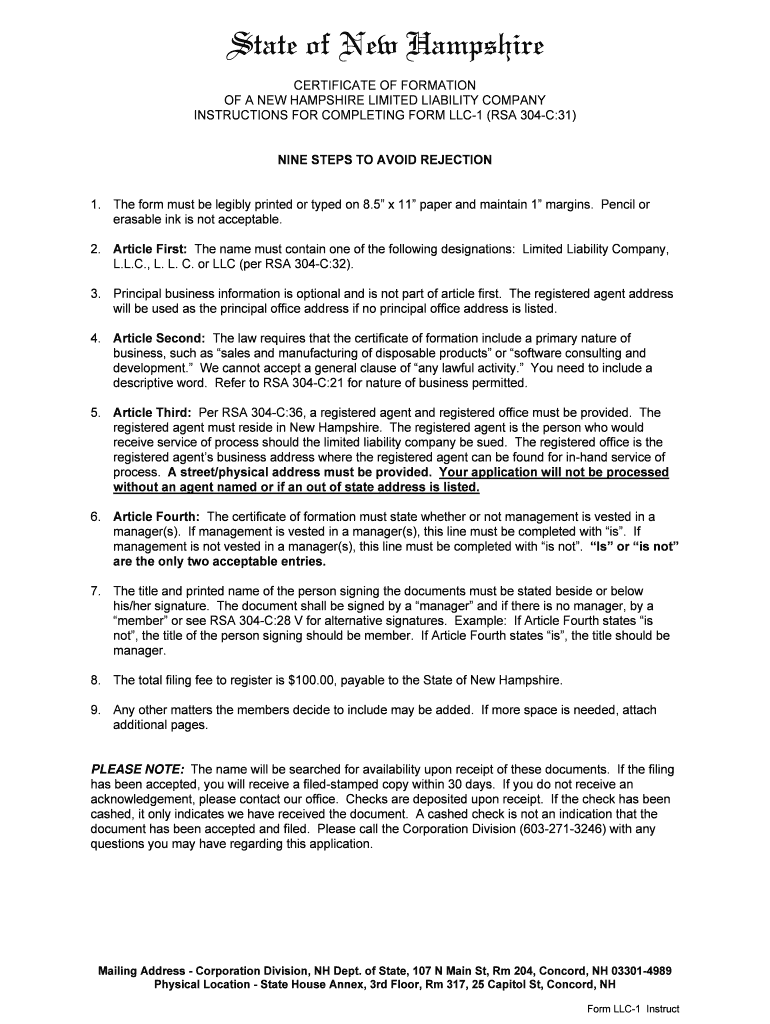







Definition and Meaning
The LLC-1, or the Certificate of Formation for a New Hampshire Limited Liability Company, is a legal document used to officially establish a limited liability company (LLC) within the state of New Hampshire. This document serves as the company's foundational charter and provides essential information about the business, such as its name, management structure, and registered agent details. This certificate is a requirement for the legal recognition of an LLC and is filed with the New Hampshire Secretary of State.
Steps to Complete the LLC-1
-
Choose a Name for Your LLC: Ensure the name is unique and includes "Limited Liability Company" or its abbreviations ("LLC" or "L.L.C.") to comply with state regulations.
-
Select a Registered Agent: The registered agent is responsible for receiving legal notices and communications on behalf of the LLC. This person or entity must have a physical address in New Hampshire.
-
Define the Management Structure: Decide whether the LLC will be managed by its members or by appointed managers. This decision affects the day-to-day operations and decision-making processes within the LLC.
-
Complete the Business Purpose Statement: Provide a clear description of the business activities or purpose in which the LLC intends to engage. This can be a broad purpose or a specific endeavor.
-
Submit the Completed Form: Ensure all necessary information is complete and that there are no errors before submitting the form to the New Hampshire Secretary of State, along with the required filing fee.
Key Elements of the LLC-1
-
Business Name: This element confirms the unique identity of the LLC in New Hampshire.
-
Principal Office Address: The principal place of business within the state must be included for official correspondence.
-
Duration of Company: Specify whether the LLC is perpetual or has a specific end date.
-
Authorized Signatures: The form must be signed by individuals authorized to act on behalf of the LLC, confirming the information provided is accurate.
Why Complete the LLC-1
Filing the LLC-1 provides several benefits, including:
-
Legal Recognition: Establishes the LLC as a legal entity separate from its owners, providing liability protection.
-
Operational Flexibility: Allows for a flexible organizational structure tailored to the needs of the business.
-
Professional Credibility: Enhances business reputation by demonstrating formal organization and compliance with state regulations.
State-Specific Rules for the LLC-1
In New Hampshire, there are specific rules governing the formation of an LLC:
-
Name Reservations: Before filing, the desired business name can be reserved with the state.
-
Publication Requirements: Unlike some states, New Hampshire does not require the publication of the formation in local newspapers.
-
Annual Reports: Once formed, the LLC must file annual reports with the state to maintain good standing.
Legal Use of the LLC-1
The LLC-1 certificate has several legal utilities:
-
Contractual Agreements: Enables the LLC to enter into contracts and agreements with other parties.
-
Bank Accounts: Required to set up business bank accounts in the company’s name.
-
Permits and Licenses: Necessary for obtaining required local and state permits and licenses for business operations.
Form Submission Methods
-
Online Filing: The most efficient method, allowing for quicker processing and confirmation of submission via the New Hampshire Secretary of State’s online portal.
-
Mail Submission: Traditional paper submission is also available, though it may take longer to process.
-
In-Person Filing: Some prefer to deliver documents directly to the state office for immediate confirmation of receipt.
Penalties for Non-Compliance
Failing to file the LLC-1 or comply with ongoing requirements can result in:
-
Inability to Legally Operate: Without proper filing, the company is not legally recognized as an LLC in New Hampshire.
-
Fines and Fees: The state may impose fines or late fees for failure to maintain compliance, such as missing annual report deadlines.
-
Loss of Good Standing: Non-compliance can lead to administrative dissolution of the LLC by the state.
Examples of Using the LLC-1
Consider these scenarios where the LLC-1 plays a crucial role:
-
Entrepreneurs launching a tech startup use the LLC-1 to establish their company officially and protect personal assets.
-
Family-owned businesses transitioning to a formal entity can use the LLC-1 to outline ownership and operational procedures.
-
Single-member LLCs often leverage the LLC-1 for greater personal liability protection while enjoying simple operational requirements.