







Definition & Meaning
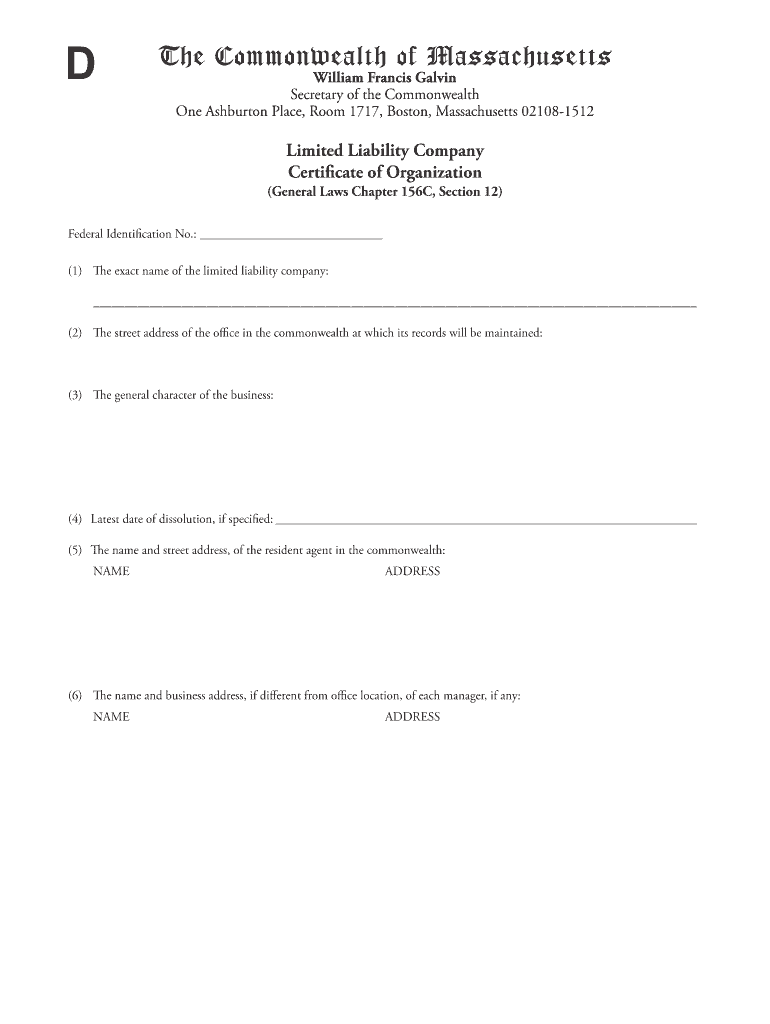
The Commonwealth of Massachusetts - William Francis Galvin form is a legal document used to establish a Limited Liability Company (LLC) in Massachusetts. It includes essential information such as the company’s name, address, business nature, management structure, and the resident agent’s consent, ensuring compliance with state laws. The Secretary of the Commonwealth certifies the form, confirming adherence to legal provisions and successful payment of filing fees. This form is critical for formal recognition of an LLC and provides a framework for its operations within the state.
How to Use the Form
To effectively utilize the Commonwealth of Massachusetts - William Francis Galvin form, you must complete all mandatory sections accurately. Start by providing the proposed LLC name and principal office address. Specify the type of business and its management structure, which may include members or managers. Then, indicate the name and address of the resident agent who will handle legal correspondence. Include any additional details required by state law, ensuring all parts align with your business plan and comply with Massachusetts regulations.
Steps to Complete the Form
- Gather Essential Information: Prepare details such as the LLC’s name, office address, business type, and management details.
- Identify the Resident Agent: Select an individual or business entity located in Massachusetts to serve as the resident agent.
- Complete the Form: Fill out the document with the gathered information, ensuring all sections are accurate and complete.
- Obtain Necessary Signatures: Secure signatures from authorized members or managers and the resident agent, if required.
- Submit the Form: File the completed document with the Secretary of the Commonwealth and pay any applicable fees to finalize the formation process.
Key Elements of the Form
The form contains several critical components. These include:
- LLC Name: Must be unique and distinguishable in Massachusetts.
- Business Address: The principal office location where business activities are conducted.
- Resident Agent Details: An appointed party responsible for receiving legal documents.
- Management Structure: Information regarding whether the LLC is member-managed or manager-managed.
- Nature of Business: A brief description of the intended business activities.
- Certification: A statement confirming compliance with legal requirements and payment of necessary fees.
Who Typically Uses the Form
Entrepreneurs and business owners looking to establish an LLC in Massachusetts are the primary users of the Commonwealth of Massachusetts - William Francis Galvin form. This group often includes individuals or companies expanding their business operations within the state. Legal professionals or business consultants may also use the form to assist clients in navigating the LLC formation process and ensuring compliance with regulations.


State-Specific Rules for the Form
Massachusetts imposes specific requirements for LLC formation via this form. Names must be unique and include “Limited Liability Company” or abbreviations like “LLC.” A resident agent is mandatory, and they must have a physical address in Massachusetts. Filing fees vary and must be paid during submission. Companies must comply with state guidelines regarding business activities and report any changes to the Secretary of the Commonwealth.
Important Terms Related to the Form
- Resident Agent: An individual or entity designated to receive legal documents on behalf of the LLC.
- Member-Managed: An LLC structure where all members participate in decision-making.
- Manager-Managed: An LLC structure where designated managers handle business decisions.
- Certificate of Organization: The document filed with the Secretary of the Commonwealth to formally establish the LLC.
- Principal Office: The main business location for official correspondence and operation.
Legal Use of the Form
The Commonwealth of Massachusetts - William Francis Galvin form is legally leveraged to establish the LLC’s existence, structure, and legal obligations in Massachusetts. It serves as the foundational document that gives the entity its legal standing and protections, ensuring it operates in accordance with state laws. By completing and submitting the form, business owners create a separate legal entity that can engage in contracts, hold assets, and conduct operations independently from its members.
Filing Deadlines / Important Dates
Although the form can be submitted at any time, prompt filing is advisable to ensure timely business operation commencement. Upon completion, the form should be filed with the Secretary of the Commonwealth, ensuring all legal protections are in place. Annual reports might be due depending on the LLC's formation date, and businesses should be aware of these timelines to maintain good standing.
Required Documents
When preparing the Commonwealth of Massachusetts - William Francis Galvin form, have the following documents ready:
- Proposed Business Name Details: Ensure it meets state naming guidelines.
- Agent Consent Form: Shows the resident agent’s agreement to serve the LLC.
- Operating Agreement: Though not mandatory, it outlines the LLC’s management and operational structure.
- Identification Documents: For verification of members or managers as required.
Form Submission Methods (Online / Mail / In-Person)
The form can be submitted through various methods based on convenience and accessibility:
- Online: Use the Massachusetts Secretary of the Commonwealth’s online portal for digital submissions, allowing faster processing and immediate confirmation.
- Mail: Send completed forms to the Secretary of the Commonwealth’s office via postal mail. Ensure you include all necessary fees and documents.
- In-Person: Visit the Secretary’s office to submit forms directly, which allows for clarification and immediate handling of any submission issues.
Form Variants
There may be variations or related forms accompanying the Commonwealth of Massachusetts - William Francis Galvin form, essential for specific business needs:
- Amendment Forms: Used to update company details post-formation.
- Dissolution Forms: Necessary for formally winding down the business.
- Foreign LLC Registration: Required if an existing out-of-state LLC plans to operate in Massachusetts.
Business Types That Benefit Most
Small to mid-sized enterprises, start-ups, and family businesses looking for liability protection and operational flexibility benefit significantly from using the Commonwealth of Massachusetts - William Francis Galvin form to form an LLC. It allows businesses freedom from double taxation and provides a straightforward structure that simplifies management and operational decisions.




