






Definition & Meaning
The "accordance with the Limited Liability Company Act of the State of Delaware" refers to the compliance requirements for forming and managing a Limited Liability Company (LLC) within Delaware. The Limited Liability Company Act provides a legal framework that governs how LLCs operate in Delaware, offering flexibility and a clear operational structure for business owners. This Act is essential for those looking to utilize the benefits of an LLC, such as limited liability protection and pass-through taxation.
The Act defines an LLC as a business entity distinct from its owners, providing legal protections similar to a corporation while allowing operational flexibility akin to a partnership. It establishes rules for creating and managing LLCs, detailing member rights, management structures, and dissolution processes. The Act's provisions also guide the filing of necessary documentation with the Delaware Division of Corporations.
How to Use the Act
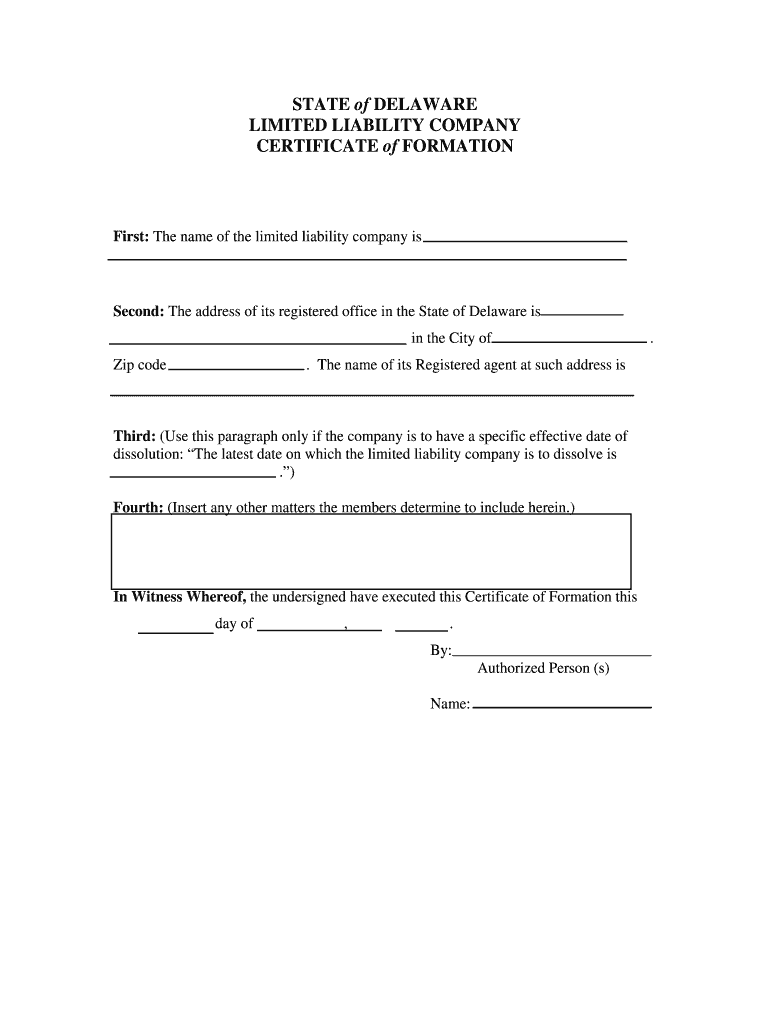
Using the Limited Liability Company Act involves understanding its provisions to ensure proper LLC formation and compliance. The Act outlines essential steps, including drafting and filing a Certificate of Formation with the Delaware Division of Corporations. This document officially registers the business and includes key details such as the LLC's name, registered agent, and duration if not perpetual.
Business owners must familiarize themselves with operational guidelines specified in the Act, such as drafting an Operating Agreement. This internal document governs the LLC's management, addressing roles, responsibilities, and member contributions. While not legally required in Delaware, an Operating Agreement is critical for mitigating disputes and ensuring smooth business operations.
Steps to Complete an LLC Formation
- Choose a Name: Select a unique and compliant name for the LLC, ensuring it includes "LLC" or "Limited Liability Company."
- Designate a Registered Agent: Appoint an agent with a physical address in Delaware to receive legal documents on behalf of the LLC.
- File the Certificate of Formation: Submit this document via mail or online to the Delaware Division of Corporations, along with the appropriate filing fee.
- Draft an Operating Agreement: Although not mandatory, it's recommended to outline management structures and operational procedures.
- Obtain an EIN: Apply for an Employer Identification Number from the IRS, necessary for tax filings and business transactions.
- Comply with Ongoing Requirements: Fulfill annual reporting and tax obligations as stipulated by Delaware state law.
Key Elements of the Act
- Limited Liability: Protects members' personal assets from business debts and obligations.
- Management Structure: Allows for flexible management arrangements, either member-managed or manager-managed.
- Operational Flexibility: Permits a diverse array of business activities and structures, adaptable to specific business needs.
- Taxation Options: Provides pass-through taxation, where income is reported on members' personal tax returns, avoiding corporate tax.
- Dissolution Provisions: Includes rules for terminating the LLC, addressing asset distribution, and member responsibilities.
State-Specific Rules
Delaware is renowned for its business-friendly environment, offering distinct advantages under the LLC Act. Unlike many states, Delaware imposes no income tax on LLCs that do not conduct business within the state. Additionally, Delaware law allows for anonymity of LLC members and offers a fast and efficient process for business dispute resolution in its Court of Chancery.
Businesses formed under the Delaware LLC Act are subject to lower franchise taxes compared to corporations, making the state attractive for startups and international companies. However, adherence to annual reporting and fee payment is crucial to maintain good standing under the Act.
IRS Guidelines
The IRS treats LLCs as pass-through entities for tax purposes, meaning profits and losses flow through to members' personal tax returns. Single-member LLCs are typically taxed as sole proprietorships, while multi-member LLCs default to partnership taxation unless another classification is elected. LLCs also have the option to be taxed as corporations by filing Form 8832 with the IRS.
Compliance with federal tax regulations under the Act requires maintaining accurate financial records and submitting relevant tax documents, such as Schedules K-1 for partnerships. Understanding these guidelines ensures proper tax treatment and avoids penalties.
Filing Deadlines & Important Dates
- Certificate of Formation: Filed any time, but it's effective upon submission to the Delaware Division of Corporations.
- Annual Franchise Tax Report: Due June 1 each year to maintain business good standing.
- Operating Agreement (Internal Deadline): While no state-mandated deadline exists, it's advisable to draft and adopt this document promptly following LLC formation.
- Tax Filings: Follow federal and state tax calendar deadlines, including quarterly estimated tax payments and annual income tax returns.
Penalties for Non-Compliance
Failure to comply with the Limited Liability Company Act can result in significant penalties. Non-filing of the Annual Franchise Tax Report leads to fines and potentially revocation of good standing status, impacting the ability to conduct business legally. In extreme cases, the state may dissolve the non-compliant LLC.
Consequences extend to federal obligations. Inaccurate tax filings or failure to report income may incur IRS penalties, interest on overdue taxes, and possible audits. Utilizing the guidance provided under the Act can help mitigate these risks and ensure smooth LLC operations without legal or financial repercussions.