Definition and Purpose of the Arkansas Prescription Drug Monitoring Program Pharmacy
The Arkansas Prescription Drug Monitoring Program Pharmacy aims to help healthcare professionals reduce prescription drug misuse and enhance patient care by monitoring substance prescription activities. Established as a public health tool, it tracks controlled substances' dispensation in the state, providing data for analysis, early detection of patterns indicative of misuse, and ensuring compliance with legal prescription protocols.
Key Objectives:
- Monitor prescription dispensing: Track controlled substances to identify and mitigate prescription drug abuse.
- Enhance patient care: Provide healthcare providers with comprehensive data to inform prescription decisions.
- Support public health: Generate insights for policy development and public health strategies.
Understanding this program is foundational for pharmacists and healthcare providers in Arkansas committed to ethical prescribing practices and combating prescription drug abuse.
Steps to Complete the Arkansas Prescription Drug Monitoring Program Pharmacy Waiver Form
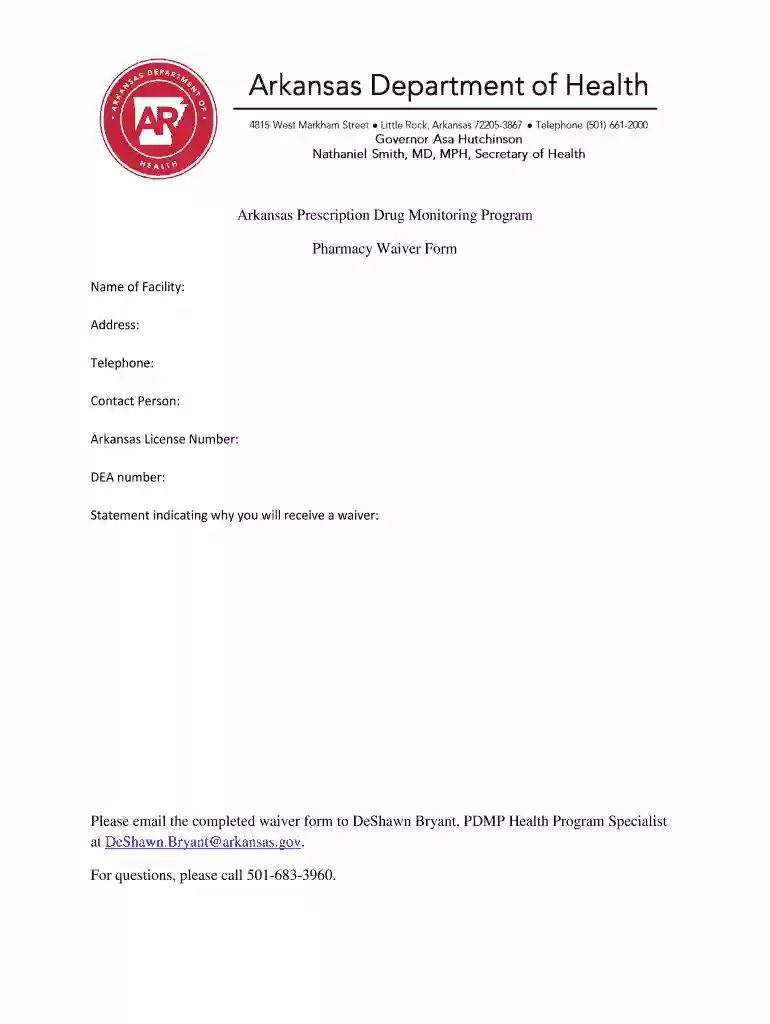
The Pharmacy Waiver Form for the Arkansas Prescription Drug Monitoring Program requires precise information for successful completion. This ensures the accurate documentation of intent and facilitates streamlined processing.
Detailed Procedure:
- Gather Required Information: Collect facility name, address, and contact information well in advance.
- Completion of Facility Details: Accurately fill out the facility’s name, address, and contact details as specified.
- Statement of Request: Articulate a clear and concise statement explaining the waiver request.
- Review and Verification: Double-check all information for accuracy and legibility to avoid processing delays.
- Email Submission: Follow the form’s instructions to submit via the specified email, ensuring that all attachments are included.
- Contact for Inquiries: Utilize provided contact details to address any questions or require clarification during the process.
Adhering to these steps ensures a smooth form completion process, minimizing errors and expediting review.
Who Typically Uses the Arkansas Prescription Drug Monitoring Program Pharmacy
The program is leveraged by various stakeholders in the healthcare and pharmaceutical sectors, each with distinct uses and responsibilities.

Primary Users:
- Pharmacists: To verify and monitor patient's controlled substance histories.
- Healthcare Providers: For assessing patient's need for controlled substances and preventing overprescribing.
- Regulatory Authorities: To oversee compliance with prescriptions and combat illicit usage.
Use Cases:
- Monitoring and Compliance: Pharmacists regularly use the program to ensure compliance with state regulations.
- Academic Research: Provides data for university-led studies on prescription trends and their societal impact.
These user groups collectively contribute to the efficacy and ethical management of prescription drugs within Arkansas.
Important Terms Related to the Arkansas Prescription Drug Monitoring Program
Understanding specific terminology is essential for effectively navigating the Arkansas Prescription Drug Monitoring Program.
Key Terminology:
- Controlled Substance: A drug or chemical whose manufacture, possession, or use is regulated by the government.
- Dispensation: The process of distributing medication as prescribed to a patient.
- Waiver Form: A document required for a pharmacy to request an exemption or special permission under specified conditions.
Familiarity with these terms aids in navigating program literature and fulfilling roles responsibly within this regulatory framework.
Legal Use of the Arkansas Prescription Drug Monitoring Program
The legal parameters guiding the use of the Arkansas Prescription Drug Monitoring Program are pivotal for ensuring compliance and ethical conduct.
Legal Considerations:
- Confidentiality: Patient data accessed through the program must remain confidential, aligned with HIPAA standards.
- Regulatory Compliance: Pharmacies must adhere to state laws governing the dispensation of controlled substances.
- Penalties for Misuse: Non-compliance can result in fines, sanctions, or licensure repercussions.
An understanding of these legal underpinnings is crucial for pharmacists and healthcare providers to operate within the law while utilizing the program.
State-Specific Rules for the Arkansas Prescription Drug Monitoring Program
Arkansas implements particular guidelines distinct from other states, shaping how the Prescription Drug Monitoring Program functions.
State-Specific Criteria:
- Mandatory Reporting: All pharmacies dispensing controlled substances must report to the program database.
- Frequency of Reporting: Reporting intervals and timelines are standardized to ensure timely data availability.
Variations in Compliance:
- State Exceptions: Certain exemptions or variations in reporting may apply, specific to state decrees.
State-specific knowledge ensures pharmacies maintain compliance and understand unique facets of Arkansas’s regulations compared to broader national practices.
Examples of Using the Arkansas Prescription Drug Monitoring Program Pharmacy
Practical examples illustrate the breadth of this program’s application across various settings.
Case Examples:
- Prescription Verification: A pharmacist uses the program to verify a patient’s prescription history before dispensing a controlled medication.
- Data Analysis: Public health officials analyze program data to identify and address trends in prescription drug usage indicative of potential public health crises.
These scenarios exemplify how the program is applied in daily operations, reinforcing its role in mitigating prescription drug misuse.
Required Documents for Completing the Waiver Form
The Arkansas Prescription Drug Monitoring Program Pharmacy Waiver Form necessitates several essential documents for submission.
Document Checklist:
- Facility Identification: Complete documentation of the pharmacy’s identifying details.
- Contact Information: Current contact information for responsible parties handling the form.
- Official Statement: An official statement explaining the rationale behind the waiver request.
Ensuring all documents are prepared and verified will facilitate speedy processing and approval of the waiver application.