






Definition and Purpose of the 2016 IN CDR Exemption Form
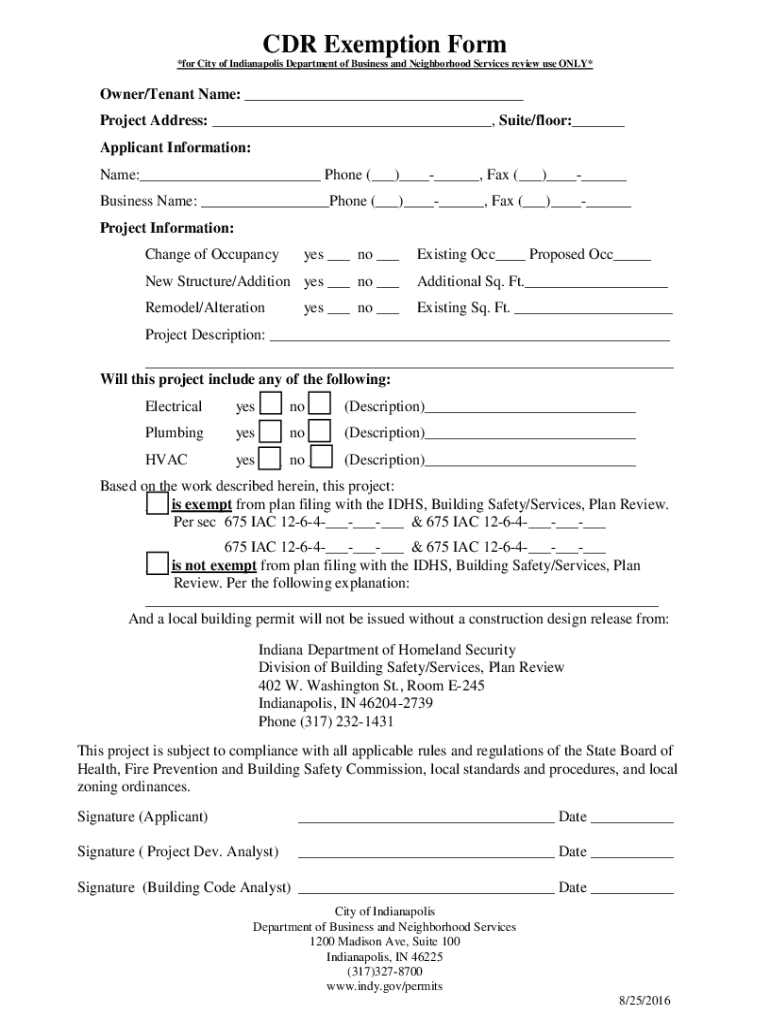
The 2016 IN CDR Exemption Form is a document used in Indianapolis to identify projects exempt from plan filing with the Indiana Department of Homeland Security. It is essential for project owners and tenants to outline project details such as type (change of occupancy, new structures, additions, remodels, or alterations). This form ensures that local compliance requirements are met while facilitating efficient project oversight.
Context and Use Cases
- Project Types: Applicable for various project categories, including commercial, residential, and mixed-use developments.
- Stakeholder Interaction: Utilized by project owners, tenants, and relevant municipal authorities.
Practical Implications
- Proper use of the form indicates compliance with local Indianapolis building regulations.
- Streamlines the approval process by clearly stating exemption eligibility.
How to Use the 2016 IN CDR Exemption Form
To effectively utilize this form, key steps include gathering project-specific information, accurately completing each section, and submitting the form through an appropriate channel.
Step-by-Step Instructions
- Identify Project Details: Document the project scope, including the type of construction or alteration.
- Gather Comprehensive Information: Collect details about the project owner, tenant, construction type, and any existing plans.
- Complete the Form Centrally: Fill in all required fields with precision to avoid delays.
- Submission: Submit the completed form either online or in-person, depending on the preferred method of the City of Indianapolis.
Tips for Accuracy
- Double-check each section for completeness.
- Consult with legal or construction experts for accurate entries.
Steps to Complete the 2016 IN CDR Exemption Form
Completing the form involves detailed data entry to ensure all aspects of the project are recorded accurately.
Detailed Entry Guidelines
- Project Owner Information: List the full name, contact details, and any relevant business association.
- Construction Type: Clearly specify whether it is a remodel, new addition, or structural change.
- Compliance Statement: Affirm that the project adheres to local compliance regulations.
Example Entry
For a remodel: "This project involves the interior renovation of a historic building, maintaining its structural integrity while updating facilities."
Key Elements of the 2016 IN CDR Exemption Form
Understanding the components of the form helps ensure accurate and thorough completion.
Major Sections to Focus On
- Owner and Tenant Information: The first section capturing the stakeholders' identities.
- Project Scope and Description: A detailed account of the intended modifications or builds.
- Exemption Criteria Met: Specify the exemption criteria relevant to the Indiana Department of Homeland Security.
Importance
These elements confirm whether the project conforms to city regulations and determine the exemption from state-level filing requirements.
Legal Use and Compliance
Legal compliance within Indianapolis city governance requires adherence to codes and exceptions specified by the City of Indianapolis.
Regulatory References
- City Ordinances: Ensures the form's completion aligns with city-specific legal frameworks.
- Department Criteria: Meet the Department of Business and Neighborhood Services’ criteria for exemptions.
Enforcement Measures
- Any errors or omissions can lead to project delays.
- Non-compliance may invoke penalties or necessitate reassessment of project permits.
Eligibility Criteria for Exemptions
Eligibility is determined by project scope and adherence to specific criteria set by state and local authorities.


Key Eligibility Indicators
- Project Type: Conforms to pre-defined categories such as minor alterations with no structural impact.
- Size and Impact: Small-scale projects not significantly altering existing building codes.
Examples of Eligible Projects
- Internal office refurbishments
- Cosmetic updates in residential properties
State-Specific Rules
Indiana regulations provide a framework within which the exemption form operates, neither conflicting with nor overriding state law.
Distinctive Aspects of Indiana Regulations
- Emphasis on life safety and structural soundness for exemption eligibility.
- Special consideration for projects in historic districts.
Planning and Execution
Strategic planning around these rules ensures smoother project initiation and execution without unnecessary compliance hurdles.
Required Documents for Submission
Successful completion and submission depend on the appropriate documentation accompanying the exemption form.
Document Checklist
- Proof of Ownership or Lease Agreement: Verifying stakeholder authorization.
- Detailed Project Plans or Overviews: Provide context and comprehensive review material.
Preparation and Verification
- Double-check each document for accuracy and completeness.
- Verification by the responsible regulatory authority aids in seamless processing.