01. Edit your form online
Type text, add images, blackout confidential details, add comments, highlights and more.

Type text, add images, blackout confidential details, add comments, highlights and more.

Draw your signature, type it, upload its image, or use your mobile device as a signature pad.

Send it via email, link, or fax. You can also download it, export it or print it out.
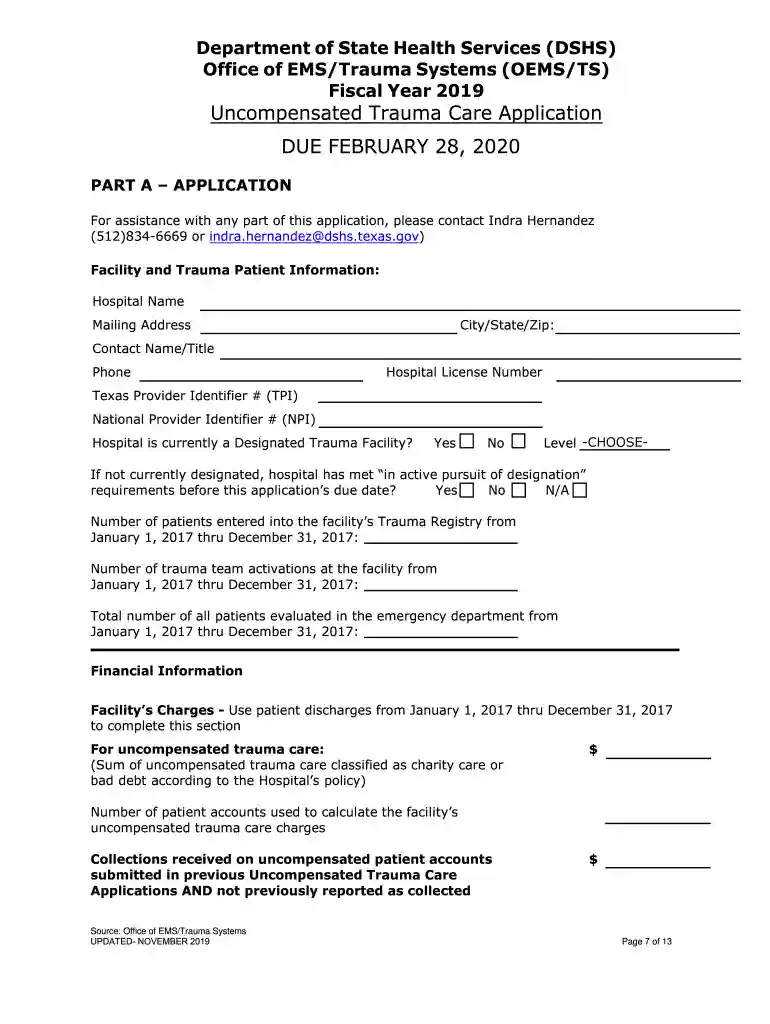
Trauma Systems are coordinated groups designed to provide prompt and effective medical care for individuals suffering from traumatic injuries. The Texas Department of State Health Services (DSHS) manages these systems to ensure that trauma care facilities are equipped and staffed to handle acute emergencies. The primary purpose is to enhance survival rates and outcomes for trauma patients by maintaining a network of hospitals and emergency services that meet defined standards. This includes guidelines for facility designation, caregiver certifications, and protocols for emergency response and treatment.
Utilizing the Trauma Systems effectively involves understanding the framework through which emergency medical services operate. Healthcare providers must adhere to the policies set by the DSHS for managing and coordinating care across different service levels. This includes awareness of protocols for patient transfer, reporting requirements for incidents, and methods to communicate with other facilities within the system. Emergency responders and healthcare professionals are trained to navigate these systems to ensure seamless care delivery.
Facilities must meet certain criteria to be designated within the Texas State Trauma System. Requirements include adequate staffing, certified emergency medical techniques, and the capacity to deliver specific levels of care. Hospitals need to achieve certification through an assessment of their operations and facilities, demonstrating readiness to handle trauma cases of varying severity. Ongoing compliance with training and equipment standards is also mandatory.


The application process for an institution to become part of the Trauma Systems involves a comprehensive review by the DSHS. Facilities must submit detailed applications that include data on capabilities, staff certifications, and case handling protocols. The approval process may take several months, requiring document reviews and potential site visits to verify the compliance with public health standards. Facilities should prepare for periodic re-evaluation to ensure ongoing compliance.
Non-compliance with trauma system guidelines can result in penalties, including fines or the revocation of trauma designation status. Facilities are required to maintain their operations in full alignment with DSHS rules. Penalties are geared toward encouraging adherence to system standards and ensuring public trust in the quality of trauma care provided. Timely reporting of any operational changes or incidents affecting compliance is crucial to avoid punitive actions.
Texas has distinct rules governing trauma systems, necessitating thorough knowledge of local legislation on trauma care provision. Elements crucial to the state system include regional advisory councils, mandatory participation in trauma registries, and tailored response plans specific to the geographical challenges of Texas. Each participating facility must integrate state guidelines into their standard operating procedures to maintain their designation.
Hospitals such as Parkland Memorial Hospital have been recognized for their exemplary adherence to trauma system protocols by implementing advanced data collection methods and personalized training modules for emergency staff. A case study from Austin Trauma Centre shows how leveraging state-wide initiatives can significantly reduce response time and improve outcomes in severe injury cases. These examples illustrate the application of the system in real-world scenarios, showcasing its benefits and challenges.
Applications require submission of numerous documents such as the trauma plan, staff certifications in trauma care disciplines, and facility reports detailing capability assessments. Periodic audits of these documents ensure that facilities remain in compliance with DSHS standards. The documentation must reflect current and comprehensive operational capabilities, as well as future planning for system enhancements and capability upgrades.
Facilities may submit documentation through several channels, including online platforms recommended by the DSHS. Ensuring secure and reliable submission is critical to avoid data loss or miscommunication. Guidelines often advise facilities to keep duplicate records and verify receipt of documents. Regular updates to submitted data may be required in response to evolving state guidelines or institutional changes.
We've got more versions of the Trauma Systems - Texas Department of State Health Services form. Select the right Trauma Systems - Texas Department of State Health Services version from the list and start editing it straight away!
| Versions | Form popularity | Fillable & printable |
|---|---|---|
| 2019 | 4.8 Satisfied (114 Votes) |
At DocHub, your data security is our priority. We follow HIPAA, SOC2, GDPR, and other standards, so you can work on your documents with confidence.