






Definition and Meaning
The North Carolina Division of Health Service Regulation (NC DHSR) plays a critical role in ensuring the quality and safety of healthcare services across the state. This regulatory body oversees a variety of sectors within the healthcare system, including hospitals, nursing homes, mental health facilities, and home care services. It is responsible for licensing healthcare facilities, conducting inspections, and investigating complaints. By enforcing health and safety standards, the division aims to protect public health and ensure that services provided meet established regulations.
Key Elements of the North Carolina Division of Health Service Regulation
- Licensing and Certification: The division handles the certification and licensing of health facilities, ensuring they comply with state and federal standards.
- Inspection and Monitoring: Regular inspections are conducted to maintain safety and quality, identifying any potential violations or areas needing improvement.
- Complaint Investigation: Effective resolution through the investigation of complaints submitted by the public or healthcare institutions themselves.
- Policy Development: Establishing policies and regulations that guide health service providers within North Carolina, adapting to emerging healthcare needs.
How to Use the North Carolina Division of Health Service Regulation
Understanding how to utilize the services and oversight of the NC DHSR can empower both individuals and organizations. For healthcare facilities, engaging with the division is essential for obtaining the necessary licenses and ensuring compliance with health standards. Consumers can use DHSR resources to verify the credibility and quality standards of facilities they are considering for healthcare services. Additionally, the division provides a platform for submitting complaints or concerns about the quality of care received, ensuring accessibility for all citizens.
Steps to Complete Compliance with NC DHSR
- Initial Assessment: Conduct a self-assessment to determine alignment with existing regulations.
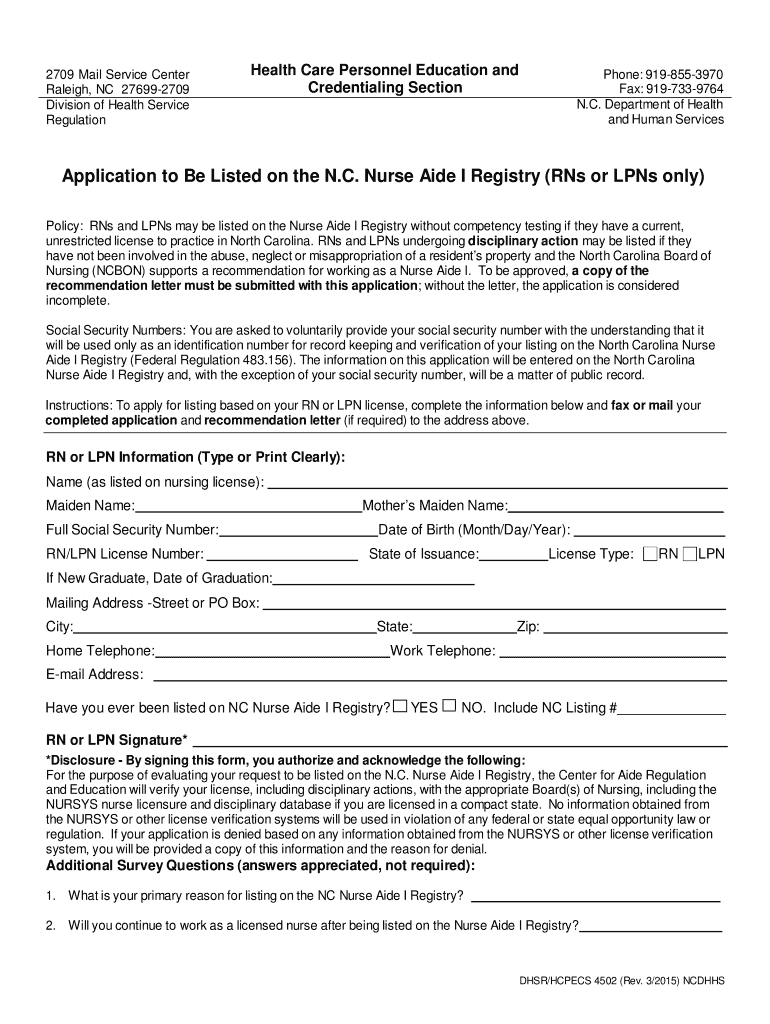
- Application Submission: Submit the necessary documentation for licensing or certification via the NC DHSR portal.
- Schedule Inspections: Arrange for mandated inspections as part of the compliance process.
- Address Feedback: Implement any required changes based on inspection feedback to gain or retain certification.
- Ongoing Monitoring: Continuously monitor operations to ensure ongoing compliance with current health and safety regulations.
Legal Use of the North Carolina Division of Health Service Regulation
The NC DHSR holds the authority to enforce regulations that protect patient rights and public health. Facilities must comply with mandates that cover patient safety, privacy, and equitable access to care. Violation of these regulations can lead to penalties, legal action, or loss of operating licenses. Furthermore, DHSR's legal framework supports collaboration with federal agencies like the Centers for Medicare & Medicaid Services (CMS) to enforce federal standards in addition to state mandates.
Who Typically Uses the North Carolina Division of Health Service Regulation
- Healthcare Providers such as hospitals and nursing homes require licenses or renewals and adhere to compliance protocols.
- Consumers looking to ensure their choice of facility meets safety standards.
- Policy Makers and public health researchers accessing data and reports produced by the division for planning and regulatory purposes.
- Healthcare Practitioners focusing on compliance with state and federal regulations affecting their practice.


Eligibility Criteria
To interact with the NC DHSR for licensing or regulatory purposes, facilities must meet several eligibility criteria:
- Compliance with State Health Standards: Facilities must demonstrate adherence to the health and safety requirements established by the division.
- Operational Infrastructure: Must have appropriate facilities and staff in place that meet the set quality standards.
- Financial Accountability: Adequate financial systems must be in place to support continuous operations and improvements.
- Engagement in Quality Improvement Programs: Facilities should participate in initiatives aimed at enhancing care quality and patient safety.

State-Specific Rules for the North Carolina Division of Health Service Regulation
While many health regulations are standard across the United States, specific state amendments or additions mark how NC DHSR operates:
- Specific Inspections: North Carolina might require specialized inspections unique to certain facility types not mandated by other states.
- Regional Priorities: Policies are sometimes influenced by regional health priorities, such as addressing rural health disparities.
- Public Health Campaigns: NC DHSR actively engages in state-focused health campaigns, which might impact regulatory focus areas.
Important Terms Related to NC DHSR
- Certificate of Need (CON): A legal document required in some cases to construct new facilities or expand existing ones in North Carolina.
- Licensure: The official approval to operate a healthcare facility or provide health services, covered under the NC DHSR regulations.
- Accreditation: A validation process by which facilities are evaluated on quality standards and granted recognition by healthcare accreditation organizations overseen by the division.
Application Process and Approval Time
The time taken for application and approval by the NC DHSR can vary based on several factors:
- Initial Review: Applications are screened for completeness, with missing information potentially delaying the process.
- Inspection Scheduling: Facility inspections must be scheduled and conducted successfully—a step that can add several weeks to the timeline.
- Response to Compliance Modifications: Should initial assessments require changes, the timeline for re-evaluation can extend approval time.
- Regulatory Body's Current Workload: The division's resource allocation and workload might affect process timing.
Penalties for Non-Compliance
Failure to adhere to NC DHSR guidelines may lead to:
- Fines and Penalties: Financial penalties are one common recourse for violations.
- Facility Closure: Persistent non-compliance can result in temporary or permanent closure of healthcare facilities.
- Reputational Damage: Public records of violations can affect a provider's reputation and trust among consumers.
Examples of Using the North Carolina Division of Health Service Regulation
- Healthcare Facility Licensing: Hospitals apply for state licenses, requiring submission of comprehensive operational plans demonstrating compliance.
- Public Reporting of Violations: Consumers use the NC DHSR platform to report service deficiencies or unsafe conditions anonymously.
- Quality Assurance Audits: Facilities leverage NC DHSR audits to benchmark against best practices and elevate quality standards.