Definition and Meaning of the Arkansas Do Not Resuscitate Form
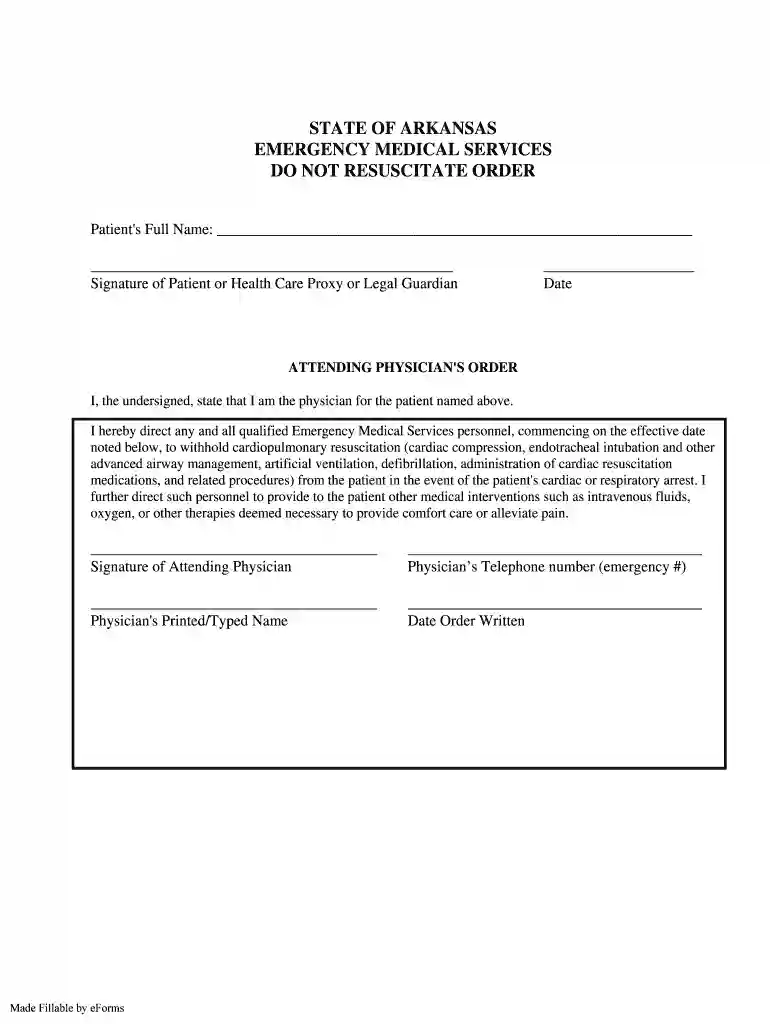
The Arkansas Do Not Resuscitate (DNR) form is a legal document used to communicate a patient's wish to refuse cardiopulmonary resuscitation (CPR) and other life-saving measures in cases of cardiac or respiratory arrest. This form allows patients or their legal representatives to make informed decisions about the kind of medical interventions they consent to, thereby ensuring that their end-of-life care preferences are respected by healthcare professionals. The document is officially recognized within the State of Arkansas and requires specific sections to be completed to be valid, ensuring that the patient's desires are properly documented and communicated.
How to Obtain the Arkansas Do Not Resuscitate Form
Obtaining the Arkansas DNR form can be done through several avenues to accommodate diverse needs:
- Medical Facilities: Hospitals and clinics often provide this form to patients upon request, especially during hospital admissions or consultations about end-of-life care.
- Healthcare Providers: Doctors or healthcare providers can supply the form during discussions about treatment preferences and advance care planning.
- Online Resources: Certain websites and platforms, such as legal or health-focused sites, may offer downloadable versions of the form, ensuring accessibility for those who prefer digital resources.
Steps to Complete the Arkansas Do Not Resuscitate Form
Completing the Arkansas DNR form requires careful attention to detail to ensure its validity:
- Patient Information: Enter the patient’s full name, date of birth, and medical history details relevant to the DNR order.
- Personal Directive: Clearly specify the terms under which resuscitation should be withheld, ensuring it aligns with the patient's wishes.
- Signatures: Obtain the patient’s or legal representative’s signature, confirming awareness and consent to the DNR order.
- Physician's Section: A licensed physician must review the form, confirm the directive, and provide their signature and medical license details.
- Witnesses: It’s advised to have one or more witnesses sign the document, verifying the authenticity of the patient’s consent.
Key Elements of the Arkansas Do Not Resuscitate Form
Several critical elements are integral to the Arkansas DNR form:
- Patient Identification: Ensures correct application of the directive.
- Medical Orders: Documents the explicit do-not-resuscitate directive under specified medical circumstances.
- Legal Validation: Requires signatures from both the patient or proxy and the attending physician to become enforceable.
- Witness Acknowledgement: Verifies the consent was given freely and knowingly.
Legal Use of the Arkansas Do Not Resuscitate Form
The DNR form must adhere to legal protocols outlined by Arkansas state laws:
- Compliance with State Regulations: The form must meet specific requirements outlined by Arkansas law to be legally binding.
- Medical Professionals’ Acknowledgment: Adherence by healthcare providers ensures they are protected under legal guidelines while respecting the patient's wishes.
- Revocation: The patient or legal representative can revoke the DNR directive at any applicable time following due process.
Important Terms Related to the Arkansas Do Not Resuscitate Form
Understanding key terms associated with the Arkansas DNR form can aid in its accurate completion:
- Advance Directive: A general term for legal documents, including DNR orders, that specify a patient's healthcare preferences.
- Cardiopulmonary Resuscitation (CPR): A medical procedure used to restore breathing and blood flow in patients experiencing cardiac arrest.
- Legal Representative: An individual authorized to make healthcare decisions on behalf of the patient, particularly when the patient is unable to communicate.
State-Specific Rules for the Arkansas Do Not Resuscitate Form
Arkansas has specific rules regarding the implementation and recognition of DNR forms:
- Execution Prerequisites: The form must be signed in the presence of a licensed healthcare provider and adhere to state-specific witnessing requirements.
- Healthcare Facility Policies: Facilities may have additional procedures or documentation needs that align with state law.
- Storage and Accessibility: Proper storage directives may exist, ensuring the form is readily accessible during medical emergencies.