Definition and Overview of the Nurse Aide and Nontechnical Services Worker Registry
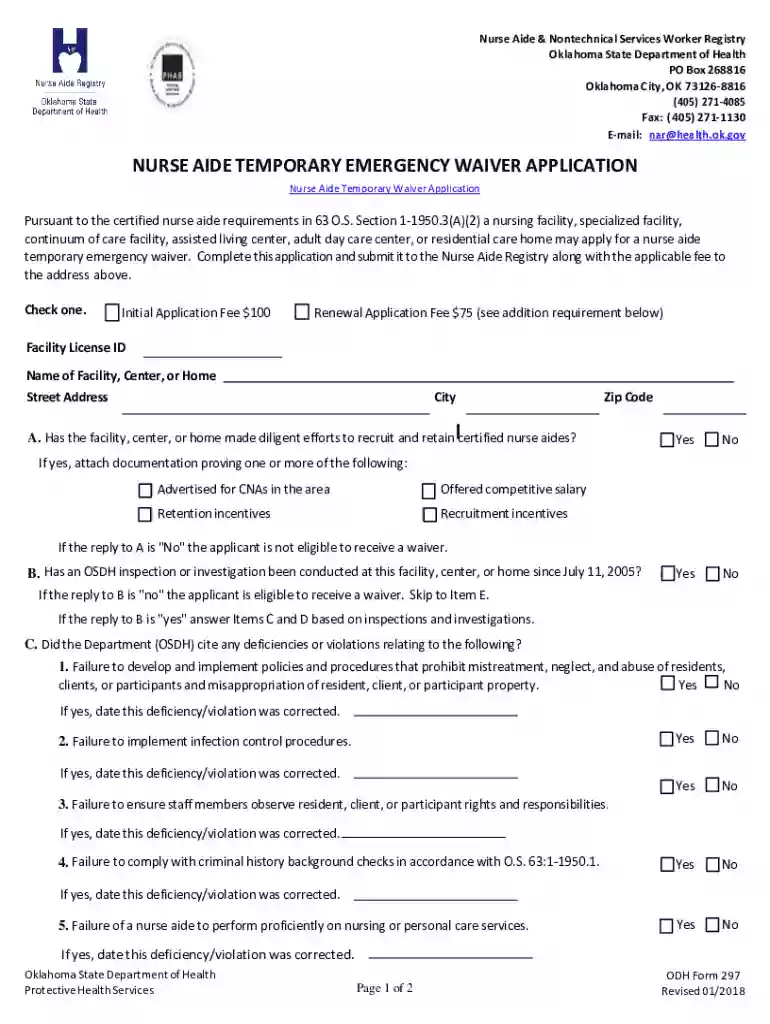
The Nurse Aide and Nontechnical Services Worker Registry is a centralized database that maintains records of individuals qualified to work as nurse aides or perform nontechnical services in certain healthcare facilities. This registry is essential for ensuring that personnel caring for patients have met specific training and certification requirements. Managed by health departments at the state level, its primary function is to store and verify the credentials of these workers to ensure they meet legal and professional standards. The registry helps healthcare facilities in the United States comply with regulations related to patient care and ensures public safety by maintaining a reliable record of worker qualifications.
How to Use the Nurse Aide and Nontechnical Services Worker Registry
Healthcare administrators and employers regularly utilize the registry to verify the credentials and status of potential hires. By accessing this database, employers can ascertain whether a nurse aide or service worker has met state-mandated requirements and is in good standing to work in healthcare settings. Here's how to effectively use the registry:
- Access the Registry: Most states offer an online portal where employers can log in using their credentials. It is crucial to have the correct login details to access this information.
- Search for Individuals: Once logged in, users can search for individuals using various parameters like name, certification number, or social security number.
- Verify Credentials: The registry will provide detailed information on the individual's certification status, including if they are eligible to work, any disciplinary actions, and renewal dates.
- Maintain Compliance: Regular checks can ensure continued compliance with state regulations regarding workforce qualifications and standards.
Steps to Complete the Nurse Aide and Nontechnical Services Worker Registry
To appear on the registry, candidates must complete a series of steps, which can vary slightly depending on state-specific requirements. Here is a generalized step-by-step guide:
- Completion of Training Program: Enroll and successfully complete a state-approved nurse aide training program. This often includes both classroom instruction and practical experience.
- Pass the Competency Examination: After training, candidates must pass a competency exam that tests their practical skills and theoretical knowledge.
- Submit an Application: Fill out and submit an application to be added to the state registry. This usually includes proof of training completion, exam results, and personal identification information.
- Verification and Admission: The state health department will verify the submitted documents and add the individual to the registry upon confirmation of eligibility.
Key Elements of the Nurse Aide and Nontechnical Services Worker Registry
The registry contains several crucial elements that are vital to its operation and utility:
- Training Records: Documentation of completed training programs, including the date and location of completion.
- Certification Status: Information about the individual's current certification, including expiration dates and renewal information.
- Disciplinary Actions: Details of any disciplinary measures taken against the worker, ensuring transparency and accountability.
- Contact Information: Personal contact details to keep records up-to-date and facilitate easy communication if needed.
State-Specific Rules and Variations
While the general structure of the Nurse Aide and Nontechnical Services Worker Registry is consistent across states, there may be variations based on local regulations:
- Training Requirements: The length and content of training programs can differ from state to state.
- Testing Processes: The format and components of the competency exams may vary, including written and practical assessments.
- Renewal Procedures: The frequency and process for renewing certification can differ, impacting how often aides must update their credentials.
- Additional State Registries: Some states may maintain separate registries for different types of nontechnical workers depending on their roles.
Required Documents for Registration
Individuals wishing to register must prepare and submit several documents, which usually include:
- Proof of Training Completion: Certificates or transcripts that confirm the individual has completed an approved training program.
- Competency Exam Results: Official documentation showing successful passing of the state exam.
- Personal Identification: Government-issued IDs or other forms of identification to verify identity and residency.
Legal Use and Compliance Considerations
Employers must use the Nurse Aide and Nontechnical Services Worker Registry responsibly and in line with legal requirements:
- Confidentiality Norms: Employers must handle the registry data with strict confidentiality to protect workers' privacy.
- Compliance Checks: Regular audits may be conducted to ensure facilities are using the registry to maintain a qualified workforce.
- Updates and Reporting: Ensuring that all changes in an aide's certification status are updated in a timely manner to avoid legal repercussions.