







Definition & Meaning
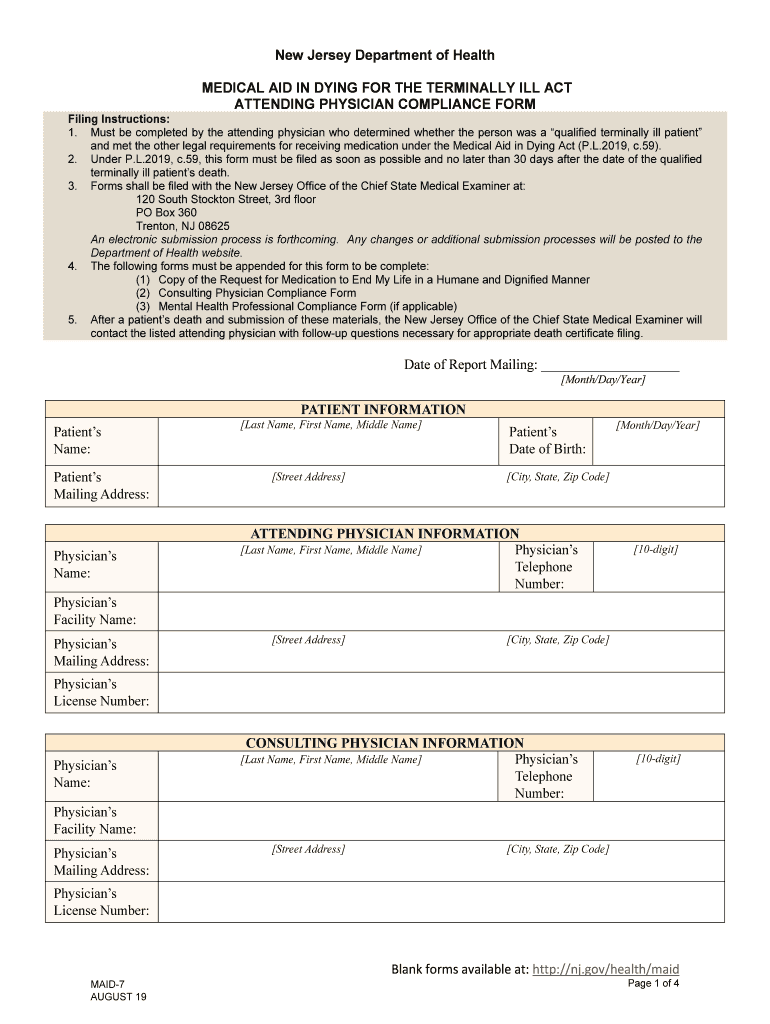
The "New Jersey Department of Health MEDICAL AID IN DYING - NJ" form, often invoked in conversations about end-of-life care, is a crucial document under the Medical Aid in Dying for the Terminally Ill Act. This law permits terminally ill adults in New Jersey to request and self-administer prescribed medication to end their lives peacefully, making this form instrumental in the legally governed process. It serves as an official record to ensure compliance with all legal requirements, documenting patient eligibility, consultation processes, and the responsible involvement of healthcare professionals.
Steps to Complete the New Jersey Department of Health MEDICAL AID IN DYING - NJ
-
Patient Eligibility Verification:
- Confirm age and residency requirements as outlined by New Jersey law.
- Verify terminal illness status with a prognosis of six months or less.
-
Physician Requirements:
- The attending physician must assess if the patient is mentally capable of making healthcare decisions.
- A consulting physician must verify the diagnosis and confirm that the patient meets all criteria.
-
Mental Health Assessment:
- If there are concerns about the patient's mental health or decision-making capacity, a mental health professional must evaluate the patient.
-
Informed Decision:
- The physician ensures the patient is fully informed about their diagnosis, prognosis, risks, and alternatives, including palliative care options.
-
Completion of Documentation:
- Accurately fill out each section of the form, ensuring all information aligns with the legal requirements.
-
Documentation Submission:
- Submit completed forms to the appropriate department within the stipulated timeframe.
Key Elements of the New Jersey Department of Health MEDICAL AID IN DYING - NJ
- Patient and Physician Information: Fields for recording vital details of both parties.
- Eligibility Confirmation: Sections dedicated to verifying vital criteria such as terminal illness diagnosis.
- Consultation Documentation: Requires input from primary and consulting physicians to ensure all medical consultations and verifications are documented.
- Medication Details: Specification of the prescribed medication, its dosage, and its method of administration.
- Decision Documentation: Forms detailing the patient's decision-making process, showcasing understanding and voluntary choice.
Eligibility Criteria
To use the form effectively, the patient must:
- Be an adult, aged 18 or older, and a resident of New Jersey.
- Be capable of making informed healthcare decisions as evaluated by a qualified physician.
- Have a terminal disease with a prognosis of six months or less.
- Voluntarily express a wish to end their life in a peaceful manner.


Legal Use of the New Jersey Department of Health MEDICAL AID IN DYING - NJ
Healthcare practitioners and patients must adhere strictly to guidelines provided by the Medical Aid in Dying Act. It is imperative to use this form to ensure that all legal processes are followed accurately for the request and administration of life-ending medication. The involved practitioners must submit necessary documents to the New Jersey Department of Health, ensuring transparency and compliance throughout the sensitive process.
Required Documents
- Attending Physician’s Report: Verifies diagnosis, prognosis, and patient eligibility.
- Consulting Physician’s Report: Provides a second opinion on the terminal diagnosis and eligibility.
- Mental Health Assessment (if applicable): Assesses competency if doubts arise during physician evaluations.
Form Submission Methods (Online / Mail / In-Person)
The form can be submitted through multiple channels:
- Mail: Send completed forms to the designated address provided by the New Jersey Department of Health.
- In-Person: Deliver forms physically to the responsible department office.
- Online: Some sections and supplementary documents can often be uploaded or filled out through the Department’s secure web portal.
Examples of Using the New Jersey Department of Health MEDICAL AID IN DYING - NJ
These scenarios illustrate appropriate use:
- Patients with Terminal Illness: For instance, a patient with advanced-stage cancer, having met all criteria, may choose this option after careful family discussions and consultations.
- Role in Hospice Care: Patients receiving hospice services may pursue this act as an extension of their care plan, ensuring a dignified end-of-life choice aligns with personal values.
Important Terms Related to New Jersey Department of Health MEDICAL AID IN DYING - NJ
- Self-Administration: The act of the patient taking prescribed aid-in-dying medication independently.
- Aid-in-Dying Medication: Specific pharmaceutical formulations prescribed for end-of-life purposes.
- Terminal Illness: A medical condition that is incurable and irreversible, leading to inevitable death within six months, as certified by medical professionals.




