






Definition & Meaning
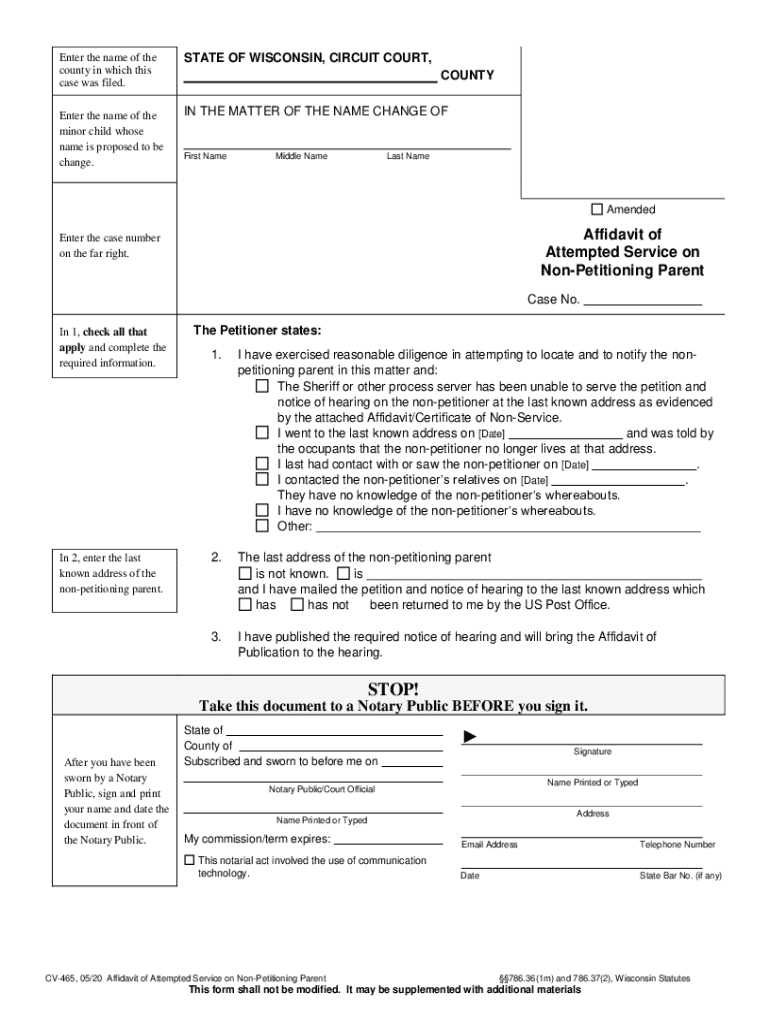
The "Name change - Wisconsin Court System - Court services - For" form is a legal document required when filing a name change petition for a minor child within the State of Wisconsin. It enables the petitioner, usually a parent or guardian, to legally request a different name for the child. This form involves entering vital information such as the child's current name, proposed new name, and the case number associated with the petition. It's a necessary step in ensuring that the name change is recognized officially by Wisconsin's legal system.
Steps to Complete the Name Change
-
Gather Necessary Information: Begin by collecting all relevant details including the child's current legal name, proposed new name, county of residence, and the case number tied to your name change petition.
-
Fill Out the Form Properly: Enter all information meticulously. Ensure names are spelled correctly and that each section of the form is complete. Missing or inaccurate information can result in delays.
-
Notify the Non-Petitioning Parent: With due diligence, make attempts to inform the non-petitioning parent about the upcoming proceedings. Failure to contact them can hinder your application.
-
Provide Additional Documentation: Attach any documents proving reasonable efforts to contact the non-petitioning parent if they have not been located. This may include attempted communication records.
-
Notarization: Before submission, the form must be notarized. Arrange for a notary public to witness your signature, ensuring all documentation is authenticated and legally binding.
How to Obtain the Form
The form can be accessed through the Wisconsin Court System's official website or directly from the local courthouse in your county. Depending on your convenience, it may be available in both physical copies from the courthouse or as a downloadable PDF from the online portal. This ensures that you can choose the most practical method for your circumstances.
Legal Use of the Form
This name change form holds legal significance as it is filed within the judicial system of Wisconsin. It adheres to state-specific regulations concerning name changes for minors, ensuring that any change is performed under the oversight of the court. It serves as an official record of the name change, particularly important for identification purposes, educational institutions, and other legal documents.
State-Specific Rules
Wisconsin has particular rules surrounding name changes for minors that must be followed:
- Residency Requirement: The child must reside in the state of Wisconsin for the petition to be valid.
- Parent Notification: Efforts must be made to notify both parents of the name change proceedings, ensuring fairness and transparency.
- Publication: In certain cases, there may be a requirement to publish a notice of the hearing in a local newspaper if the non-petitioning parent cannot be contacted.
These rules ensure the process is conducted fairly and aligns with both state and federal laws regarding the rights of parents and guardians.
Required Documents
Completing a name change for a minor in Wisconsin necessitates various supporting documents. This includes:
- Proof of Diligence in Contacting Non-Petitioning Parent: Communication records or affidavits showing attempts to reach them.
- Child’s Birth Certificate: Often required to verify the child's identity and parentage.
- Identification Forms: IDs or documents proving the identity and residence of the petitioner.
These documents are crucial in verifying the authenticity of the information provided and ensuring the name change is processed without hindrance.
Application Process & Approval Time
Once the form is filled, notarized, and submitted along with accompanying documents, the court reviews the information provided. The approval process timeframe can vary depending on court schedules, the complexity of your case, and the completion of due process elements like notifying the other parent. On average, it may take several weeks to a few months for a final decision and issuance of a legal order, depending on the backlog and efficiency of the local court system.
Penalties for Non-Compliance
Non-compliance in the form completion or submission process can lead to several consequences:
- Denial of Petition: Incomplete or inaccurate information can result in outright denial by the court.
- Legal Repercussions: Failing to make efforts to notify the other parent can potentially lead to legal action against the petitioner.
- Fines or Court Fees: Additional costs may incur if court procedures are not followed, including frequent resubmission fees.
Adhering to rules and properly submitting the form minimizes these risks, ensuring smooth processing through the legal system.