







Definition and Purpose of Waiver of Full Administration Affidavit
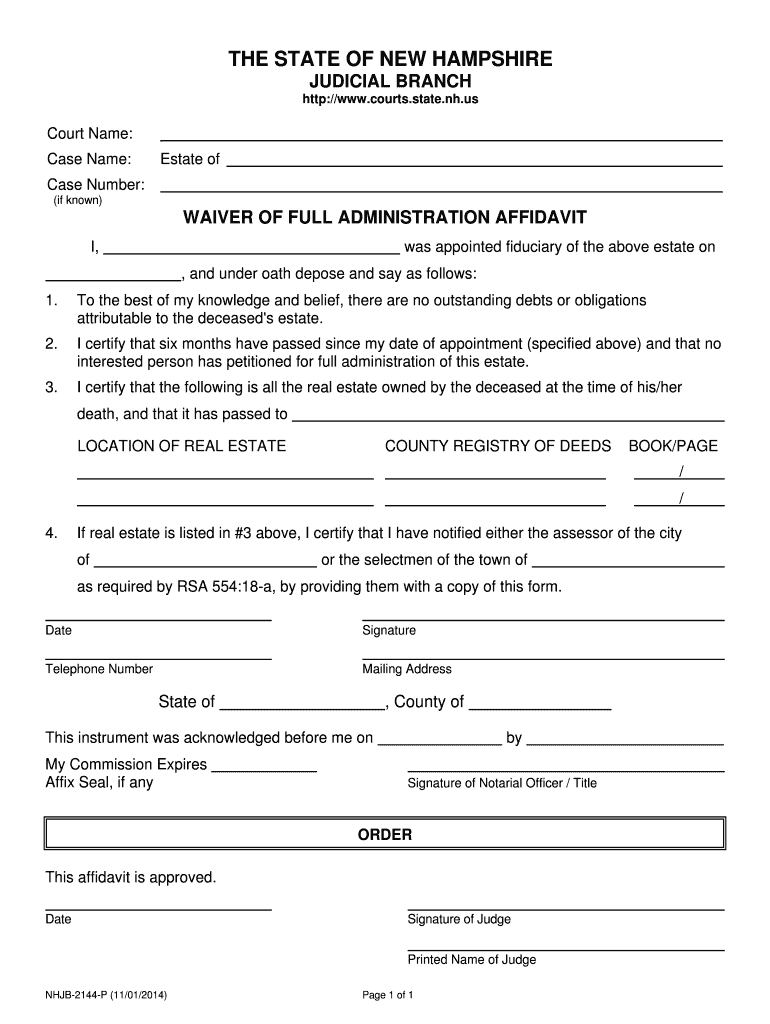
The Waiver of Full Administration Affidavit is a legal document used in the context of estate administration. This affidavit serves to certify that an estate does not require a full probate proceeding due to certain qualifying conditions, such as the absence of outstanding debts and no petitions for full administration within six months of the fiduciary's appointment. In New Hampshire, the affidavit specifically details the lack of debt and provides an outline of any real estate owned by the deceased. Notarization and judicial approval are necessary for validation. This document streamlines the probate process, reducing the need for extensive court involvement, thereby saving time and resources for the stakeholders involved.
Key Elements of the Waiver of Full Administration Affidavit
The waiver form includes several critical components that ensure its validity and effectiveness:
- Fiduciary Declaration: The person responsible for managing the estate must declare the status of debts and the timeline since their appointment.
- Real Estate Documentation: Details of any properties owned by the deceased need to be included to provide a complete picture of the estate’s assets.
- Notarization: Official notarization is crucial; it formally certifies the authenticity of the signatures and declarations made in the document.
- Judicial Approval: A judge's approval is needed to affirm that the estate qualifies for a waiver of full administration.
Steps to Complete the Waiver of Full Administration Affidavit
- Gather Necessary Information: Compile all relevant data regarding the deceased's estate, including creditor statements and asset documentation.
- Complete the Affidavit: Fill in the fiduciary declaration, ensuring accuracy and completeness of information related to debts and assets.
- Notarize the Document: Arrange for notarization to authenticate the signatures and declarations made in the document.
- Submit for Judicial Approval: Present the notarized affidavit to a court for the necessary judicial review and approval.
Importance of the Waiver in Streamlining Probate
The Waiver of Full Administration Affidavit is vital in simplifying the probate process by eliminating the need for comprehensive administration when qualifying conditions are met. This can significantly expedite the settlement of an estate, benefiting beneficiaries by reducing administrative costs and shortening the time required to distribute assets.
State-Specific Rules and Variations
While the waiver is commonly used in New Hampshire, different states may have variations or entirely separate processes for estate administration waivers. It is crucial to understand the specific legal requirements and documentation needed within each jurisdiction to ensure compliance.
Who Typically Uses the Waiver of Full Administration Affidavit
This affidavit is primarily used by fiduciaries of estates, including executors and administrators, when the conditions of the estate allow for a waiver of full administration. It is also useful for legal practitioners specializing in estate planning and probate law, who need to advise clients on estate settlement options.


Legal Implications and Compliance
Ensuring legal compliance when using a Waiver of Full Administration Affidavit is crucial. Failing to accurately disclose debts or to meet state-specific procedural requirements can lead to legal challenges and financial penalties. Therefore, fiduciaries should work closely with legal professionals to ensure all aspects of the affidavit and related processes are handled correctly to avoid potential issues.
Examples of Situations Requiring the Affidavit
Consider a scenario where a deceased individual's estate consists of only a single piece of real estate with no outstanding debts. In such instances, a Waiver of Full Administration Affidavit efficiently handles the estate without necessitating lengthy probate court procedures, thus providing a practical solution for minimal estates.




