01. Edit your form online
Type text, add images, blackout confidential details, add comments, highlights and more.

Type text, add images, blackout confidential details, add comments, highlights and more.

Draw your signature, type it, upload its image, or use your mobile device as a signature pad.

Send it via email, link, or fax. You can also download it, export it or print it out.
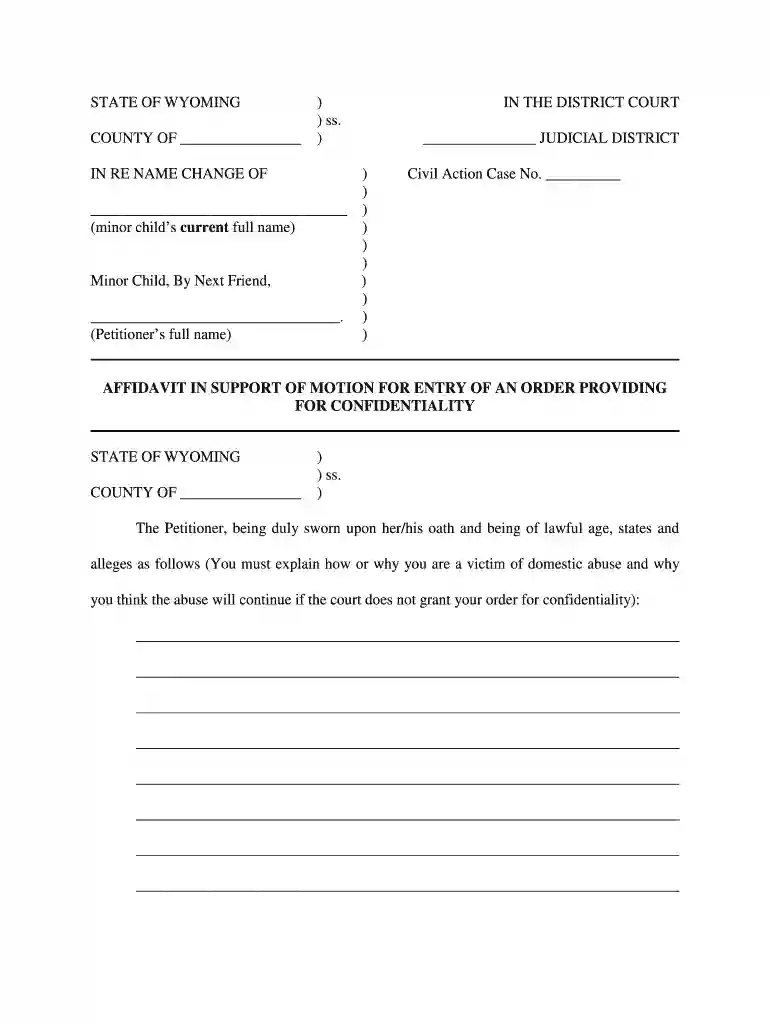
The "Parental Consent to Name Change of Minor Child - eForms" is a legal document that one or both parents complete to give formal consent for a minor child's name change. This form is often a requirement in legal processes where a name change application is made to a court. The primary purpose is to ensure that both parents, or the custodial parent, agree to the proposed name change, thus protecting the child’s rights and legal identity. This form supports the child’s welfare by ensuring that both parents are involved in such a significant decision.
To effectively use the Parental Consent to Name Change of Minor Child form, begin by ensuring you have the proper document based on your state's requirements. Once obtained, fill out the form with accurate information about the child, yourself, and the other parent if applicable. This will typically include:
After filling out the form, both parents must sign it in the presence of a notary public. Ensure all sections are completed to prevent processing delays.
Gather Required Information: Before filling out the form, collect all necessary data including identification documents for both the child and parents.
Complete the Form: Enter the child’s current information and the proposed new name. Be clear and concise about the reasons for the name change.
Review for Accuracy: Double-check the details for accuracy and completeness. Incomplete or incorrect forms could be rejected by the court.
Notarization: Both parents should sign the form in front of a notary public, who will notarize the signatures.
Submit the Form: Submit the form to the appropriate court with jurisdiction over the name change process. Follow any additional instructions provided by the court.
The form contains several critical sections that must be properly addressed:
The form is legally binding, meaning that once signed and notarized, it indicates the parent's or parents' consent for the child's legal name change. It’s a crucial step in the legal process for a minor's name change and often a prerequisite for court approval. Understanding the legal weight of the document ensures that parents acknowledge the seriousness and permanence of the decision.
Name change procedures, including parental consent forms, can vary significantly across states. Some states may require additional documentation, such as proof of identity or evidence of the reason for the name change. It’s important to refer to local laws or consult with a legal expert for state-specific guidelines. For instance, some jurisdictions might demand a public notice of the name change, while others may grant waivers for privacy reasons, especially in circumstances involving safety or domestic issues.
The primary rationale for requiring parental consent in minor name changes is to ensure both parents are informed and agreeable to the change, thus upholding the child’s best interests. This form helps protect the child from unilateral decisions that one parent may make, which might not align with the child’s welfare or legal rights. It is a safeguard for the minor’s legal identity and familial heritage.
To obtain this form, you can either download it from an online legal form repository or acquire it directly through your local court’s website. Make sure the form is approved for use in your specific jurisdiction to avoid any administrative issues during the name change process. Some courts might provide paper forms that can be completed on-site.
Consider a scenario where parents have divorced, and one parent wishes to change the child’s last name to match theirs. In such cases, the consent form ensures that this decision is made collaboratively, respecting the legal rights of the non-custodial parent. Another situation might involve a blended family where the stepchild wishes to adopt the surname of their step-parent, again requiring explicit consent from both biological parents when possible for the change to proceed.
We've got more versions of the Parental Consent to Name Change of Minor Child - eForms form. Select the right Parental Consent to Name Change of Minor Child - eForms version from the list and start editing it straight away!
| Versions | Form popularity | Fillable & printable |
|---|---|---|
| 2020 | 4.9 Satisfied (52 Votes) | |
| 2018 | 4.5 Satisfied (36 Votes) | |
| 2018 | 4.9 Satisfied (24 Votes) | |
| 2018 | 4.4 Satisfied (46 Votes) | |
| 2018 | 4.3 Satisfied (57 Votes) | |
| 2018 | 4.5 Satisfied (58 Votes) | |
| 2018 | 4.8 Satisfied (65 Votes) | |
| 2015 | 4 Satisfied (26 Votes) | |
| 2015 | 4.8 Satisfied (129 Votes) | |
| 2014 | 4 Satisfied (34 Votes) | |
| 2012 | 4.8 Satisfied (120 Votes) | |
| 2002 | 4.4 Satisfied (123 Votes) |
At DocHub, your data security is our priority. We follow HIPAA, SOC2, GDPR, and other standards, so you can work on your documents with confidence.