






Definition & Meaning
The New Mexico Uniform Owner Resident Relations Act - RLD is a legislative framework that outlines the legal responsibilities and rights of landlords and tenants in New Mexico. It serves to regulate the rental housing market by establishing standards for rental agreements, tenant rights, and landlord obligations. This Act aims to ensure a fair and consistent approach to addressing issues such as lease agreements, property maintenance, and dispute resolution.
Key Provisions
- Rental Agreements: Establishes legal standards for rental contracts, including necessary disclosures and terms.
- Tenant Rights: Protects tenants against unlawful eviction and ensures access to essential property maintenance.
- Landlord Responsibilities: Mandates landlords to maintain safe and habitable housing conditions.
How to Use the New Mexico Uniform Owner Resident Relations Act - RLD
To effectively use the New Mexico Uniform Owner Resident Relations Act - RLD, both landlords and tenants must familiarize themselves with its provisions applicable to their rental situations. Understanding the Act can aid in drafting compliant lease agreements and resolving disputes legally.
Process Steps
- Review: Obtain a copy of the Act and thoroughly review its sections relevant to your circumstances.
- Lease Drafting: When creating rental agreements, ensure they conform to the Act’s requirements.
- Dispute Resolution: Refer to the Act for guidance in handling tenant-landlord disputes legally.
How to Obtain the New Mexico Uniform Owner Resident Relations Act - RLD
The New Mexico Uniform Owner Resident Relations Act - RLD can be accessed through various state government websites and legal resource platforms. It is crucial for landlords, tenants, and legal professionals in New Mexico to review the current version to ensure compliance with the latest legal standards.
Acquisition Methods
- Online Access: Available for download on the New Mexico Legislature website.
- Legal Libraries: Visit local libraries or legal aid organizations for physical copies.
- Consultation: Legal professionals often provide resources and interpretations of the Act.
Steps to Complete the New Mexico Uniform Owner Resident Relations Act - RLD
There is no direct form completion required for the New Mexico Uniform Owner Resident Relations Act - RLD, but understanding how it integrates within lease agreements and legal transactions is essential for compliance.
Comprehensive Guide
- Drafting Leases: Ensure all contractual terms adhere to the Act.
- Legal Advice: Seek professional legal assistance for complex scenarios.
- Regular Updates: Stay informed of legislative changes that may affect property management practices.
Key Elements of the New Mexico Uniform Owner Resident Relations Act - RLD
This Act encompasses various critical components that dictate the lawful operation of rental arrangements in New Mexico. Understanding these elements can aid both landlords and tenants in navigating their legal relationships.
Essential Components
- Entry and Access: Stipulates conditions under which landlords can enter rental properties.
- Security Deposits: Outlines regulations on the collection, usage, and return of tenant deposits.
- Termination of Tenancy: Provides lawful procedures for ending a rental agreement.
Important Terms Related to the New Mexico Uniform Owner Resident Relations Act - RLD
Familiarity with the legal terminology used in the Act is key to effectively interpreting and applying its provisions in real-world scenarios.
Commonly Used Terms
- Premises: Refers to the physical property under a rental agreement.
- Breach of Lease: Describes a situation where either the landlord or tenant fails to uphold contract obligations.
- Habitability: Legal standard ensuring rental properties are safe and livable.
State-Specific Rules for the New Mexico Uniform Owner Resident Relations Act - RLD
While the Act provides a standardized approach, understanding state-specific regulations is crucial for lawful compliance, as New Mexico has distinct rules different from other states.
State Differences
- Local Amendments: Some municipalities might have additional regulations enhancing the Act.
- Enforcement: State agencies may provide resources and assistance in situations of breach or dispute.
Examples of Using the New Mexico Uniform Owner Resident Relations Act - RLD
Successfully applying the principles of the Act can resolve conflicts and prevent legal issues, providing a benchmark for good practice in rental relationships.
Practical Scenarios
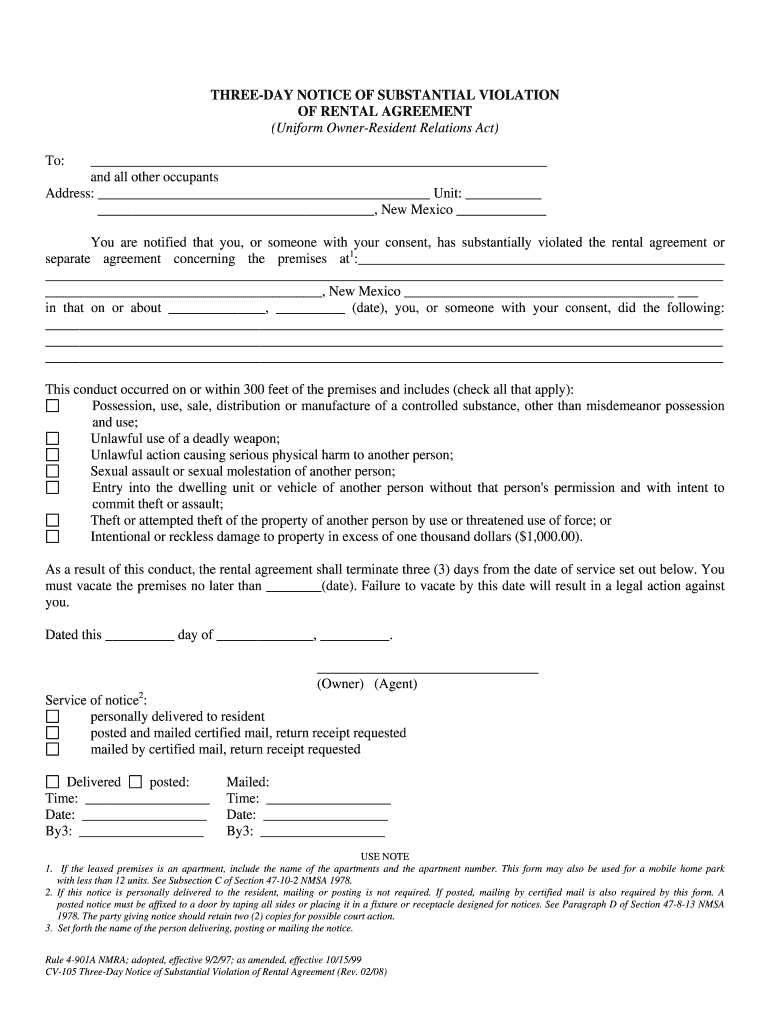
- Handling Lease Violations: Using the Act to structure notices and timelines for tenant compliance.
- Eviction Proceedings: Ensuring eviction processes are conducted legally by adhering to prescribed timelines and justifications.
Who Typically Uses the New Mexico Uniform Owner Resident Relations Act - RLD
This Act serves as a critical tool for a wide range of users, offering a legal framework for residential tenancy agreements.


Primary Users
- Landlords and Property Managers: Utilize the Act to structure tenancy agreements and regulatory compliance.
- Tenants: Reference the Act to safeguard their rights and ensure fair treatment in rental situations.
- Legal Professionals: Provide expertise in disputes and contract formation based on the Act.
Penalties for Non-Compliance
Failure to adhere to the New Mexico Uniform Owner Resident Relations Act can result in various penalties, impacting both landlords and tenants.
Consequences
- Fines and Legal Sanctions: Non-compliance may lead to financial penalties and legal actions.
- Tenant Compensation: Landlords may be required to compensate tenants for unlawful actions or breaches.
- Lease Nullification: Flawed agreements under the Act’s standards may be rendered void.
Filing Deadlines / Important Dates
While the Act itself does not have filing requirements, awareness of deadlines relevant to its provisions is critical for compliance.
Notable Timelines
- Eviction Notices: Specific timelines are mandated for issuance and response.
- Lease Terminations: Legal guidelines exist for notification periods during tenancy end.
Required Documents
Compliance with the New Mexico Uniform Owner Resident Relations Act mandates the use of certain documents, which support the legal standing of rental arrangements.
Documentation Needs
- Lease Agreements: Must reflect the Act's standards for legal enforceability.
- Notices and Correspondences: Documentation of communications regarding tenancy conditions or changes is essential.
These sections provide a comprehensive understanding of the specific legal landscape shaped by the New Mexico Uniform Owner Resident Relations Act - RLD. This insight ensures landlords, tenants, and legal professionals engage with rental relationships in a law-abiding and informed manner.