Definition & Meaning
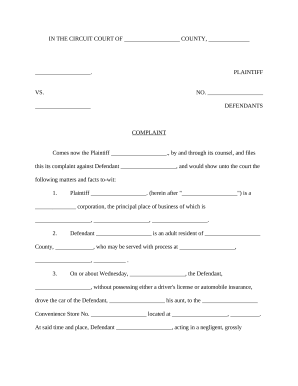
"IN RE THE NAME CHANGE OF:" is a legal term used in the context of name change petitions filed in the United States. This phrase typically appears in the heading of legal documents submitted to a court during a name change process. The term "IN RE" is a Latin phrase meaning "in the matter of," which denotes the subject of the legal proceeding. In this case, it indicates that the legal case is concerned with the change of a person's name. The document is a formal petition requesting that a court consider and approve a name change for the petitioner.
Steps to Complete the IN RE THE NAME CHANGE OF:
-
Prepare the Petition: Start by gathering all necessary personal information, including your current legal name, desired new name, and the reason for the change. Complete the form in its entirety, ensuring that all details are accurate.
-
Publication Requirement: Most states require you to publish a notice of your intent to change your name in a local newspaper to inform the public. Check state-specific requirements for publication timelines and approved newspapers.
-
File the Petition: Submit the completed petition along with proof of publication to the appropriate court. Some jurisdictions offer online filing, while others require physical submission.
-
Attend the Hearing: A court hearing may be required where you must present your case for the name change to a judge. Be prepared to explain your reasons and provide any additional documentation if necessary.
-
Receive the Court Order: If approved, the court will issue an order granting the name change. This document is essential for updating your official identification and records.
Who Typically Uses the IN RE THE NAME CHANGE OF:
This form is primarily used by individuals seeking a legal change of their personal name. Common users include:
- Adults: People wishing to change their name for personal reasons, such as preferring a different name, marriage, divorce, or transitioning genders.
- Parents or Guardians: Those looking to change the name of a minor child, usually after an adoption or to match a parent's name.
- Organizations: Businesses or entities changing their registered name for branding or operational reasons.


Key Elements of the IN RE THE NAME CHANGE OF:
- Petitioner Information: Full legal name, address, and contact details.
- Current and Desired Name: The current legal name and the new name requested.
- Reason for Name Change: Explanation of why the name change is desired.
- Publication Proof: Evidence that the change has been publicly announced as required by law.
- Signatures and Notarizations: Required signatures and notarization to authenticate the document's validity.
State-Specific Rules for the IN RE THE NAME CHANGE OF:
Name change procedures can vary significantly between states. Key variations include:
- Publication Requirements: Some states mandate specific newspapers for publication, while others might not require publication at all.
- Filing Fees: Costs associated with filing a name change petition can vary.
- Court Appearance: Not all states require a court appearance; some may approve petitions administratively.
Examples of Using the IN RE THE NAME CHANGE OF:
- Gender Transition: An individual changing their name to better match their gender identity.
- Post-Marriage: A person adopting their spouse’s surname.
- Cultural Reasons: Someone choosing a name reflective of their cultural or familial heritage.
Required Documents
- Petition Form: The main document stating the request for a name change.
- Identification: Copies of government-issued ID showing your current legal name.
- Birth Certificate: A document to verify identity, often required for minors.
- Publication Proof: A signed affidavit from the newspaper confirming the name change notice was published.
Legal Use of the IN RE THE NAME CHANGE OF:
The petition serves as a formal request to a court, seeking official recognition and legal sanction for a name change. Successful processing of this form results in a court order, which is then used to update legal documents such as driver's licenses, passports, and social security records. Courts must approve the change to prevent issues like fraud or evasion of legal responsibilities.