01. Edit your form online
Type text, add images, blackout confidential details, add comments, highlights and more.

Type text, add images, blackout confidential details, add comments, highlights and more.

Draw your signature, type it, upload its image, or use your mobile device as a signature pad.

Send it via email, link, or fax. You can also download it, export it or print it out.
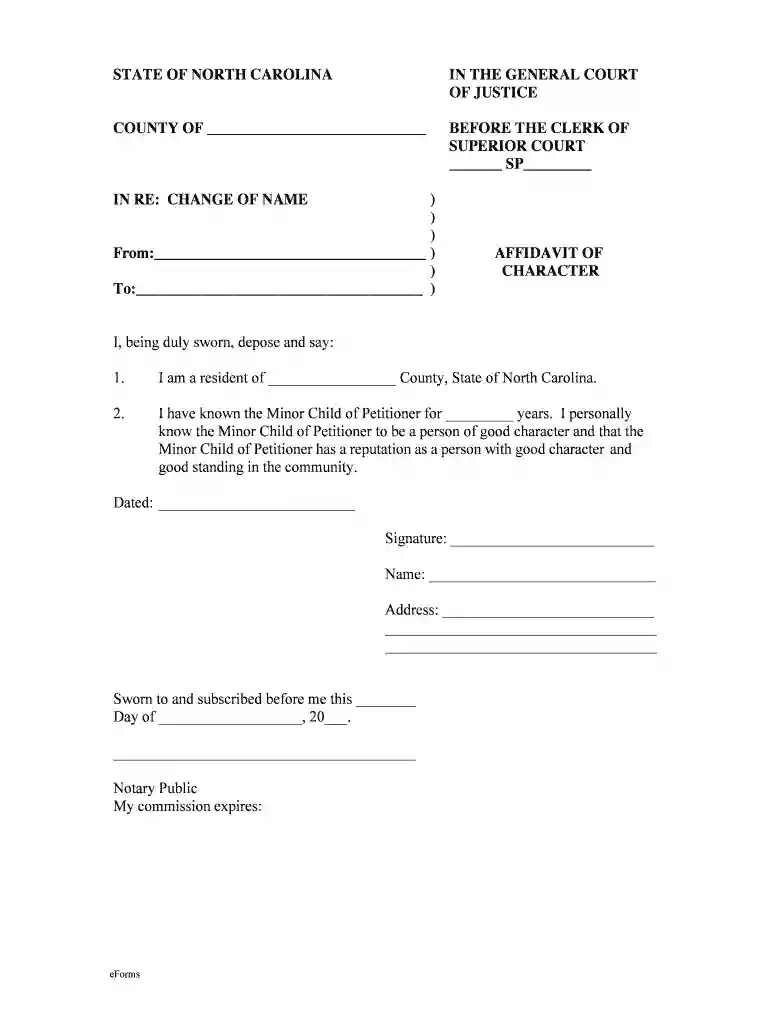
The "Clerk of Superior Court - North Carolina General Assembly" is a term that refers to a specific role within North Carolina's judicial system. The Clerk of Superior Court is a judicial officer elected in each county who manages administrative functions, records, and proceedings related to the Superior Court. The North Carolina General Assembly provides the legislative framework within which the clerks operate, ensuring that judicial processes align with state laws. This role encompasses a range of duties, including estate administration, processing civil and criminal court filings, and maintaining official court records.
The functions performed by the Clerk of Superior Court significantly impact the efficiency and integrity of court operations, affecting the swift administration of justice.
Completing forms related to the Clerk of Superior Court involves several methodical steps that ensure accuracy and compliance.
Understanding specific terminology is crucial when dealing with matters related to the Clerk of Superior Court.
North Carolina has distinct legal expectations and rules guiding the operations of its Clerks of Superior Court, shaped by state laws.
The forms and services provided by the Clerk of Superior Court hold legal significance and must be used correctly under the law.
Utilize these services to protect your legal interests in matters involving estate settlements, property disputes, and more.
Securing the necessary forms related to the Clerk of Superior Court's functions requires knowing the appropriate channels.
Ensure a stable internet connection and a compatible device if opting for online form download and submission.
Practical application of clerk services is illustrated through various commonly encountered scenarios.
A family may use the Clerk of Superior Court’s services to probate a deceased relative’s will, ensuring that the estate is distributed according to legal stipulations.
Individuals may file lawsuits through the Clerk’s office, which records and schedules hearings within the Superior Court’s jurisdiction.
Adhering to deadlines is critical in judicial processes managed by the Clerk of Superior Court.
Failure to adhere to filing deadlines can lead to dismissed cases or delayed court actions, risking financial and legal positions.
The "Clerk of Superior Court - North Carolina General Assembly" forms are issued by the respective Clerk of Superior Court’s office within each North Carolina county.
County offices provide tailored support and guidance, ensuring individuals can correctly obtain and complete necessary forms.
We've got more versions of the Clerk of Superior Court - North Carolina General Assembly form. Select the right Clerk of Superior Court - North Carolina General Assembly version from the list and start editing it straight away!
| Versions | Form popularity | Fillable & printable |
|---|---|---|
| 2018 | 4.8 Satisfied (162 Votes) |
At DocHub, your data security is our priority. We follow HIPAA, SOC2, GDPR, and other standards, so you can work on your documents with confidence.