Definition & Meaning
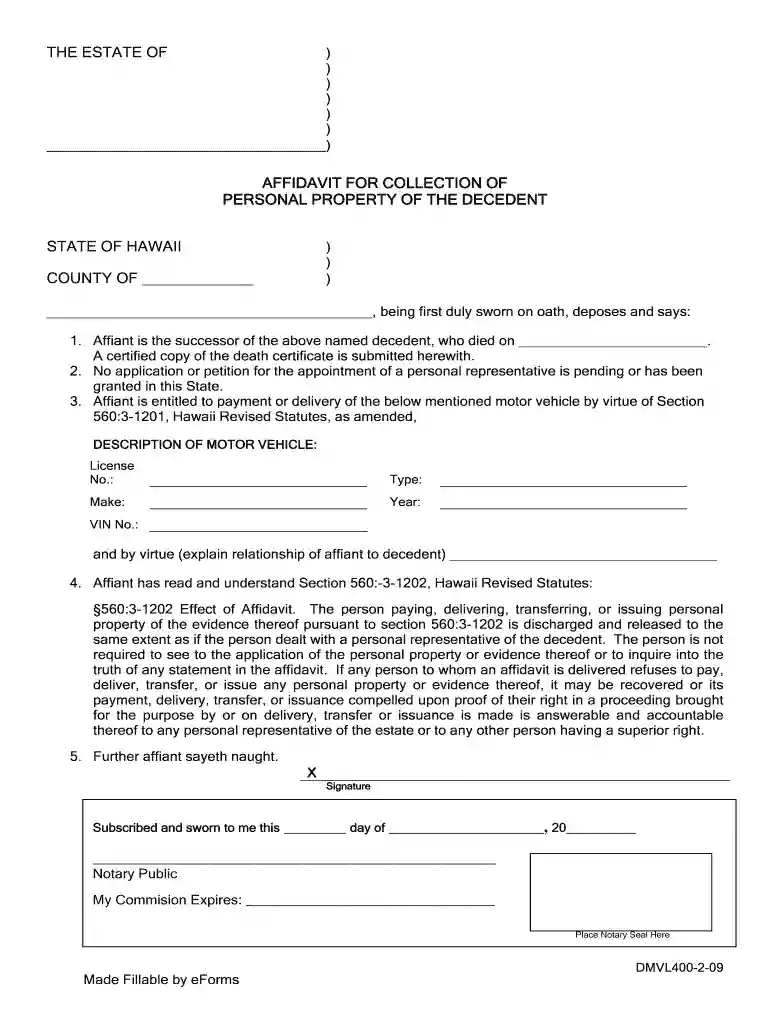
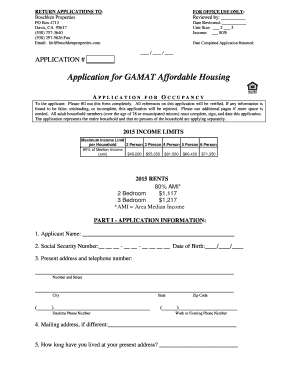
The Hawaii Small Estate Affidavit for Motor Vehicles is a legal document designed for the simplified transfer of ownership of a decedent's motor vehicle in Hawaii. This process allows an heir or beneficiary to claim the vehicle without the probate court's extensive involvement. The form is particularly relevant when the estate qualifies as a "small estate" under Hawaii law, which typically means the overall value of the decedent's personal property is below a statutory threshold. The affidavit confirms the relationship of the claimant to the deceased, ensures no personal representative is appointed, and facilitates a legal transfer of the vehicle title.
How to Use the Hawaii Small Estate Affidavit for Motor Vehicles
- Determine Eligibility: Verify that the estate qualifies as a small estate under Hawaii statutes, which usually limits the total estate value.
- Identify Relationship and Ownership: Establish your relationship with the deceased and confirm there is no other party with a superior claim.
- Complete the Affidavit: Fill out the affidavit form with accurate details, including the decedent's information, vehicle details, and your claim.
- Notarization: Have the document notarized. Notarization is crucial to validate the affidavit's authenticity.
- Submit to the Department of Motor Vehicles (DMV): Present the notarized affidavit to the Hawaii DMV to effectuate the transfer of the vehicle title.
- Pay Applicable Fees: Be prepared to pay any applicable fees required by the DMV for processing the title transfer.
Important Terms Related to Hawaii Small Estate Affidavit for Motor Vehicles
- Affiant: The person who swears the affidavit, usually the claimant of the vehicle.
- Decedent: The deceased individual whose estate is being administered.
- Probate: The legal process of administering the assets of the deceased.
- Title Transfer: The process of changing the legal ownership of the vehicle.
Key Elements of the Hawaii Small Estate Affidavit for Motor Vehicles
- Affiant's Declaration: A statement by the affiant declaring their lawful entitlement to the decedent's motor vehicle.
- Description of Vehicle: Specific details about the vehicle, including make, model, VIN, and license plate number.
- No Representative Clause: Confirmation that no personal representative is managing the estate or that any existing representative waives the claim.
- Legal Protection Clause: A section that protects individuals who release the vehicle to the affiant from liability.
State-Specific Rules for the Hawaii Small Estate Affidavit for Motor Vehicles
- Only applicable if the decedent was a Hawaii resident and the estate qualifies as small.
- Hawaii Revised Statutes Chapter 560 outlines the small estate limit and procedural requirements.
- The form is generally valid only if no probate proceedings are pending or commenced.
Required Documents
- Death Certificate: An official copy of the decedent's death certificate.
- Vehicle Title: The current original title of the vehicle.
- Proof of Relationship: Documentation establishing the affiant's relationship to the decedent, such as a marriage certificate or birth certificate.
Examples of Using the Hawaii Small Estate Affidavit for Motor Vehicles
- Spouse Claims: A spouse uses the affidavit to transfer a decedent's vehicle into their name, avoiding an extended probate process.
- Adult Child Claims: An adult child of the decedent claims the motor vehicle as part of their inheritance, facilitated by the affidavit.
- Siblings: Siblings agree that one should receive the decedent's vehicle based on mutual consent and use the affidavit to complete the transfer legally.
Steps to Complete the Hawaii Small Estate Affidavit for Motor Vehicles
- Gather Necessary Information: Collect the decedent's full name, date of death, and the vehicle's details.
- Fill Out the Affidavit Form: Enter accurate details. Ensure all required fields are filled thoroughly.
- Sign and Notarize: Affiant must sign the form in the presence of a notary public.
- Submit the Affidavit: Deliver the completed form to the DMV along with supporting documents for processing.
- Receive Title: Once the process is complete, receive the updated vehicle title reflecting the new ownership.
Legal Use of the Hawaii Small Estate Affidavit for Motor Vehicles
- The affidavit acts as a simplified claim to the vehicle when a decedent's estate does not necessitate the full probate administration, streamlining the transfer process for eligible beneficiaries.
- It serves as a legal protection mechanism for those facilitating the transfer, ensuring they are not liable for claims by other potential heirs.
- Explicitly complies with the Uniform Probate Code provisions adopted by Hawaii, streamlining succession processes.