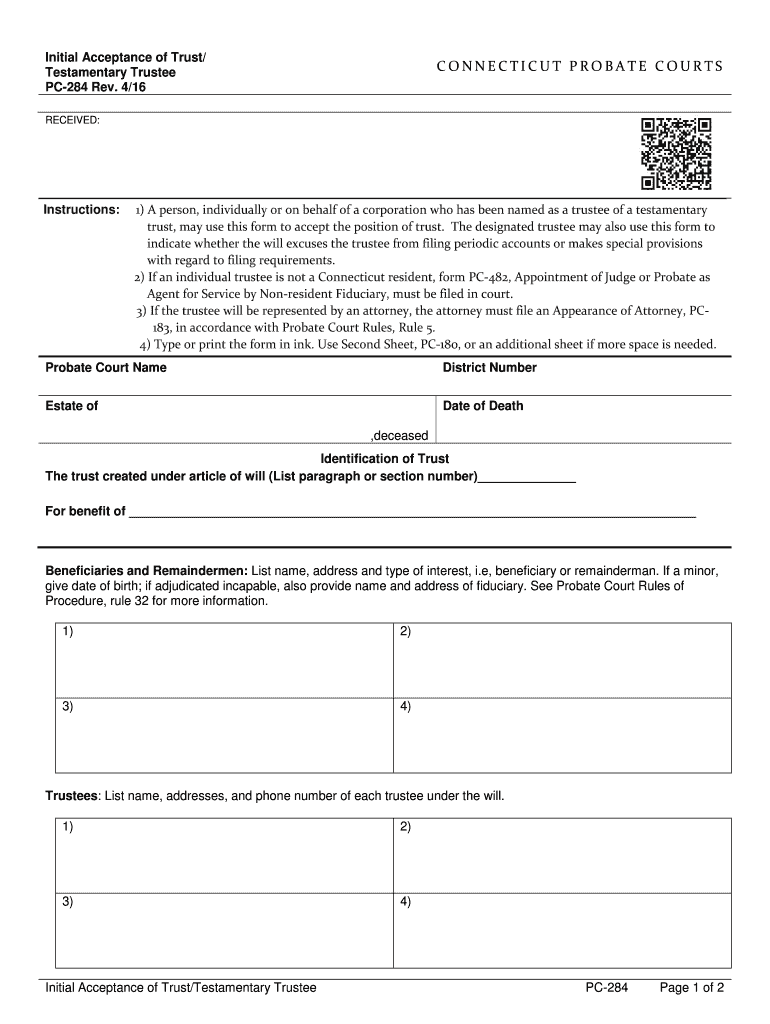







Definition & Meaning
The Initial Acceptance of Trust Testamentary Trustee Form PC-284 is a legal document used within the Connecticut Probate Courts system. Its primary purpose is to formally acknowledge and record an individual's or corporation's acceptance of the role as a testamentary trustee. This role involves managing and administering the assets within a trust created by a will. The form ensures that the trustee understands their responsibilities, which include fulfilling the last wishes of the deceased as outlined in their testamentary documents and acting in the best interest of the beneficiaries. The form PC-284 is essential for initiating the legal obligations and duties of a trustee.
Steps to Complete the Initial-Acceptance-of-Trust-Testamentary-Trustee-Form-PC-284
-
Gather Necessary Information: Before starting the form, collect all relevant details about the trust, such as the name of the deceased, the date of the will, and specific information regarding beneficiaries.
-
Complete Trustee Information: Fill out the section dedicated to the trustee's information, including name, contact details, and role acceptance statement.
-
Detail the Trust: Clearly outline details of the trust, including its name, any unique identifiers, and key provisions that should be observed.
-
List Beneficiaries: Provide comprehensive information about all beneficiaries involved, ensuring names and contact details are accurate.
-
Signatures: The appointed trustee(s) must sign the document indicating their acceptance of the role. If applicable, a co-trustee or witness may need to countersign.
-
Review and Submit: Carefully review the completed form for accuracy and then submit it to the appropriate probate court. Specific instructions for submission can typically be found on the probate court's website.
Key Elements of the Initial-Acceptance-of-Trust-Testamentary-Trustee-Form-PC-284
- Trust Details: Includes the formal title and date of the trust, outlining its terms and conditions.
- Trustee Information: Requires detailed personal information about the individual or corporation accepting trusteeship.
- Beneficiary Information: Involves listing details about parties benefiting from the trust, ensuring transparency and understanding for all involved.
- Acceptance Statement: A crucial section where the trustee confirms their understanding and willingness to fulfill trustee duties.
- Signatures: Legal significance is added through authenticated signatures of the trustee(s) and possible witnesses, validating the document's authenticity.
Legal Use of the Initial-Acceptance-of-Trust-Testamentary-Trustee-Form-PC-284
Trustees using this form are legally bound to manage the trust in the manner dictated by the will. The form serves several legal purposes:
- Formalizes Trustee Role: Legally binds the trustee to their fiduciary roles and responsibilities.
- Records Acceptance: Provides a legal record indicating that the trustee is aware of and agrees to the terms stipulated.
- Protects Beneficiaries: Ensures that beneficiaries' interests are legally protected by having a designated trustee accountable.
Important Terms Related to Initial-Acceptance-of-Trust-Testamentary-Trustee-Form-PC-284
- Testamentary Trust: A trust that's created in accordance with a will, activated upon the death of the person creating the will.
- Fiduciary Duty: The legal obligation of the trustee to act in the best interest of the trust and its beneficiaries.
- Probate Court: The legal body that oversees the administration of wills and trusts, including the acceptance of trusteeship through forms like PC-284.
- Beneficiary: An individual or entity designated to receive benefits from the trust and reliant on the trustee to manage the trust appropriately.
Who Typically Uses the Initial-Acceptance-of-Trust-Testamentary-Trustee-Form-PC-284
- Individual Trustees: Persons designated by the will of a deceased person to administer the estate according to specified wishes.
- Corporate Trustees: Financial institutions or companies appointed to oversee the trust's execution due to their expertise and resources.
- Legal Practitioners: Attorneys may use the form on behalf of their clients to ensure compliance with probate requirements.


State-Specific Rules for the Form
The form PC-284 is specifically used within Connecticut and follows the state's legal requirements for probate processes. It is important to adhere to Connecticut's rules regarding:
- Submission Deadlines: Compliance with filing time frames set by Connecticut probate courts.
- Witness Requirements: Specific to Connecticut, the form may require an additional number of witnesses to validate signatures.
Form Submission Methods
There are a few ways to submit Form PC-284:
- Online: Connecticut probate courts may allow for digital submission through their official website.
- Mail: Forms can be mailed to the respective probate court for those who prefer physical documentation.
- In-Person: Personal submission may be necessary or preferred for individuals seeking direct confirmation of their form's acceptance.
Penalties for Non-Compliance
Failing to complete or submit the Initial-Acceptance-of-Trust-Testamentary-Trustee-Form-PC-284 accurately and promptly can result in legal implications, such as:
- Delays in Trust Administration: Slowed legal processes affecting beneficiaries.
- Legal Penalties: Possible fines or other penalties levied by the probate court.