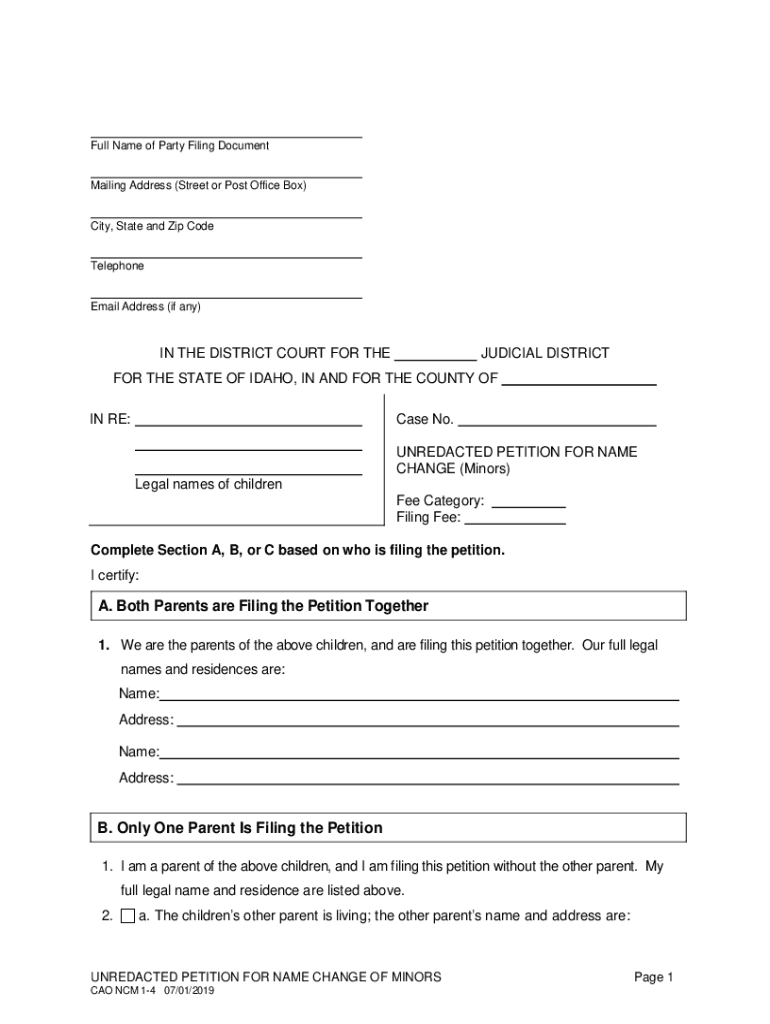







Comprehensive Overview of "A Both Parents are Filing the Petition Together"
Filing a petition together as both parents can significantly impact the processing and approval of certain legal and administrative requests, such as a name change for minors. Understanding the nuances and requirements of this form is crucial.
Steps to Complete the Petition
Completing the petition where both parents file together involves several detailed steps.
-
Gather Required Information
- Personal details of each parent, such as full name, address, and contact information.
- Details of the child or children involved, including names and birth dates.
-
Fill Out Parental Information
- Provide comprehensive details about both parents, ensuring accuracy to avoid delays.
-
State Your Intent
- Clearly specify the purpose, such as a name change, and provide justifications if applicable.
-
Sign and Date the Document
- Both parents must sign the form. Some jurisdictions may require notarization.
-
Prepare Supporting Documents
- Gather any additional documents that might be required, such as birth certificates or previous legal documents.
Necessary Forms and Documentation
Different states may have varying requirements when both parents file a petition together. However, some essential documents typically include:
- Birth certificates of the involved children.
- Proof of identity for each parent.
- Completed petition form specifying the nature of the request.
Legal Implications and Requirements
When both parents file a petition together, it usually implies joint agreement and acknowledgment regarding the request. This unified approach can often expedite the process and provide a stronger legal basis.
- Joint Consent: Legal systems often prioritize petitions with mutual parental consent due to fewer disputes.
- Jurisprudence: Understanding local laws regarding joint parent petitions is crucial, as some regions may have specific mandates.
Eligibility Criteria
Eligibility for filing a petition jointly as both parents typically includes:
- Legal guardianship of the children involved.
- An absence of current legal or custody disputes.


State-Specific Regulations
Each state might have unique requirements or instructions for petitions filed by both parents. It's essential to consult state-specific resources or legal advisors for precise guidance.
- Idaho Example: The District Court of Idaho, for instance, includes requirements for public notices and homogeneity in petition details.
Form Submission Methods
Submitting the form can vary depending on jurisdiction and personal preference:
- Online Submission: Some regions offer the convenience of digital submission through government portals.
- Mail or In-Person: Traditional methods remain valid and might be required for notarized documents.
Practical Examples and Scenarios
To illustrate the application of “A Both Parents are Filing the Petition Together” form, consider these scenarios:
- Name Change: Both parents agree on altering a child's name due to significant life changes such as adoption.
- Travel Consent: Joint approval might be necessary for international travel arrangements for minors.
Reasons for Filing Together
Filing a petition together provides several advantages:
- Efficiency: Streamlines the legal process as consent disputes are minimized.
- Clarity: Joint filing offers a clear, unified request to legal authorities.
Important Terms and Definitions
Understanding terms used within the form is essential:
- Petitioner: The individual(s) initiating the request, in this case, both parents.
- Respondent: In some forms, this could be the entity or individual completing additional steps post-filing.
Key Elements of the Petition Form
- Section for Personal Information: Ensures that both parents’ and children’s details are documented.
- Statement of Purpose: Explains the reason for filing, such as changes in legal rights or status.
Explore these sections thoroughly to ensure the effective use and completion of the form.