Definition & Meaning
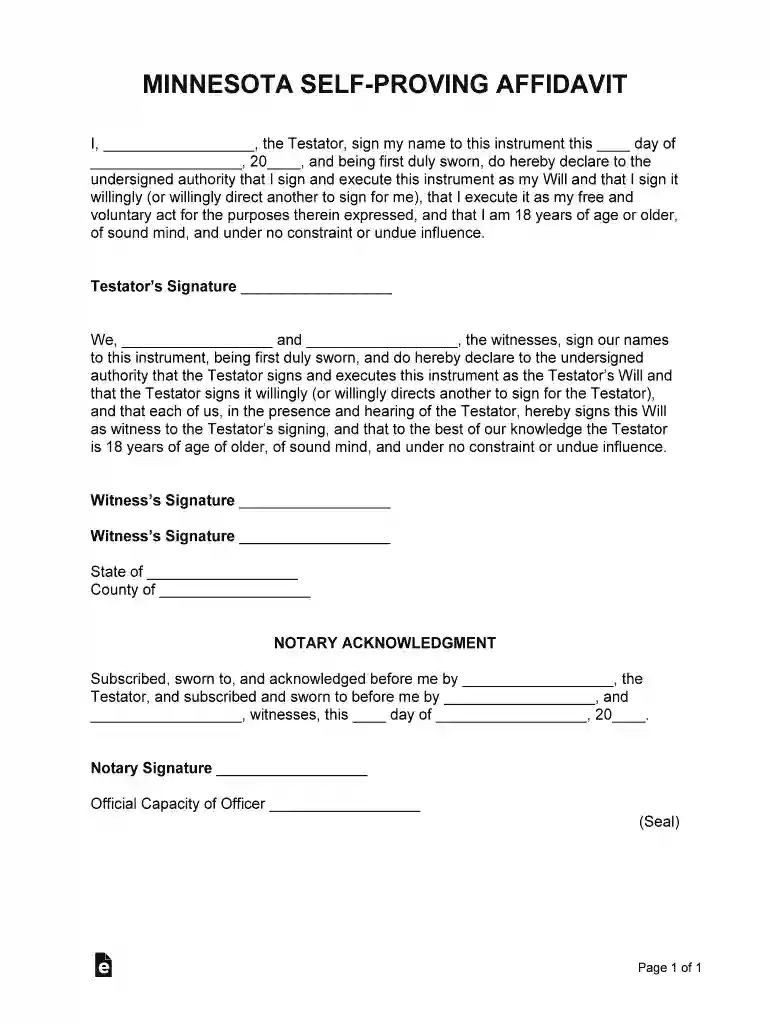
The Minnesota Self-Proving Affidavit Form is a legal document used to confirm the validity of a testator’s will when it is filed for probate in the state of Minnesota. It includes declarations by the testator and witnesses, attesting that the will was signed willingly, and the testator was of a sound mind and not under duress. The form also typically requires a notary acknowledgment to ensure that the documentation is legitimate and reduces the chances of contestation during the probate process.
Key Components of the Form
- Testator's Declaration: This section allows the testator to confirm that their will is executed voluntarily, accurately reflecting their wishes, and that they are capable of making such decisions.
- Witness Statements: The form requires signatures from at least two witnesses who must provide their details and confirm the testator's declaration.
- Notary Section: Validates the signatures with an official notary act, adding a layer of legal security to the form.
How to Use the Minnesota Self-Proving Affidavit Form
To properly use the Minnesota Self-Proving Affidavit Form, follow these detailed steps:
- Preparation: Ensure that you understand the purpose of the form as it relates to your will. Gather information about witnesses who are legally eligible.
- Filling Out the Form: Complete the form with the required information, including names, addresses, and signatures of both the testator and the witnesses.
- Signatures: Both the testator and witnesses must sign the form in the presence of a notary. Doing so confirms the authenticity of the document.
- Notary Acknowledgment: Present the completed form to a notary public who will verify the identities and execution of the document.
Benefits of Using the Form
- Streamlined Probate Process: With the affidavit, there is no need to call witnesses into court, expediting the probate.
- Legal Assurance: It serves as robust evidence that the will meets legal standards, reducing the likelihood of disputes.
How to Obtain the Minnesota Self-Proving Affidavit Form
Acquiring the Minnesota Self-Proving Affidavit Form is a straightforward process:
- Online Resources: Many websites, including legal service providers, offer downloadable templates specific to Minnesota’s requirements.
- Legal Consultations: It can be obtained through an attorney who specializes in estate planning, ensuring compliance with state laws.
- Libraries and Courthouses: Some county courthouses and local libraries may provide physical copies or guidance on obtaining the form.
Considerations When Obtaining the Form
- State-Specific Compliance: Verify that the form aligns with Minnesota's legal requirements to prevent any issues during probate.
- Professional Legal Advice: Engaging with a lawyer may provide additional assurance and peace of mind, especially where complex estates are involved.
Steps to Complete the Minnesota Self-Proving Affidavit Form
Filling out the form accurately is critical for it to be effective. Here’s a step-by-step guide:
- Gather Necessary Information: Collect personal details of the testator and witnesses.
- Complete Testator's Section: Record the testator’s full name and include their confirmation statement of understanding about the will.
- Witness Details and Signatures: The witnesses should read the declaration and provide their complete information, signing the document accordingly.
- Interaction with Notary: Arrange for a meeting with a notary public and ensure all parties sign the form in the notary's presence for validation.
Detailed Consideration
- Witness Eligibility: Ensure that witnesses are neutral parties, not beneficiaries of the will, and are over 18 years old to avoid any conflicts of interest.
- Secure Storage: Once completed and notarized, store the affidavit safely with the will to ensure quick access during probate.
Why You Should Use the Minnesota Self-Proving Affidavit Form
The Minnesota Self-Proving Affidavit Form serves a critical function in confirming the legitimacy of a will:
- Reduces Probate Complexity: By precluding the need for witnesses during probate, it simplifies legal proceedings and hastens asset distribution.
- Mitigates Contests: Provides strong proof against challenges over the testator's mental state or intent, ensuring wishes are fulfilled.
- Legal Protection: Safeguards the estate’s execution, offering legal protection to beneficiaries and peace of mind to the testator.
Practical Scenarios
- Complex Estates: For estates with multiple beneficiaries, clear documentation is crucial to prevent familial and legal disputes.
- Simplifying Legal Processes: Individuals aiming to streamline posthumous matters for their heirs often prefer this document.
Key Elements of the Minnesota Self-Proving Affidavit Form
A thorough understanding of the form includes recognizing its critical elements:
- Structuring of Information: Clearly delineated spaces for names, addresses, and roles of participants.
- Signing Methodology: Instructions that validate signatures by a notary, a crucial aspect of affirming the form’s legality.
- Notarization: A section dedicated to an official notary statement, which includes their seal and confirmation, ensuring the document’s legitimacy.
Importance of Each Element
- Witness Signatures: Acts as a safeguard, confirming the testator’s capability and willingness.
- Notary Public: Provides an objective validation, increasing the document's resilience against legal challenges.
State-Specific Rules for the Minnesota Self-Proving Affidavit Form
In Minnesota, specific requirements govern the use of the Self-Proving Affidavit Form:
- Legal Age for Witnesses: Witnesses must be adults, generally over 18, to validate the document.
- Neutral Witness Requirement: Witnesses should not be beneficiaries to ensure unbiased validation of the will’s execution.
- Notarization Mandate: Mandatory notary involvement provides legal assurance and authenticity.
Variation Across States
- Witness Criteria: Not all states demand witness neutrality, but Minnesota emphasizes this to prevent potential conflicts.
- Notary Specifications: While some states may offer flexibility, Minnesota stipulates rigid notary requirements to uphold the document’s integrity.