






Definition and Purpose of the Nebraska Self-Proving Affidavit Form
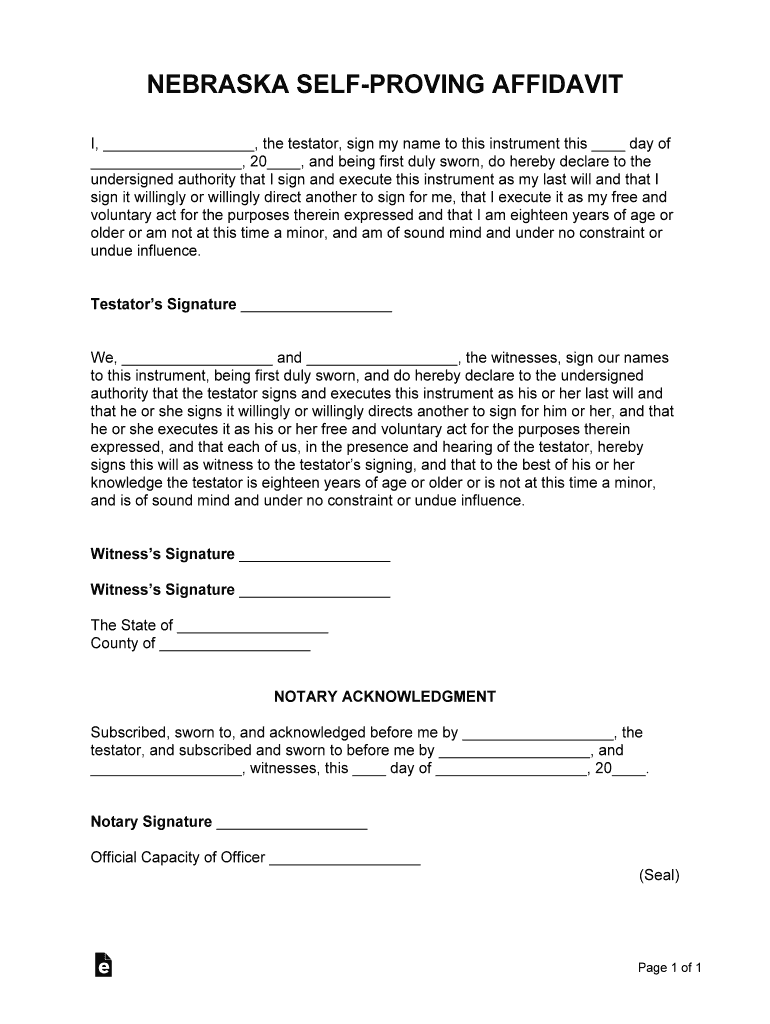
The Nebraska Self-Proving Affidavit Form is a legal document used to support the validity of a last will and testament. This form allows the testator, the person creating the will, to affirm that the will was executed freely and with sound mind. It serves as a declaration that the will was duly executed according to state laws and that the witnesses observed this process. The presence of this form aims to streamline estate proceedings by potentially removing the need to call witnesses when the will is submitted for probate.
Essential Components of the Form
Signature Requirements
The form requires signatures from several parties, including:
- Testator: Verifies the authenticity and voluntary nature of the will.
- Two Witnesses: Confirm they observed the testator signing the will.
- Notary Public: Officiates and certifies the document, providing a notary acknowledgment to affirm the identities of the signatories.
Affirmations and Declarations
Each signatory on the form provides specific affirmations:
- The testator declares their awareness and intention in creating the will.
- Witnesses affirm they were present during the will's signing.
- The notary validates the occurrence of these actions and the identities involved.
Detailed Steps to Complete the Nebraska Self-Proving Affidavit Form
- Gather Parties: Ensure the presence of the testator, two witnesses, and a notary public.
- Complete Personal Information: Accurately fill in details for the testator and witnesses, including names and addresses.
- Sign the Will: The testator signs the will in the presence of the witnesses.
- Execute the Affidavit: Each witness signs the affidavit to confirm they witnessed the execution of the will.
- Notarization: The notary public verifies the identities and signatures, then completes the notarization section.
- File or Retain: Keep the original document with the will to present during probate.
How to Obtain the Nebraska Self-Proving Affidavit Form
The form can be acquired through several venues:
- Legal Websites and Online Platforms: Many websites offer downloadable versions.
- Law Firm Services: Engaging a lawyer who specializes in estate planning often provides access to the form.
- State Probate Offices: Direct inquiries can yield official guidance and document copies.
Legal Use and Benefits
Employing the Nebraska Self-Proving Affidavit Form offers several legal advantages:
- Reduces Probate Complexity: By serving as prima facie evidence, it can eliminate the need for witnesses at probate.
- Mitigates Legal Challenges: Provides robust defense against potential disputes concerning the will's validity.
- Efficient Estate Closure: Speeds up the process, thereby aiding quicker access to the estate for beneficiaries.
State-Specific Rules for Usage
Witness and Notary Requirements
- Qualifying Witnesses: Nebraska mandates that witnesses be competent and preferably disinterested parties who derive no benefit from the will.
- Notary Public Role: The notary’s presence is essential for the affidavit to carry legal weight in court proceedings.
Document Storage
- It is advisable to store the self-proving affidavit securely with the will, ensuring its availability when required by probate courts.
Practical Examples of Form Usage
- Simplifying Probate: A will with this affidavit was processed without witness testimonies, reducing probate time.
- Counteracting Challenges: In a contested will case, the affidavit served as strong evidence of the testator’s intentions.
Important Terms Related to the Form
- Testator: The individual who creates the will.
- Probate: The judicial process of authenticating a will.
- Notary Public: An official who verifies identities and certifies documents for legal purposes.
Common Scenarios and Variations
Individual and Family Wills
The form is applicable for both personal and family estate planning, suitable for single individuals and those with extensive familial dependents.
Updates and Amendments
Revising a will may necessitate a new affidavit if substantial changes occur, ensuring continued legal protection under modified circumstances.
Eligibility and Applicability
General Eligibility
- Anyone creating a will in Nebraska is eligible to attach a self-proving affidavit, as long as they fulfill all legal requirements outlined in the state's testamentary laws.
Unique Scenarios
- Applicable in ensuring witness availability or clarity regarding testamentary capacity, especially valuable in family disputes or when potential objections are anticipated.