






Definition & Meaning
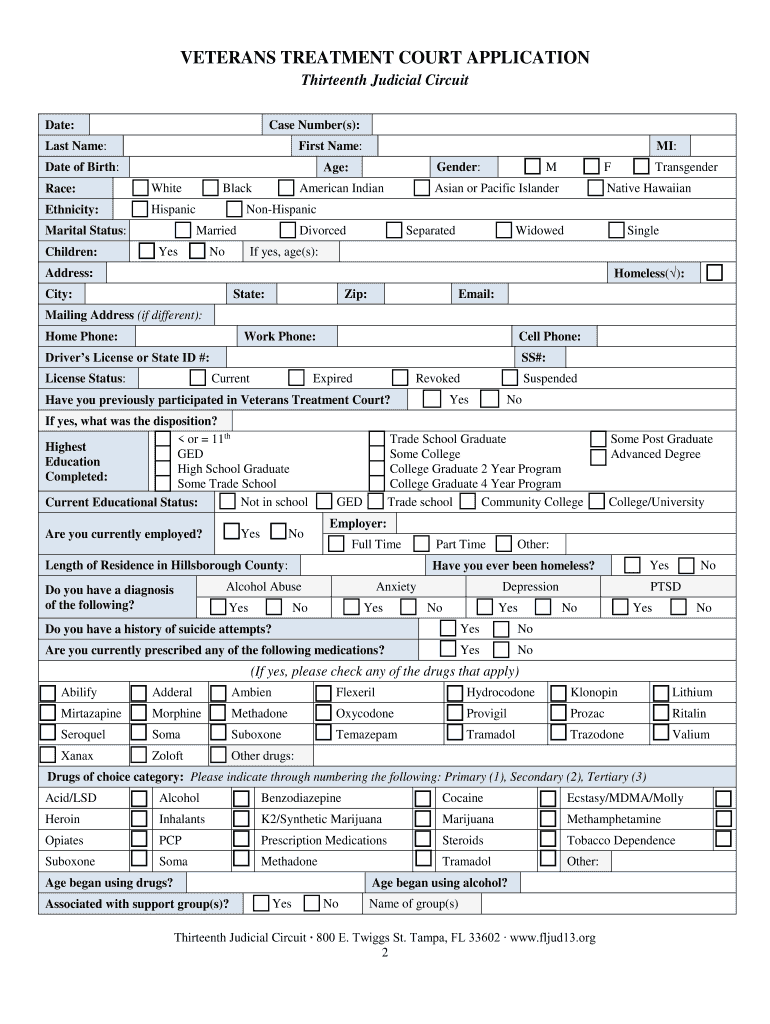
The Veterans Treatment Court Application for the Thirteenth Judicial Circuit is an essential legal document created to support veterans struggling with mental health challenges, substance abuse disorders, or psychological problems related to their military service. The primary purpose of the application is to facilitate admission into the Veterans Treatment Court program, which offers rehabilitation and support rather than punishment. This form is integral to the court's mission to provide assistance to veterans who face criminal charges influenced by their military experiences.
Key Elements of the Veterans Treatment Court Application
The application comprises various sections that require detailed information from the applicant.
- Personal Information: Includes full name, address, and contact details.
- Military Service Details: Requires specifics about military service, such as service branch, rank, and duration of service.
- Current Charges: Applicants must disclose the criminal charges they are facing.
- Consent for Release: Involves the applicant's agreement to release confidential information that is necessary for program participation.
Understanding each element is crucial for applicants to ensure they provide comprehensive and accurate information.
Eligibility Criteria
Eligibility for the Veterans Treatment Court program involves several considerations:
- Veteran Status: Applicants must be veterans of the United States Armed Forces.
- Service Connection: Issues such as substance abuse or mental health problems must be connected to the applicant's military service.
- Current Legal Situation: The applicant must be facing charges in the Thirteenth Judicial Circuit and are eligible for court-supervised rehabilitation.
These criteria aim to align the program's resources with the veterans who stand to benefit most.


Steps to Complete the Veterans Treatment Court Application - Thirteenth Judicial Circuit
Completing the application involves several steps:
- Gather Information: Collect all necessary personal, military, and legal information.
- Fill Out Personal Details: Enter full name, contact information, and address accurately.
- Document Military Service: Provide detailed military history, including branch and service period.
- List Current Charges: Clearly outline any current legal charges or proceedings.
- Sign Consent Forms: Agree to the release of confidential information relevant to the court proceedings.
- Review and Submit: Double-check all entered information for accuracy before submission.
Completing these steps meticulously helps ensure the application is processed efficiently.
Legal Use of the Veterans Treatment Court Application
The application serves a dual legal purpose: it is both an entry vehicle into the Veterans Treatment Court and a legal agreement to comply with the program’s conditions. Applicants are legally bound to provide truthful information and adhere to the program’s rules, offering a path to potential rehabilitation and legal resolution under the guidance of the court.
Important Terms Related to the Veterans Treatment Court Application
- Substance Abuse Disorder: A pattern of symptoms resulting from the use of a substance that you continue to take, despite experiencing problems as a result.
- Confidential Information Release: A formal agreement to allow the sharing of sensitive information pertinent to legal proceedings and treatment.
- Rehabilitation Programs: Court-mandated intervention programs aimed at treating psychological or substance-related issues.
Grasping these terms supports applicants in understanding their obligations and rights.
Who Typically Uses the Veterans Treatment Court Application
The application is specifically designed for:
- Veterans struggling with mental health or substance abuse issues due to military service.
- Legal practitioners assisting veterans through the application process.
- Veterans' advocates and support organizations helping veterans navigate the legal system.
Understanding the typical users ensures that the application reaches those most in need.

Examples of Using the Veterans Treatment Court Application
Consider a U.S. Army veteran charged with a minor offense linked to PTSD. By applying to the Veterans Treatment Court, they could opt for treatment rather than traditional sentencing. Jane, a Navy veteran coping with addiction, might complete the application to seek structured support and avoid further legal consequences.
These scenarios highlight the application’s role in leading veterans towards recovery and reintegration.