






Definition and Purpose of the Manual for the Certification of Laboratories
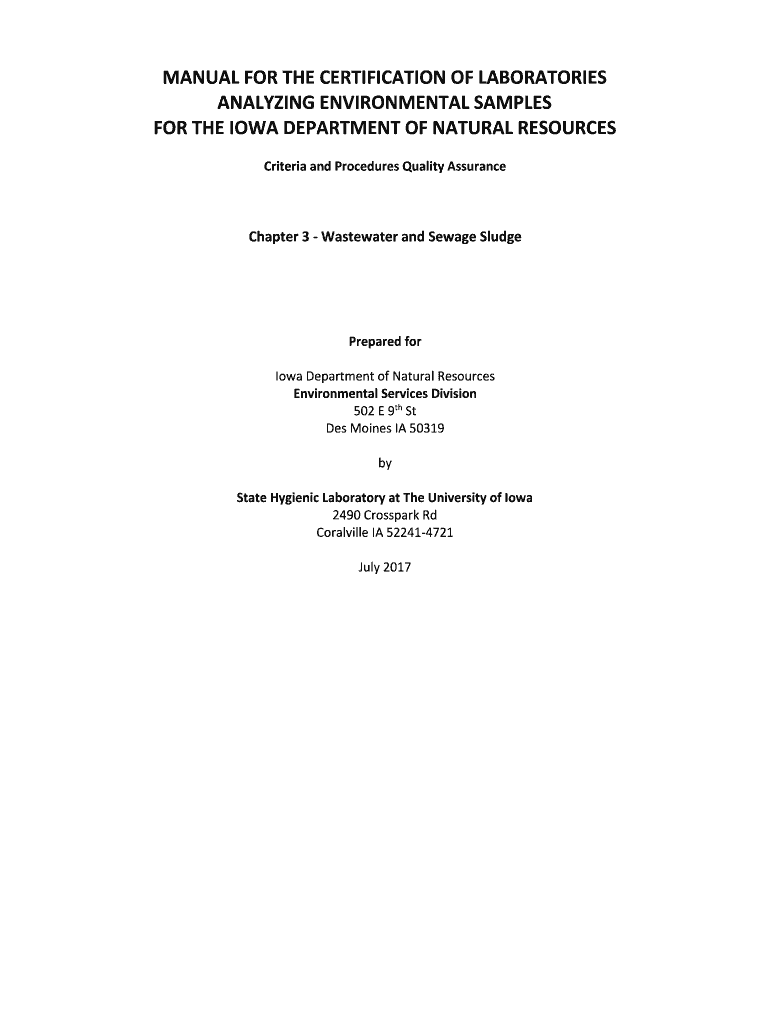
The Manual for the Certification of Laboratories serves as a comprehensive guide designed primarily for laboratories involved in analyzing environmental samples, focusing specifically on wastewater and sewage sludge. Developed for the Iowa Department of Natural Resources, this manual outlines stringent criteria and standardized procedures essential for laboratory certification. The main purpose of the manual is to ensure that laboratories adhere to high-quality standards, thus guaranteeing the accuracy and reliability of the environmental data they provide. The manual encompasses various elements such as application processes, evaluation criteria for both personnel and facilities, quality assurance requirements, and the protocols for maintaining existing certifications. By following these guidelines, laboratories can meet regulatory standards and provide validated results that are crucial for environmental monitoring and protection.
Key Elements of the Manual for the Certification of Laboratories
The manual contains several critical components that are essential for obtaining and maintaining certification:
- Application Procedures: Detailed steps on applying for laboratory certification, including necessary documentation and deadlines.
- Evaluation Criteria: Standards for assessing laboratory personnel qualifications, facility adequacy, and technical capabilities.
- Quality Assurance Requirements: Protocols for ensuring the accuracy and reliability of test results through proper calibration, validation, and proficiency testing.
- Record Maintenance: Guidelines for documentation practices to maintain traceability and compliance with state regulations.
These elements ensure a robust framework for laboratories to consistently produce high-quality data.
Steps to Complete the Certification Process
Completing the laboratory certification involves several sequential steps:
- Initial Assessment: Evaluate whether the laboratory meets the basic requirements regarding personnel, equipment, and facility.
- Application Submission: Complete the application form accurately and gather all required supporting documents.
- Proficiency Testing: Conduct testing to demonstrate the laboratory's ability to produce accurate results consistently.
- On-site Evaluation: Participate in an on-site inspection by certification authorities to verify adherence to the guidelines.
- Approval or Remediation: Receive certification approval or follow up with corrective actions if deficiencies are identified.
These steps guide laboratories through the entire certification process, ensuring compliance and readiness to operate under state regulations.
Importance of Adhering to the Manual
Adhering to the Manual for the Certification of Laboratories is crucial for several reasons:
- Regulatory Compliance: Ensures that laboratories operate in conformity with state and federal regulations, preventing legal and financial penalties.
- Data Integrity: Promotes the production of accurate and reliable data essential for environmental decision-making and policy formulation.
- Client Trust: Builds confidence among stakeholders and clients in the laboratory's ability to deliver precise and trustworthy results.
Adherence to the manual not only aligns with legal standards but also enhances the laboratory's reputation and reliability in the environmental sector.
Evaluation Criteria for Laboratories
The manual outlines specific criteria for evaluating laboratories, focusing on key areas:
- Personnel Qualifications: Requirements for employee education, experience, and ongoing training.
- Facility Standards: Specifications for laboratory layout, equipment, and safety measures.
- Technical Procedures: Approved methodologies for sample collection, handling, and analysis.
These evaluation criteria ensure that qualified personnel and well-equipped facilities are in place to deliver accurate results.
Legal Use of the Certification Manual
Legal compliance with the certification manual is mandatory and has several implications:
- Binding Obligations: Laboratories agree to adhere to the specified procedures and regulations upon receiving certification.
- Inspection and Audits: Allows for regular audits and inspections to ensure ongoing compliance with the certified procedures.
- Enforcement Actions: Non-compliance may result in fines, revocation of certification, or legal action by regulatory authorities.
Understanding the legal framework surrounding the certification manual is essential for laboratories to operate legally and avoid penalties.
Application Process and Approval Time
The application process for certification is detailed and involves:
- Document Preparation: Collection and preparation of necessary documents such as laboratory protocols, personnel certifications, and quality control records.
- Submission Timeline: Adherence to submission deadlines to expedite the review process.
- Review Period: Approval times may vary, with a typical review period ranging from several weeks to a few months, depending on the complexity of the application and the completeness of the submitted information.
Proper planning and timely submission are vital to ensure the swift processing and approval of certification applications.
Digital vs. Paper Version of the Manual
The manual is available in both digital and paper formats, offering different advantages:
- Digital Version: Enhances accessibility, allows for easy updates, and supports environmentally friendly practices by reducing paper use.
- Paper Version: Provides a tangible reference that can be useful in settings where digital access is limited or impractical.
Choosing between the digital and paper version depends on the laboratory's operational needs and technological capabilities.