



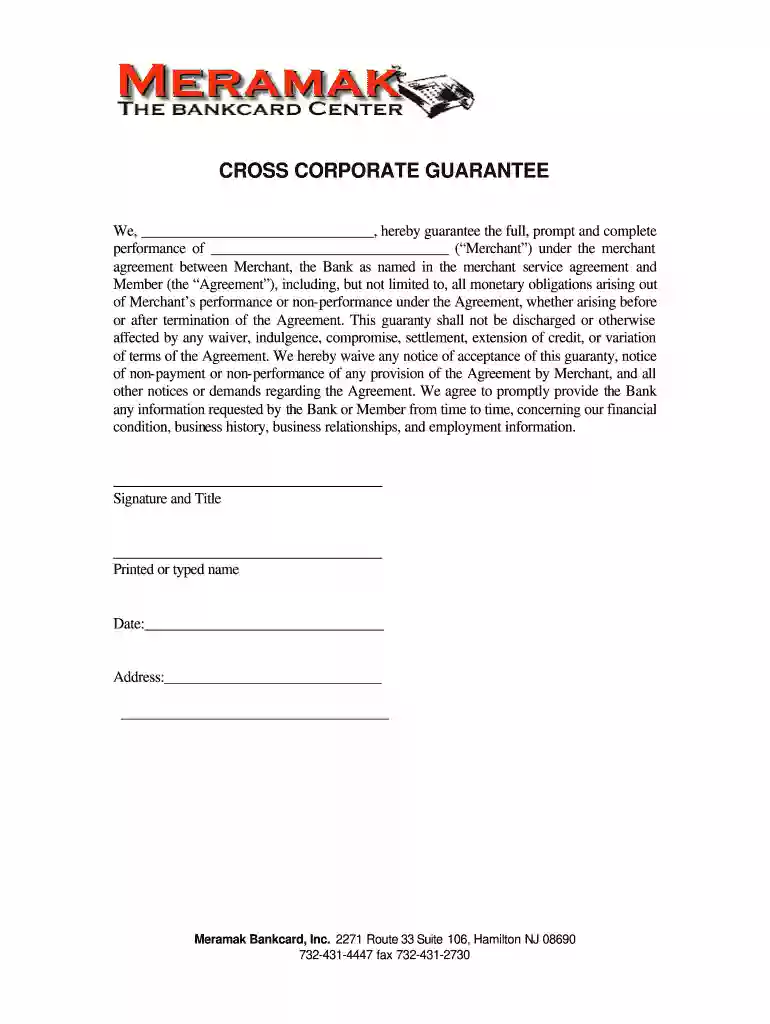
01. Edit your cross company guarantee template online
Type text, add images, blackout confidential details, add comments, highlights and more.

Type text, add images, blackout confidential details, add comments, highlights and more.

Draw your signature, type it, upload its image, or use your mobile device as a signature pad.

Send cross company guarantee template uk via email, link, or fax. You can also download it, export it or print it out.
A cross company guarantee template is a legal document in which one company (the guarantor) agrees to fulfill the obligations of another company (the primary debtor) under an agreement with a third party, often a bank. This ensures that the parties involved are protected, and it clarifies the responsibilities of the guarantor. The template outlines critical features such as the obligations of each party, circumstances under which the guarantee can be invoked, and any waivers of rights or notices that may apply. Essentially, it serves as a safeguard to ensure that obligations are met, particularly in financial transactions.
Utilizing a structured template streamlines the process of creating a cross company guarantee, ensuring all necessary legal elements are included. It minimizes the risk of misinterpretation and provides a clear framework for all parties involved.
Completing a cross company guarantee template requires meticulous attention to detail to ensure that all relevant information is accurately captured. The following steps outline the procedure for filling out the template:
Identify the Parties: Clearly write the full legal names of the guarantor and the primary debtor, along with their addresses and contact information.
Define the Terms: Specify the nature of the agreement between the primary debtor and the third party, including the amounts guaranteed.
Insert Specific Obligations: Articulate the obligations that the guarantor agrees to fulfill, and the scenarios under which these obligations will be enacted.
Include Waivers and Limitations: State any applicable waivers or limitations regarding the rights of the guarantor. This can involve waiving future notifications or demands from the creditor.
Review and Sign: Once completed, the document should be reviewed for accuracy by all parties involved. The guarantor should sign and date the document to formalize the agreement.
Cross company guarantees are commonly employed in various business scenarios, particularly in the following contexts:
Financial Institutions: Banks often require cross company guarantees when lending to a company, ensuring that they have recourse to another financially stable entity should the primary borrower default.
Corporate Groups: Parent companies may use these guarantees to support their subsidiaries or affiliates in obtaining financing or entering contracts, thereby reinforcing the group’s financial leverage.
Joint Ventures: When two or more companies collaborate on a project, a cross guarantee can provide assurance to investors or creditors, signaling a commitment from all parties.

Understanding the specific terminology associated with cross company guarantees is crucial for clear communication and effective documentation. Below are some of the key terms:
Guarantor: The company that agrees to fulfill the obligations of the primary debtor.
Primary Debtor: The party responsible for the primary obligations under the original agreement.
Default: Failure of the primary debtor to meet their contractual obligations, triggering the guarantor's responsibilities.
Waiver: A provision where the guarantor relinquishes certain rights, which can affect their recourse options in the event of a default.
Using a cross company guarantee template must adhere to specific legal standards to be enforceable. The following factors contribute to the legal validity of the document:
Clarity and Precision: The terms of the guarantee must be clearly articulated and unambiguous, leaving no room for misinterpretation.
Mutual Consent: All parties must willingly agree to the terms without coercion, ensuring that the agreement is valid.
Written Form: Cross company guarantees should be documented in writing to ensure they comply with contract law standards.
Affixed Signatures: Legally binding agreements require signatures from all involved parties, demonstrating their acceptance of the terms laid out in the document.
Real-world scenarios where a cross company guarantee template might be employed include:
Bank Loan Guarantees: A parent corporation may guarantee a loan made to its subsidiary, providing reassurance to the lending institution that obligations will be met even if the subsidiary faces financial difficulties.
Lease Agreements: A company may guarantee lease obligations on behalf of a subsidiary, ensuring the landlord that rental payments will be made.
Supplier Agreements: Businesses may use a cross company guarantee to assure suppliers that payment will be made, enhancing their creditworthiness.
When choosing to create or maintain a cross company guarantee template, businesses have the option of using either digital or paper formats. Here are the considerations for each:
In conclusion, the choice between digital and paper formats may depend on the culture of the organization, the complexity of the agreements involved, and specific industry practices.
At DocHub, your data security is our priority. We follow HIPAA, SOC2, GDPR, and other standards, so you can work on your documents with confidence.
(5) Cross guarantees must be submitted, either at the time of initial application for licensure on a form prescribed by the Department in Rule 61-35.013, F.A.C.Read more
Feb 28, 2026 Indicate by check mark if the registrant is a well-known seasoned issuer, as defined in Rule 405 of the Securities Act. ☒ Yes ☐ No.Read more


