01. Edit your form online
Type text, add images, blackout confidential details, add comments, highlights and more.

Type text, add images, blackout confidential details, add comments, highlights and more.

Draw your signature, type it, upload its image, or use your mobile device as a signature pad.

Send it via email, link, or fax. You can also download it, export it or print it out.
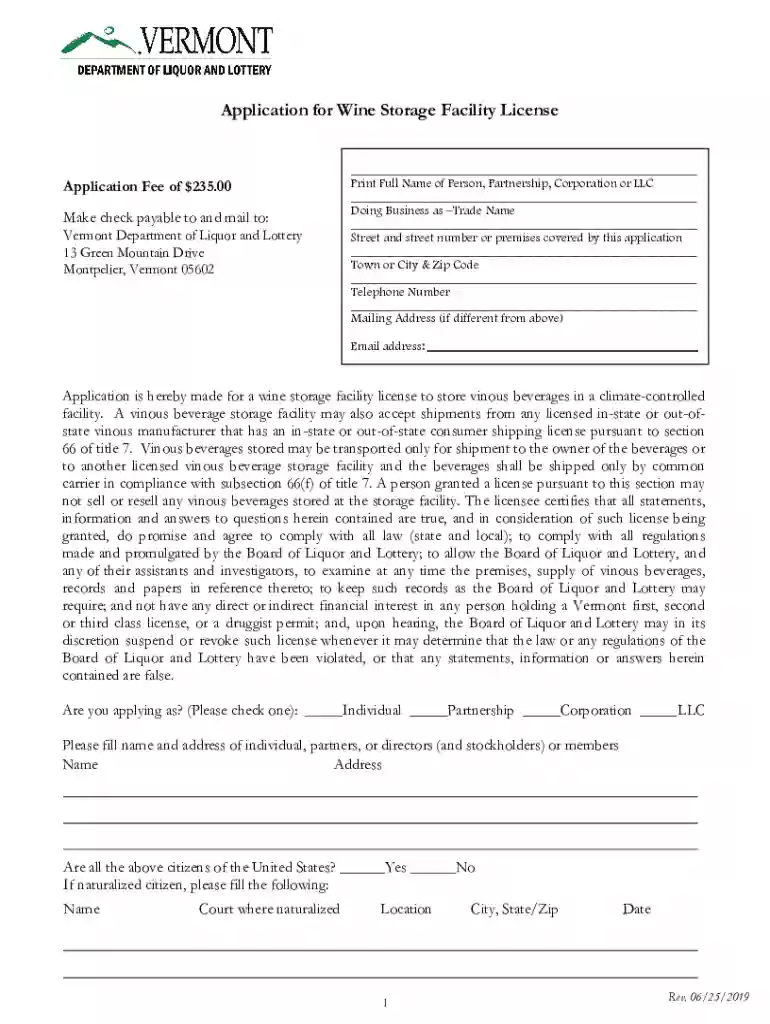
The Application for Wine Storage Facility License is an official form required in Vermont for the legal operation of facilities intended for the storage of vinous beverages. It permits the storage of wine in appropriate, climate-controlled conditions while prohibiting the sale and resale of these beverages. This application is a critical step for businesses involved in the maintenance of wine storage facilities, ensuring compliance with state regulations. The license not only standardizes the operational criteria for such facilities but also promotes adherence to legal standards for preserving wine quality.
The form entails various components that applicants must address, including:
These elements collectively establish a framework for ensuring the responsible and legal storage of wine.
By following these steps, applicants can efficiently navigate the application process.
Applicants must submit several documents alongside the form to ensure the application is complete:
Organizing these documents before applying saves time and reduces the likelihood of application errors.
Using the Wine Storage Facility License properly involves understanding the restrictions on wine activities within the licensed premises:
Compliance with these legal guidelines ensures operational validity and protects against legal complications.
Vermont applies particular statutes and policies that applicants need to consider:
Understanding these state nuances is essential for both the application process and ongoing compliance.
Certain business structures find significant advantages in obtaining this license:
These businesses benefit by ensuring that vinous beverages are stored in accordance with industry best practices, enhancing service credibility and customer trust.
The application can be submitted through several channels, providing flexibility to applicants:
Choosing the appropriate method depends on the applicant’s preference for convenience and pace in processing the application.
We've got more versions of the Application for Wine Storage Facility License form. Select the right Application for Wine Storage Facility License version from the list and start editing it straight away!
At DocHub, your data security is our priority. We follow HIPAA, SOC2, GDPR, and other standards, so you can work on your documents with confidence.