






Definition & Meaning
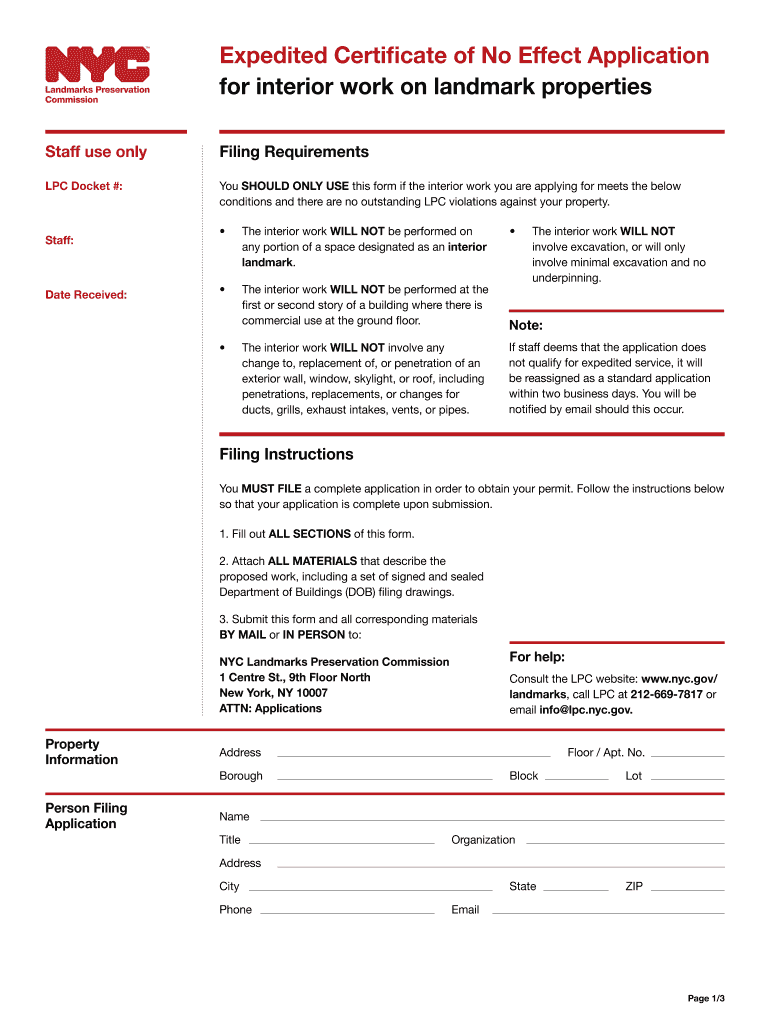
The Expedited Certificate of No Effect Application is a specialized document utilized in scenarios where proposed interior work on landmark properties does not affect their landmark status. This application facilitates faster processing compared to a standard Certificate of No Effect, provided the work aligns with specific guidelines. It is a key tool in navigating regulatory requirements for interior modifications for property preservation without the delay inherent in standard application processes.
How to Use the Expedited Certificate of No Effect Application
To effectively use the Expedited Certificate of No Effect Application, one must follow a structured process:
- Review Eligibility: Ensure the proposed work qualifies for expedited processing by confirming it does not impact landmarked features like exterior walls or involve excavation.
- Prepare Documentation: Gather the necessary information, including detailed descriptions of the work, architectural plans, and any required forms.
- Submit Sworn Statements: Both the architect/engineer and the property owner must provide sworn statements validating compliance with applicable regulations.
How to Obtain the Expedited Certificate of No Effect Application
Securing the Expedited Certificate of No Effect Application involves a few key steps:
- Access the Application Form: Typically available from the local landmarks preservation commission or equivalent body overseeing historical properties.
- Gather Additional Documentation: Include sanctioned plans and any related documents outlining the intended modifications.
- Engage Professional Assistance: Depending on project complexity, consider enlisting an architect or legal expert specialized in historic properties to ensure compliance.
Steps to Complete the Expedited Certificate of No Effect Application
Completing the application necessitates attention to detail:
- Fill Out Personal and Property Information: This section requires identifying details, including the property address and ownership data.
- Describe Proposed Work: Provide a clear, concise description of the modifications, emphasizing those aspects qualifying for expedited service.
- Submit Supporting Documents: Attach relevant architectural drawings, owner/architect statements, and any additional materials that might assist in the decision-making process.
- Submit for Approval: Deliver the completed application and accompanying documents to the designated preservation body.
Important Terms Related to Expedited Certificate of No Effect Application
- Interior Landmarks: Architectural features within a building officially recognized for their cultural or historical significance.
- Sworn Statement: A declaration by architects/engineers and property owners affirming the project's compliance with landmark regulations.
- Expedited Process: A faster procedure offered when alterations are strictly internal and do not affect landmarked elements.
Legal Use of the Expedited Certificate of No Effect Application
The legal use of this application is confined to ensuring that the proposed changes within landmark properties comply with established preservation laws without necessitating extensive approval timelines. It is critical that users comprehend the legal ramifications of non-compliance, including potential fines or project delays.
Key Elements of the Expedited Certificate of No Effect Application
- Applicant Information: Names, addresses, and role in the project.
- Project Description: Detailed account of the modifications, with emphasis on alignment with prescribed regulations.
- Supporting Documents: Attach certified plans, photographs, and written statements per application requirements.
State-Specific Rules for the Expedited Certificate of No Effect Application
Rules regarding expedited applications can vary by state:
- Local Regulations: Some states may impose additional stipulations to ensure local heritage protection.
- Agency Guidelines: The specific tasks and responsibilities of state or local landmarks boards may influence application processing and eligibility.
Filing Deadlines / Important Dates
Staying aware of filing deadlines is crucial:
- Submission Periods: Some jurisdictions may have distinct windows for filing expedited applications, often tied to committee meeting schedules.
- Timeline for Decision: Once submitted, a defined timeline outlines when decisions should be rendered, typically aligning with landmarks preservation agendas.
Form Submission Methods (Online / Mail / In-Person)
Applicants can submit their forms through several methods:
- Online Portals: Some jurisdictions support digital filing, expediting initial paperwork processing.
- Mail Submission: Traditional postal submissions may be necessary if electronic means are unavailable or unsupported.
- In-Person Filing: Some regulatory bodies require physical submission to ensure all supporting documents are properly verified.
Application Process & Approval Time
The approval timeline for the Expedited Certificate of No Effect Application is generally shorter:
- Rapid Review: Typically involves a streamlined review of submissions given their non-intrusive nature on landmark features.
- Approval Periods: Approval times may vary depending on the volume of applications and specific scheduling by landmarks commissions.
Eligibility Criteria
To determine eligibility:
- Scope of Work: Ensure alterations are wholly interior-focused, without external impact or significant structural change.
- Property Type: Only certain types of landmarked properties may qualify for expedited processing, based on local preservation statutes.


Versions or Alternatives to the Expedited Certificate of No Effect Application
While the expedited version is preferred for qualifying projects, there are alternative application types:
- Standard Certificate of No Effect: Used when projects might have a broader impact, requiring more extensive review.
- Permit for Minor Work: Some jurisdictions may offer this option for projects straddling the line of expedited criteria.