






Definition and Purpose
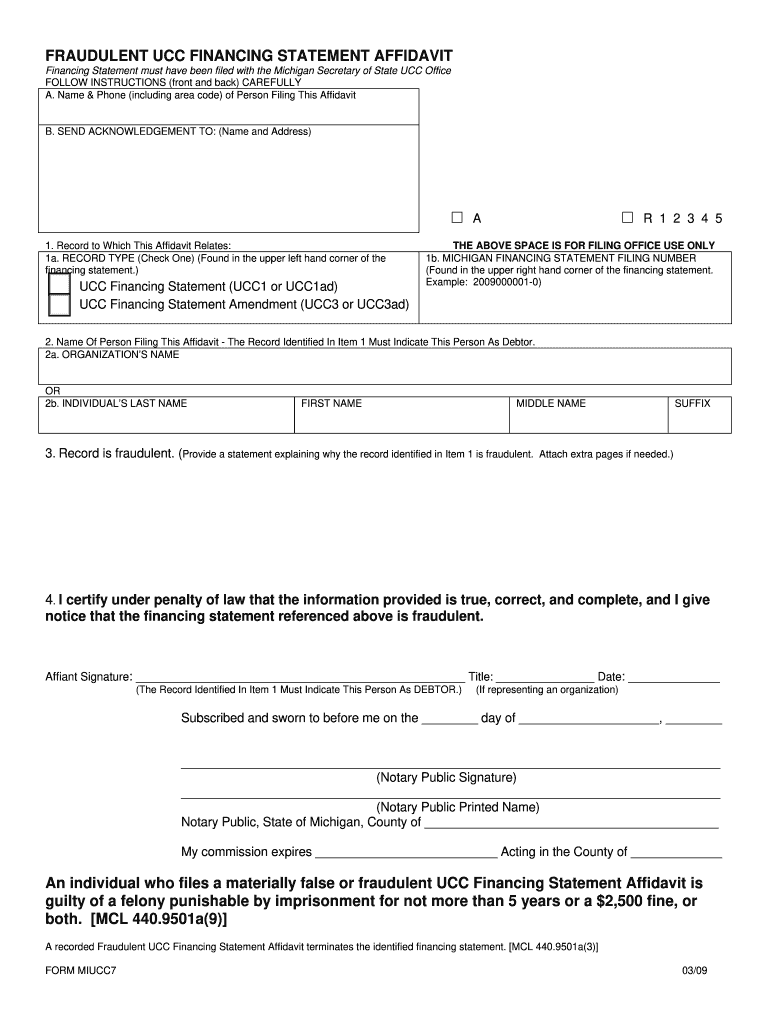
The Fraudulent UCC Financing Statement Affidavit, also known as the MI-UCC7 form, is a legal document utilized in the state of Michigan to contest a financing statement that is believed to be fraudulent. This affidavit is filed with the Michigan Secretary of State (SOS) to officially declare that a specific financing statement was improperly and fraudulently filed against a party’s assets or interests. The form requires detailed information to substantiate the claims of fraud, ensuring the integrity and legality of financial records.
Process of Obtaining the Form
To obtain the Fraudulent UCC Financing Statement Affidavit MI-UCC7, individuals can access the Michigan Secretary of State's official website, where resources and forms are provided for public use. The form might also be available at local SOS branch offices. Requesters typically need to specify the form by its full name or reference number to ensure they receive the correct version. Checking official government resources ensures that the most current and legally compliant form is used for filing.
Steps for Completing the Affidavit
-
Gather Required Information: Collect all pertinent information regarding the alleged fraudulent financing statement, including the statement number and the filing date.
-
Identify the Contested Record: Clearly specify the record being contested within the affidavit, detailing the nature and specifics of the fraudulent activity claimed.
-
Provide Personal Details: Enter the contact information of the filing party, including name, address, and contact methods, to facilitate communication and verification.
-
Explain the Fraud: Include a comprehensive statement explaining why the financing statement is deemed fraudulent, supported by evidence or documentation if available.
-
Sign and Notarize: The affidavit must be signed in the presence of a notary public to validate the submission. The notary’s endorsement ensures the veracity of the document's contents and the identity of the signer.
Key Elements of the Affidavit
- Filer's Information: Requires complete details of the individual or entity filing the affidavit.
- Details of the Disputed UCC Statement: Includes the identification and specifics of the allegedly fraudulent financing statement.
- Description of Fraud: A mandatory section where the filer explains the basis of the fraud allegations.
- Signature and Notarization: Ensures legal acknowledgment and authenticity of the document.
Legal Use and Implications
Filing a Fraudulent UCC Financing Statement Affidavit is a legally binding action. It serves to correct abusive practices in filing financing statements. When unjustly filed, these statements can encumber assets and potentially harm the victim financially. The affidavit not only acts to annul such statements but also serves as a deterrent against fraudulent practices. Misuse of the affidavit can lead to severe legal consequences, as filing false information to the SOS carries the risk of felony charges.
State-Specific Rules and Considerations
In Michigan, specific state statutes govern the filing of UCC financing statements and related affidavits. The Michigan SOS enforces rules to prevent abuse of the UCC filing system. It is crucial for the filer to understand these regulations to ensure compliance and effectiveness of their filing. The state may provide additional guidance regarding eligible grounds for alleging fraud, administrative procedures, and appeals.
Eligibility and Common Users
Common users of the MI-UCC7 form include individuals or organizations whose financial interests or assets have been improperly implicated by fraudulent UCC filings. This can encompass a broad range of entities, from private citizens to large corporations, especially those that frequently engage in securing interests via public records.


Filing Methods and Requirements
The affidavit can typically be submitted to the Michigan Secretary of State via mail or in person. It must include all required attachments and a fee may apply. The form's submission methods should follow specific procedures outlined by the SOS, confirming that the document is filed in a timely and efficient manner.
Penalties for Misuse or Non-Compliance
Failure to adhere to the legal protocols associated with filing a Fraudulent UCC Financing Statement Affidavit can result in significant penalties. This includes possible criminal charges if false claims are made. The SOS maintains records of such filings and may prosecute those who misuse the affidavit process to incorrectly claim fraudulent activity.
Important Terms to Understand
- UCC (Uniform Commercial Code): A set of laws regulating commercial transactions in the U.S.
- Financing Statement: A document filed to secure a creditor's interest in the debtor's property.
- Affidavit: A written statement confirmed by oath, used as evidence in court.
- Notarization: The official process of signing a document in front of a notary public.