01. Edit your nfpa record of inspection and testing online
Type text, add images, blackout confidential details, add comments, highlights and more.

Type text, add images, blackout confidential details, add comments, highlights and more.

Draw your signature, type it, upload its image, or use your mobile device as a signature pad.

Send form alarm inspection via email, link, or fax. You can also download it, export it or print it out.
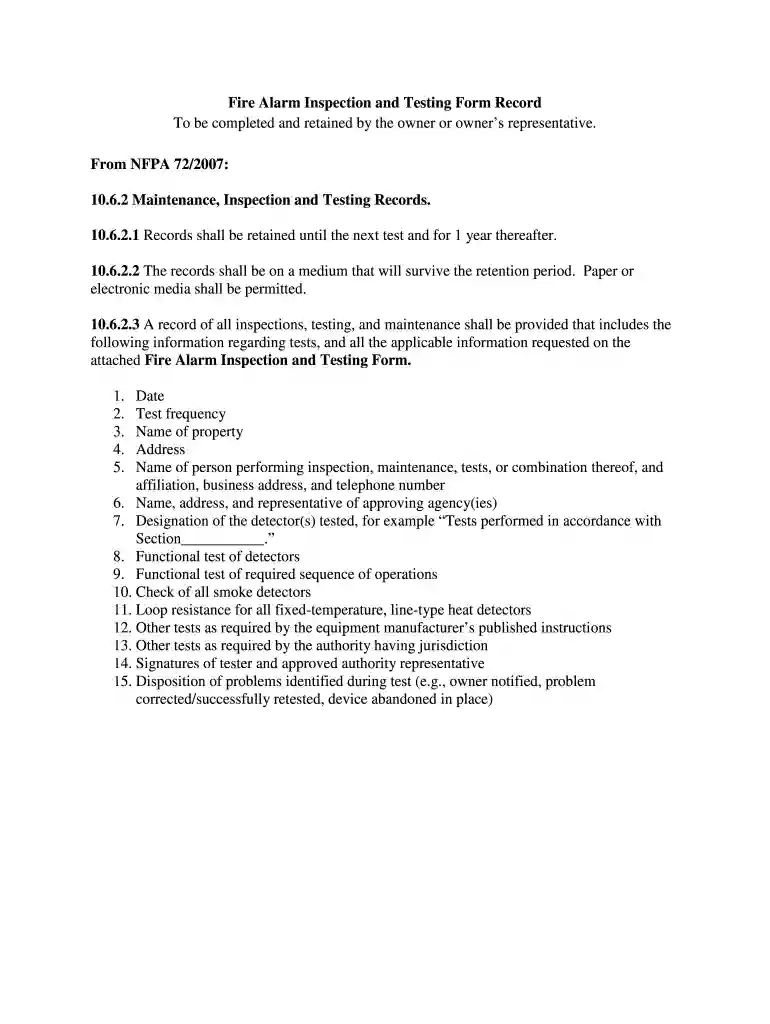
Fire testing forms are critical documents used to ensure that fire alarm systems meet safety standards and regulations. These forms often follow guidelines outlined by organizations like the National Fire Protection Association (NFPA), specifically NFPA 72/2007, to standardize fire alarm system inspections. They serve as a record of fire alarm inspections, detailing various tests performed, results obtained, and compliance with safety standards.
When using fire testing forms, it is essential to follow structured guidelines to guarantee that all aspects of the fire alarm system are evaluated accurately. Begin by reviewing the sections of the form that pertain to the specific fire alarm components installed on the premises. Document every test conducted, noting dates, frequencies, and results. It is crucial to involve a certified professional, typically a fire alarm technician, to conduct these tests and ensure compliance with legal requirements.
Pre-Inspection Preparation: Gather all relevant documents, including previous inspection reports and system specifications.
Initial Inspection: Check for obvious signs of wear or malfunction in alarm devices and communication systems.
Device Testing: Conduct tests on all fire alarm devices including smoke detectors, heat detectors, and manual pull stations. Record the functioning and results on the form.
System Functionality: Test the entire fire alarm system to ensure it triggers alarms and notifications properly.
Documentation: Accurately complete each section of the form, ensuring that all mandatory fields are filled in, and sign off the form once all checks are complete.
Review and Submit: Review the completed form for accuracy before submitting it to the appropriate authority or retaining it for records.
Conducting regular fire testing with these forms is critical for ensuring safety and compliance. These tests help identify potential issues in fire alarm systems, reducing the risk of failure in the event of an emergency. Moreover, maintaining accurate records supports adherence to legal and insurance requirements, potentially lowering liability.
These forms are commonly used by property owners, facility managers, and safety officers in commercial establishments, schools, hospitals, and residential complexes. They are particularly important for entities with large or complex fire alarm systems that require regular maintenance and reviews to meet safety standards.
Fire testing form completion is mandated by law in many jurisdictions, including adherence to the NFPA 72/2007 guidelines. This ensures that fire alarm systems are regularly inspected and maintained, minimizing the risk of malfunctions. Failure to comply with these requirements can result in penalties, including fines and increased liability in the event of a fire incident.
Fire testing forms can typically be obtained through local fire departments, professional fire alarm service providers, or downloadable from safety standard organization websites. Once completed, these forms should be submitted to the relevant municipal or state authority as proof of compliance. They can also serve as part of the organization's internal safety records.
This structured, detailed approach ensures thorough coverage of the "fire testing form" topic, aligning with cultural and legal references pertinent to a U.S. audience. Each block offers unique, valuable insights into the form's usage and significance.
At DocHub, your data security is our priority. We follow HIPAA, SOC2, GDPR, and other standards, so you can work on your documents with confidence.