







Definition and Meaning
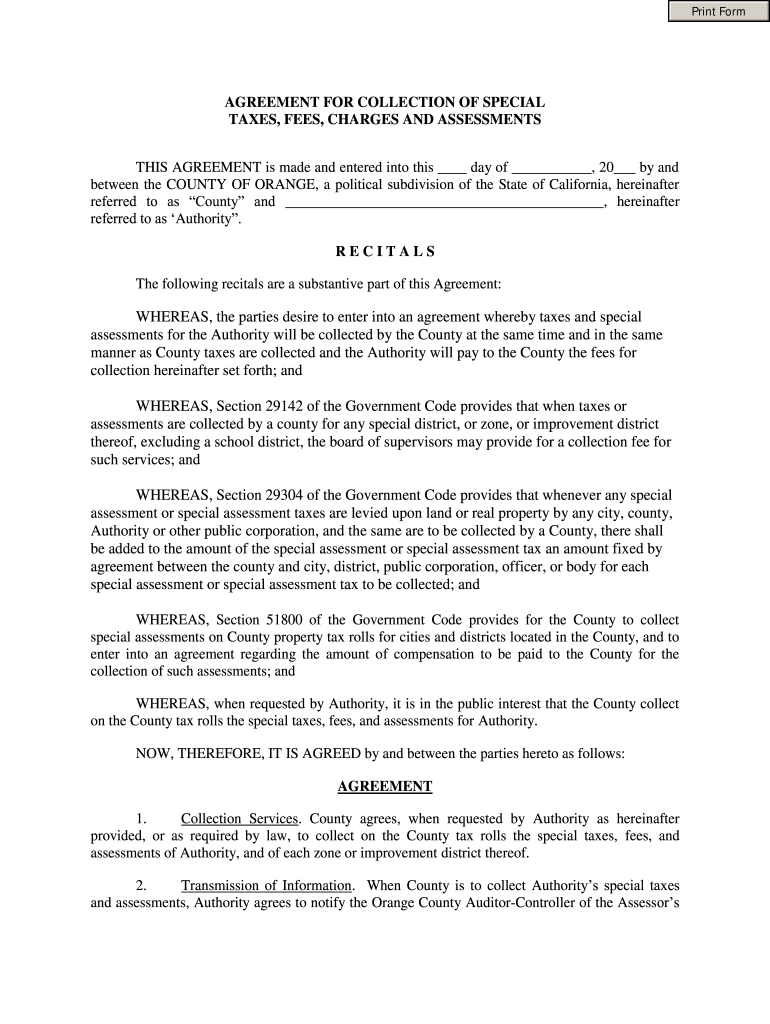
The "AGREEMENT FOR COLLECTION OF SPECIAL" refers to a legal document that outlines the terms and conditions under which a designated Authority and a municipal entity, such as the County of Orange, agree to collaborate in the collection of special assessments, taxes, fees, and charges. This agreement specifies the responsibilities of each party, ensuring that the collection process aligns with state laws. By entering into this agreement, both parties aim to streamline revenue collection and ensure fiscal compliance.
Steps to Complete the AGREEMENT FOR COLLECTION OF SPECIAL
- Identification of Parties: Clearly identify the Authority and the municipal entity involved in the agreement. Ensure the full legal names and addresses are included.
- Outline Responsibilities: Define the duties of both parties, including the methods and timelines for collection.
- Payment Terms: Specify how and when the collected fees will be transferred from the municipal entity to the Authority.
- Notification Protocol: Establish how each party will communicate any relevant changes or updates regarding the collections.
- Certification and Reporting: Document the process for certifying assessments and generating regular reports.
- Indemnification Clauses: Detail indemnification measures to protect each party from legal liabilities that may arise.
Key Elements of the AGREEMENT FOR COLLECTION OF SPECIAL
- Scope of Services: A comprehensive description of the collection activities to be performed.
- Fee Schedule: A detailed list of the fees associated with the collection services.
- Duration and Termination: The agreement's effective period and procedures for termination by either party.
- Dispute Resolution: Mechanisms for resolving any disagreements that may arise from the agreement.
- Confidentiality: Provisions that ensure the confidentiality of sensitive financial information.
- Data Security: Measures and technologies used to protect data integrity and confidentiality.
How to Obtain the AGREEMENT FOR COLLECTION OF SPECIAL
To acquire a copy of the "AGREEMENT FOR COLLECTION OF SPECIAL", the interested party should contact the municipal office or Authority responsible for the oversight of such agreements. Documents may be available for download from official websites or by direct request through email or phone inquiries to the offices involved.
Legal Use of the AGREEMENT FOR COLLECTION OF SPECIAL
Engagement with this agreement must adhere to state and federal laws governing the collection of taxes and fees. Legal compliance is ensured by integrating clauses that mandate adherence to specific regulations and certification requirements. Legal counsel is often consulted during drafting to guarantee that all aspects of the agreement meet applicable legal standards.
Important Terms Related to AGREEMENT FOR COLLECTION OF SPECIAL
- Assessment: A charge or levy placed on property to pay for services provided by a government entity.
- Certification: The formal attestation of the assessment amounts and their legality by a qualified authority.
- Indemnity: A contractual obligation of one party to compensate for the loss or damage incurred by another party.
- Fee Schedule: A comprehensive list of charges correlated with the collection services provided.
- Notice Requirement: Defined procedures for notifying parties of actions or changes in the collection process.
Who Typically Uses the AGREEMENT FOR COLLECTION OF SPECIAL
This agreement is commonly utilized by municipal governments and their counterparts—often other government agencies or approved authorities tasked with collecting special assessments. It is essential for those involved in local government finance, treasury management, and municipal legal departments to understand the ins and outs of these agreements.


State-Specific Rules for the AGREEMENT FOR COLLECTION OF SPECIAL
While the agreement provides a general framework, specifics can vary significantly based on state regulations. Variances may include unique certification requirements, payment timelines, or additional reporting obligations. Parties entering into these agreements should review applicable state statutes and ordinances to ensure all aspects conform to local laws.
Examples of Using the AGREEMENT FOR COLLECTION OF SPECIAL
A county government and a water district may enter into such an agreement to facilitate the collection of special taxes needed for infrastructure. In another instance, a city could partner with a public utilities authority to ensure the collection of energy-related assessments, streamlining the process and ensuring efficient financial management.




