01. Edit your form online
Type text, add images, blackout confidential details, add comments, highlights and more.

Type text, add images, blackout confidential details, add comments, highlights and more.

Draw your signature, type it, upload its image, or use your mobile device as a signature pad.

Send it via email, link, or fax. You can also download it, export it or print it out.
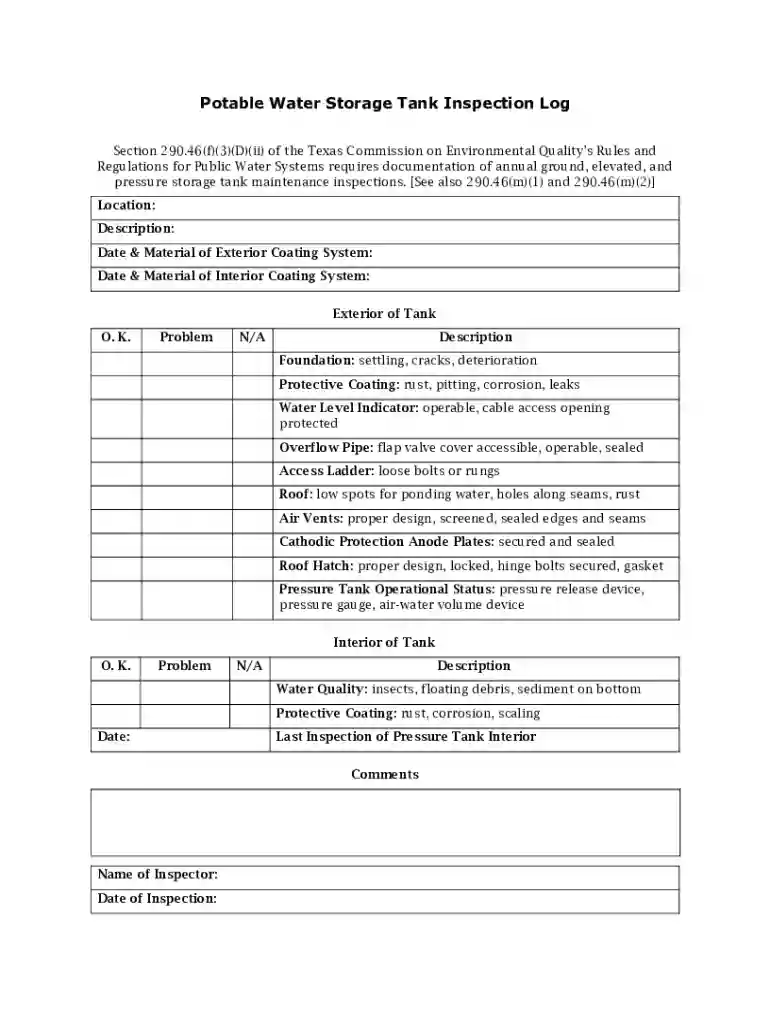
The Potable Water Storage Tank Inspection Log is a critical document used for the systematic review and maintenance of water storage tanks. It serves as a compliance tool, ensuring that facilities uphold the standards set by regulatory bodies like the Texas Commission on Environmental Quality. This log documents details about the tank, such as its location, description, and the coating materials used. Regular inspections help identify issues like rust or water quality concerns, ensuring the safety and integrity of the water supply.
The inspection log comprises several sections that capture essential information. These sections include:
Routine inspections documented in the log help maintain the tank's functionality and safety, preventing costly repairs and ensuring a clean water supply. Compliance with state and federal regulations is crucial to avoid legal penalties. Regular logging supports proactive maintenance strategies by identifying issues before they become significant problems, which is essential for water safety and quality assurance.
While all states impose general standards, Texas, for instance, mandates that facilities complete these logs annually to ensure adherence to TCEQ guidelines. These rules might differ slightly in inspection frequency, required documentation, or specific criteria evaluated during inspections. It is essential to review state-specific regulations to ensure full compliance.
Failure to maintain or properly complete the Potable Water Storage Tank Inspection Log can result in significant penalties, ranging from fines to more severe legal action. Non-compliance could lead to mandated operational halts until tanks meet regulatory standards. It may also increase the risk of lawsuits in case a contamination incident occurs due to neglected maintenance checks.
At DocHub, your data security is our priority. We follow HIPAA, SOC2, GDPR, and other standards, so you can work on your documents with confidence.