







Definition and Meaning
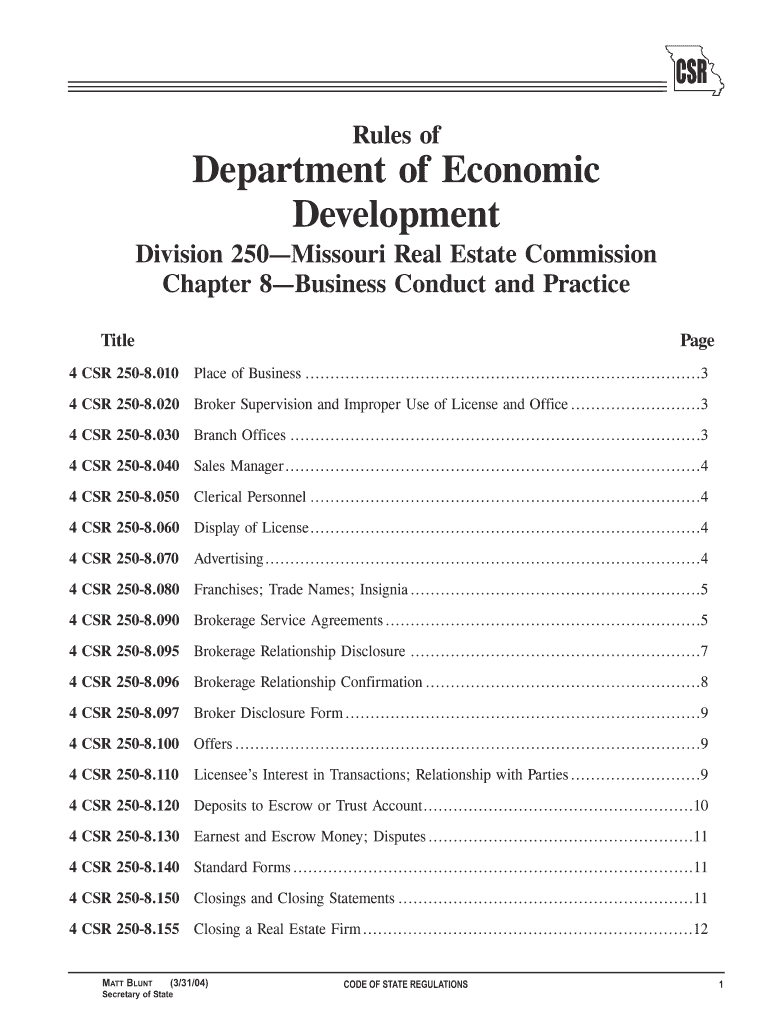
The "MO Real Estate CSR Form," pertinent to Missouri real estate, plays a crucial role in standardizing business conduct and compliance with state regulations. Managed by the Missouri Real Estate Commission, this document ensures adherence to various legal and ethical standards within the real estate industry. It encompasses guidelines related to business operations, broker supervision, advertisements, brokerage agreements, disclosure requirements, and management agreements. These guidelines aim to uphold transparency and accountability, fostering ethical real estate practices in Missouri.
Importance of the Form
- Compliance with Regulations: It ensures real estate professionals comply with Missouri's legal standards.
- Guidance on Practices: Offers structured rules for maintaining sound business operations.
- Ethical Assurance: Promotes ethical behavior by clearly outlining necessary practices.
How to Use the MO Real Estate CSR Form
To effectively use the MO Real Estate CSR Form, real estate professionals should begin by familiarizing themselves with its structure and the information required. This involves understanding the rules and how they apply to specific business practices, such as advertising or handling escrow accounts.
- Read the Guidelines: Start by thoroughly reviewing the form’s guidelines to understand binding obligations.
- Identify Required Information: Determine what specific details need to be provided, particularly concerning business and management agreements.
- Application to Operations: Apply the form's rules to your daily operations, ensuring compliance with disclosure and supervisory standards.
Practical Tips
- Stay Updated: Regularly check for any updates to the form as regulatory changes might alter legal requirements.
- Collaborative Approach: Engage with legal advisors or colleagues to ensure comprehensive understanding and correct application of the form.
Steps to Complete the MO Real Estate CSR Form
Completing the MO Real Estate CSR Form involves several critical steps to ensure compliance and accuracy:
- Gather Necessary Information: Compile all relevant business documents that will assist in filling out the form accurately.
- Review Each Section Thoroughly: Ensure all guidelines and sections are clearly understood before proceeding.
- Provide Accurate Details: Fill in the form with precise business information related to advertising practices, transaction management, and broker supervision.
- Verify Compliance: Double-check all entries against state regulations to ensure total compliance.
- Submit and Maintain Records: Submit the form through the required channel and retain copies for future reference.
Considerations
- Accuracy is Key: Mistakes might lead to non-compliance penalties.
- Documentation: Keep comprehensive records of all submissions for legal protection.
Key Elements of the MO Real Estate CSR Form
The MO Real Estate CSR form encompasses several key elements essential for regulatory compliance and ethical business conduct.
Major Components
- Business Conduct Guidelines: Rules covering operational procedures and ethical practices.
- Disclosure Requirements: Mandatory information that must be communicated to clients and stakeholders.
- Broker Supervision: Standards for the supervision of real estate transactions and personnel.
Detailed Aspects
- Record Retention: Specifications on how long documents need to be retained.
- Earnest Money Management: Directives on the handling and documentation of client funds.
State-Specific Rules for the MO Real Estate CSR Form
Missouri imposes specific rules that are integral to the CSR form. Understanding these is crucial for real estate professionals working within the state.
Missouri-Specific Regulations
- Advertising Standards: Clear directives on what constitutes compliant real estate advertising.
- Brokerage Service Agreements: Detailed expectations around agreements made with clients.
Implications
Failure to adhere to these state-specific rules could result in penalties or business licensure issues.
Legal Use of the MO Real Estate CSR Form
The legal use of the MO Real Estate CSR Form extends to licensing requirements and ensuring that real estate practices meet Missouri's stringent regulatory benchmarks.
Compliance and Legal Framework
- Licensing Requirements: Usage of the CSR form is often essential for maintaining a real estate license.
- Audit Trail: Keeping an accurate and comprehensive audit trail is legally binding and essential for protecting against potential lawsuits.
Examples of Misuse
- Ignoring Disclosure Requirements: Failure to disclose necessary information can lead to legal action.
- Inaccurate Record Keeping: Maintaining incorrect records can have legal repercussions.
Who Typically Uses the MO Real Estate CSR Form
The primary users of the MO Real Estate CSR Form include licensed real estate brokers, agents, and companies operating within Missouri. It serves a pivotal function in ensuring that these parties maintain compliance with state regulations and maintain ethical practices.


Key Stakeholders
- Real Estate Brokers: Directly responsible for ensuring all transactions comply with CSR guidelines.
- Real Estate Companies: Use the form to standardize operational procedures across the organization.
Benefits for Users
- Consistency in Practices: Ensures uniform compliance across all real estate activities.
- Enhanced Trust: Builds client confidence through demonstrated adherence to legal standards.
Examples of Using the MO Real Estate CSR Form
Employing the MO Real Estate CSR Form in practical scenarios can illustrate its importance and relevance.
Real-World Examples
- Case Study on Disclosure Compliance: A real estate company avoided legal action by strictly following disclosure requirements mandated by the CSR form.
- Effective Broker Supervision: A brokerage improved its oversight capabilities by implementing detailed supervision guidelines outlined in the form.
Nuances and Variations
- Scenario One: An agent satisfactorily resolved a client complaint by referencing and adhering to specific CSR form guidelines.
- Scenario Two: A company streamlined its advertising practices to align with the form’s specified regulations.




